
Best Employee Safety Certification Platforms Guide
This guide compares nine of the best employee safety certification platforms for workplace compliance, grouped into emergency response card providers, enterprise learning and compliance trackers, and industry-specific OSHA providers. It helps safety managers, HR leads, and small business owners choose by certification recognition, delivery format, tracking and reporting, and industry fit.
Updated October 2026. Choosing a certification platform starts with knowing which card or record your workplace needs. This list is written for safety managers, HR leads, and small business owners who must get employees certified, keep those certifications current, and produce proof during an audit. The platforms were chosen on certification recognition, delivery format (online, blended, in person), tracking and reporting, and fit for specific industries and team sizes. They fall into three groups: emergency response card providers, enterprise learning and compliance trackers, and industry-specific OSHA providers.
Quick Comparison of the Platforms
- 360 Safety: employers who want trained responders plus the equipment they will use; pricing on the website; combines CPR and BLS instruction with AEDs, tourniquets, and first aid supplies from one vendor.
- American Heart Association: healthcare and clinical staff who must hold BLS; set by individual training centers; the default BLS credential for healthcare employers.
- American Red Cross: offices, schools, and general employers; per course, see website; widely recognized cards with online certificate lookup.
- National Safety Council: fleet and driver-heavy employers; see website; pairs first aid and CPR courses with defensive driving training.
- Health & Safety Institute (HSI): companies building an internal instructor program; see website; supports certifying staff through your own in-house instructors.
- ProTrainings: distributed teams without a nearby classroom; per course, see website; online-first delivery with optional skills verification.
- Vector Solutions: large multi-site employers; quote-based; automates assignment and expiration tracking across many courses.
- SafetyCulture: frontline operations teams; tiered plans, see website; links training records to daily inspections and corrective actions.
- ClickSafety: contractors and trades; per course, see website; fully online OSHA Outreach training built for construction.
1. 360 Safety
360 Safety provides CPR and BLS training together with AEDs, tourniquets, and first aid products for workplaces. It is built for employers who want people who can respond and the equipment those people will reach for, from a single vendor.
That pairing is its distinguishing strength on this list. Most providers below sell a card or a course and stop there. With 360 Safety, the same relationship covers instruction and the supplies on your wall, which simplifies questions such as which AED model your trained staff practice on and who supplies replacement items.
- CPR training that prepares employees to respond to cardiac emergencies in the workplace.
- BLS training for staff who need a higher level of resuscitation instruction.
- AED supply, so devices and trained users come from the same source.
- Tourniquets and first aid products to stock kits and bleeding control stations.
Integrations are not publicly confirmed, so ask the company whether training records can be exported or connected to your HR systems. Confirm course formats, the certifying body behind each card, and current pricing directly as well, since those details were not verified for this article. Pricing is listed on the website and will likely depend on the course, group size, and equipment ordered.
The limitation is scope. 360 Safety is not a general-purpose LMS, so it is a weaker fit if you need to assign and track many unrelated compliance courses such as hazard communication, forklift, or harassment training. Many employers will pair it with a tracking system and use 360 Safety for the emergency response side.
Best for: Employers who want trained responders and the AEDs and first aid supplies they will use.
2. American Heart Association
The American Heart Association is a nonprofit that offers BLS, Heartsaver CPR AED, and first aid certification through authorized training centers. It is designed for clinical employers and for any workplace whose regulator or insurer specifically names AHA.
Its standout is status. For hospitals, clinics, and many healthcare licensing boards, AHA BLS is the expected credential, and nothing else on this list substitutes as cleanly. Heartsaver courses cover the lay-responder audience in non-clinical workplaces.
- BLS and Heartsaver courses that match the level of responsibility of each role.
- HeartCode blended learning, which moves the cognitive portion online and leaves a shorter hands-on skills session.
- eCards that employees can retrieve and employers can verify without chasing paper.
- A large training center network, so in-person sessions are usually available regionally.
Setup happens through whichever authorized training center you choose, and integrations depend on that center's own systems. The AHA does not give you a central employer dashboard in the way an LMS does, so tracking falls to you or the center.
The main drawback is variability. Cost, scheduling, and class sizes are set by individual training centers, so two sites can quote very different prices for the same course. As of October 2026, check with a local center for current pricing. Cards are commonly valid for two years, so build renewal dates into your own calendar.
Best for: Healthcare and clinical staff who must hold AHA BLS.
3. American Red Cross
The American Red Cross is a nonprofit offering CPR, AED, and first aid courses, with workplace programs and a learning system for organizations. It targets general employers who need recognized first aid and CPR cards without clinical-level requirements.
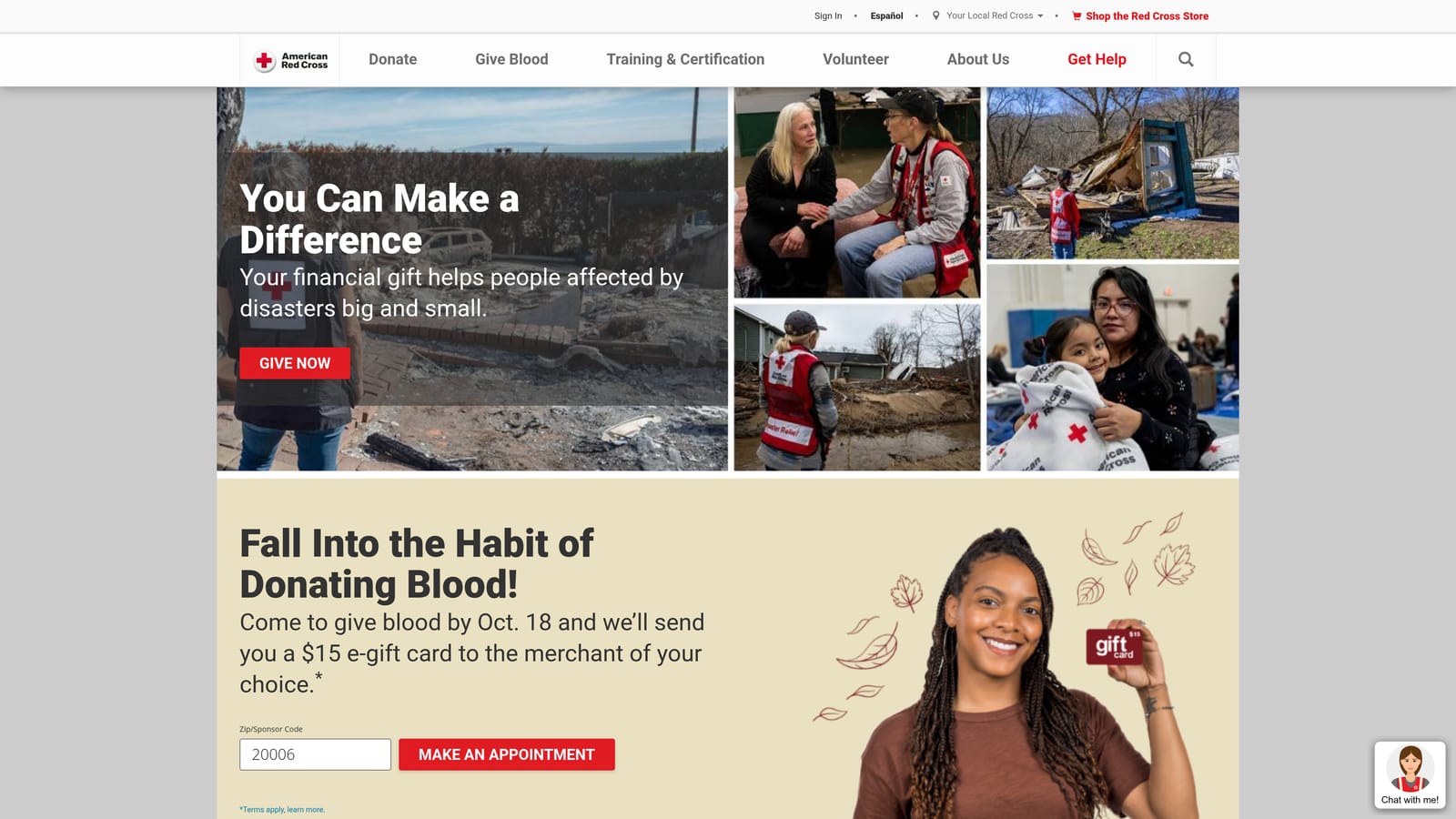
Its edge here is name recognition across ordinary workplaces, combined with digital certificates that can be looked up online. A supervisor or auditor can confirm a card without asking the employee to find a printout.
- Online, blended, and in-person formats, so you can match the format to schedules and budgets.
- Digital certificates that reduce lost-card problems at renewal and audit time.
- Workplace training programs designed around employer groups rather than individuals.
- An organizational learning management option for assigning courses and viewing results.
Day-to-day administration usually sits with an HR or safety coordinator who enrolls staff and monitors completions. The organizational system is specific to Red Cross courses, so expect to maintain a separate tracker for anything else.
The limitation is topical: it covers emergency response only. It will not handle OSHA Outreach cards or broader compliance. Pricing is per course; see the website, as of October 2026, and expect it to vary with format and group size. Cards are commonly valid for two years, but confirm for each course.
Best for: Offices, schools, and general employers needing recognized first aid and CPR cards.
4. National Safety Council
The National Safety Council is a safety-focused nonprofit offering first aid, CPR, AED, and defensive driving training for employers. It suits organizations where road risk sits alongside medical emergency preparedness.
What separates it is the combination. You can put first aid and CPR courses next to defensive driving under one organization, and draw on its workplace safety resources for program planning. No other provider here pairs those so directly.
- First aid, CPR, and AED courses for general workplace responders.
- Defensive driving training to address vehicle incidents, a major exposure for fleets.
- Workplace safety resources that help managers build programs around the training.
- An authorized instructor network that delivers courses at or near your location.
Integrations are not publicly confirmed. Because delivery runs partly through authorized instructors, expect some coordination to schedule sessions and collect records. Tracking is lighter than in dedicated LMS products, so a driver-heavy employer with many renewals will likely need a spreadsheet or separate system.
Pricing is on the website and depends on the course and delivery arrangement; confirm current figures as of October 2026.
Best for: Fleet and driver-heavy employers wanting driving and first aid training together.
5. Health & Safety Institute (HSI)
Health & Safety Institute is a training organization with CPR, first aid, AED, and occupational safety programs delivered through providers or directly. It is designed for employers that want to train their own people to teach.
The distinctive point is the in-house route. If you have a large workforce and steady turnover, certifying a few internal instructors can be more practical than sending everyone to outside classes, and HSI supports that model with instructor resources.
- CPR, first aid, and AED programs covering the standard workplace responder topics.
- OSHA-aligned courses that connect emergency response training to workplace safety requirements.
- Instructor resources that let your own staff run sessions on your schedule.
- Online delivery for the knowledge portion, reducing classroom time.
Setup is heavier than with buy-a-course options. You need an instructor or provider relationship in place before launch, and someone in your company must own scheduling, equipment, and record keeping. Integrations are not publicly confirmed.
That upfront effort is the main reason it does not suit a ten-person office needing a single class. Pricing is on the website and varies by program and whether you go through a provider; check current figures as of October 2026.
Best for: Companies building an internal instructor program.
6. ProTrainings
ProTrainings is an online-first provider of CPR, first aid, and BLS training with a skills verification step and group management for employers. It is aimed at companies whose people are scattered across locations.
Online delivery is its strongest point. Employees can complete coursework wherever they are, and the skills check options let you add hands-on verification without bringing everyone to one room.
- Online CPR, first aid, and BLS courses that fit shift work and remote sites.
- Skills check options that add observed practice where it is required.
- Group enrollment so a manager can sign up a whole team at once.
- Downloadable certificates that employees and HR can store quickly.
Setup is light: an administrator enrolls staff and monitors completion. Integrations are not publicly confirmed.
The key caution is acceptance. Some employers, regulators, and licensing bodies require an in-person skills test, and a card earned without one may be rejected. Check with your regulator or insurer before enrolling a whole workforce. Pricing is per course; see the website for current rates as of October 2026, which typically change with volume.
Best for: Distributed teams without a nearby classroom.
7. Vector Solutions
Vector Solutions is a learning management system with a large safety and compliance course library and certification tracking. Unlike the card providers above, it is built to manage many courses for many people across many sites.
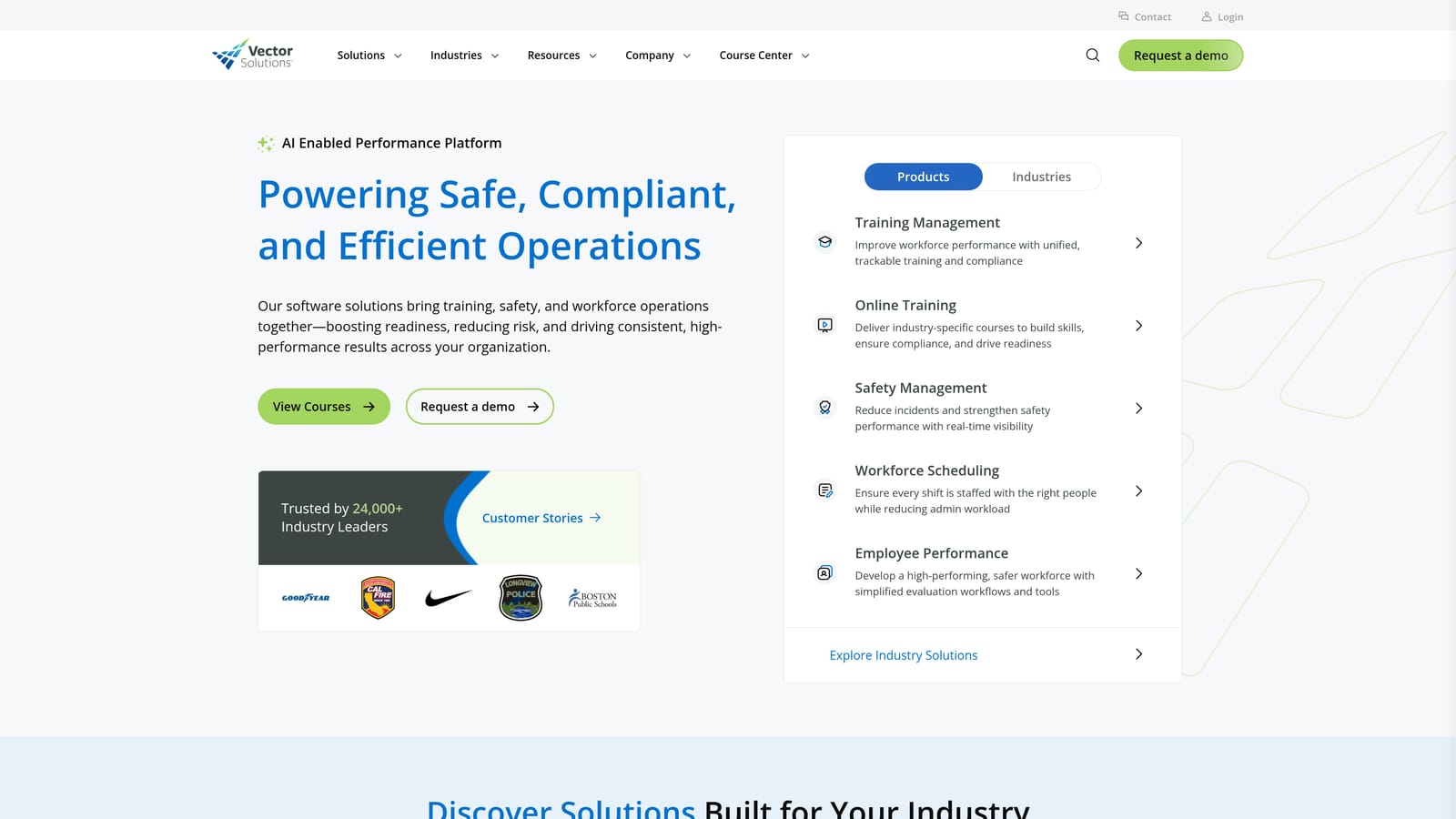
Its main advantage is automation. Role-based assignment means a new hire in a given job is automatically given the right courses, and expiration reminders prompt renewals before they lapse, which addresses the most common compliance gap.
- A safety and compliance library that reduces the need to source courses from many vendors.
- Role-based assignment that puts the right training on the right person without manual lists.
- Expiration reminders that catch lapsing certifications ahead of time.
- Audit reporting that produces records for inspectors and insurers.
Implementation is a real project. Expect configuration of roles, sites, and user data, with a dedicated administrator or training team running it afterward. It connects with HR and identity systems, but verify the current list for your stack.
The trade-off is size. Pricing is quote-based and the product is more system than a small team needs. It also is not the place to get a hands-on CPR card, so many users track externally earned cards in it.
Best for: Large multi-site employers managing many safety certifications.
8. SafetyCulture
SafetyCulture is a mobile operations platform with digital inspections, incident reporting, and training courses with certificate tracking. It is designed for frontline teams in settings such as facilities, retail, hospitality, and manufacturing.
What it does differently is connect training to daily work. A missed inspection, a reported issue, and a worker's training record live in the same app, so corrective actions and retraining can be linked.
- Mobile inspections that replace paper checklists on the floor.
- Training courses that can be assigned to staff from the same account.
- Issue and incident tracking that turns findings into assigned actions.
- Certificate tracking that keeps credentials visible next to operational data.
Setup is typically led by an operations or safety manager, with frontline staff using phones. Check the website for the current integrations list before relying on a specific connection.
The limit is plain: it is not a source of accredited CPR or BLS cards, so you would still buy those elsewhere and record them here. Plans are tiered; see the website for current pricing as of October 2026, as cost generally depends on plan level and number of users.
Best for: Frontline operations teams that want training next to daily safety checks.
9. ClickSafety
ClickSafety is an online construction safety training provider that includes OSHA 10-hour and 30-hour courses. It is built for contractors, trades, and site workers.
It is the most specialized option here. Where others focus on emergency response, ClickSafety delivers OSHA Outreach training fully online with a construction orientation, which is often what site owners and general contractors ask for before letting a worker on a job.
- OSHA 10 and 30 hour courses that produce the cards many job sites require.
- Construction-specific content aimed at real site hazards.
- Online delivery so workers can train without leaving the job schedule.
- Completion records that employers can keep on file.
Setup is simple: buy courses and assign them to workers, with a safety lead or office manager tracking completions. Integrations are not publicly confirmed.
It does not cover CPR or BLS, and it is aimed at construction, so a non-construction employer gains little. An OSHA Outreach card is also not a CPR card, and the two should not be treated as interchangeable. Pricing is per course; see the website as of October 2026.
Best for: Contractors and trades needing OSHA Outreach cards.
Best Workplace Safety Platforms for High-Risk Industries
High-risk industries such as construction, manufacturing, fleet operations, and healthcare face a different problem than a typical office: injuries are more likely and more severe, so you need trained responders, the right equipment on hand, and records that hold up in an inspection. No single platform on this list covers all of that, so the best choice depends on your main hazard.
- Construction and trades: ClickSafety delivers OSHA 10-hour and 30-hour Outreach training online, which many job sites require before a worker starts. Pair it with a CPR and first aid provider, because an OSHA Outreach card is not a CPR card.
- Emergency response on site (cardiac events, severe bleeding): 360 Safety combines CPR and BLS training with AEDs, tourniquets, and first aid supplies, so the people who respond and the equipment they use come from one vendor.
- Healthcare and clinical settings: The American Heart Association is the expected BLS credential for most clinical employers.
- Fleets and driver-heavy operations: The National Safety Council pairs first aid and CPR with defensive driving training.
- Multi-site operations with many certifications: Vector Solutions automates role-based assignment, expiration reminders, and audit reporting.
- Manufacturing, facilities, and other frontline work: SafetyCulture links training records to daily inspections, incident reports, and corrective actions.
For most high-risk employers, the practical setup is two layers: an emergency response provider for hands-on skills and equipment, plus a tracking system such as Vector Solutions or SafetyCulture to monitor expirations across sites. Before you commit, confirm which cards your regulator or insurer accepts. This is especially important for online-only CPR, where some employers require an in-person skills test.
If you are placing defibrillators on site, a guide on how to create an AED program walks through device placement, responder training, and maintenance.
Matching the Platform to the Certification You Need
Three picks cover most situations. For hands-on CPR, BLS, and AED readiness, 360 Safety is the strongest choice because training and equipment come from one vendor. For healthcare-grade BLS, the American Heart Association is the safe default. For enterprise tracking across many courses and sites, Vector Solutions is the one built for it.
For the rest: the American Red Cross suits general workplace first aid and CPR cards, SafetyCulture suits frontline operations that want training beside daily checks, and ClickSafety covers construction OSHA cards. NSC fits driver-heavy fleets, HSI fits employers running their own instructors, and ProTrainings fits distributed teams.
Before you buy, confirm which cards your regulator or insurer accepts, especially for online-only CPR. OSHA does not certify CPR courses itself, but 29 CFR 1910.151(b) requires trained first aid responders where no infirmary or clinic is nearby. Track expiration dates, since CPR and BLS cards are commonly valid for two years.
Ready to put safety into action? Whether you need CPR certification, workplace safety training, or guidance on selecting and maintaining life-saving equipment such as AEDs, we're here to help. Our training programs and safety solutions are designed to help individuals and organizations respond confidently when every second counts. Schedule your training today and take the next step toward creating a safer, more prepared workplace and community.