
Digital Safety Training Platform Comparison for 2026
This guide compares eight options across safety course libraries, general learning management systems, and EHS suites. If you need a digital safety training platform for multi-site workplace compliance, it shows how content depth, certification tracking, mobile access, and team size should drive your choice.
This list is for safety managers, HR leads, and operations teams who have to train workers across several sites or shifts and prove it happened. The platforms were chosen on content depth, tracking and certification records, mobile access, and fit for different team sizes. They fall into three groups: safety-specific course libraries, general learning management systems (LMS), and environmental, health and safety (EHS) suites. Matching the group to your need for content, delivery, or both matters more than any single feature.
Quick Comparison of Digital Safety Training Platforms
- SafetyCulture Training: frontline teams that learn on phones; free plan for small teams, paid plans per user; training can be triggered by inspection and incident findings.
- Vector Solutions: mid-size and large regulated employers; quote-based; industry-specific course packages bundled with an LMS and EHS tools.
- 360training: individuals and small employers needing certificates fast; priced per course; pay-as-you-go regulatory catalog with no platform commitment.
- HSI (Health & Safety Institute): employers running CPR, AED, BLS and first aid programs; priced per course or program; blended online learning plus in-person skills check.
- TalentLMS: small and mid-size teams with their own procedures; tiered plans by user count; fastest self-serve setup on this list.
- Absorb LMS: enterprises needing audit-ready reporting; quote-based; deep reporting and automation for multi-audience programs.
- iSpring Learn: teams with an in-house trainer; priced per active user; authoring tool and LMS tightly linked.
- Intelex: organizations already invested in EHS management; quote-based; training requirements tied to incidents, audits and corrective actions.
1. SafetyCulture Training
SafetyCulture Training, formerly known as EdApp, is a mobile-first microlearning platform connected to SafetyCulture's inspection and incident tools. Microlearning means short lessons, often a few minutes each, that a worker can finish on a phone during a break. It is designed for frontline teams in retail, hospitality, manufacturing and logistics that rarely sit at a desk.
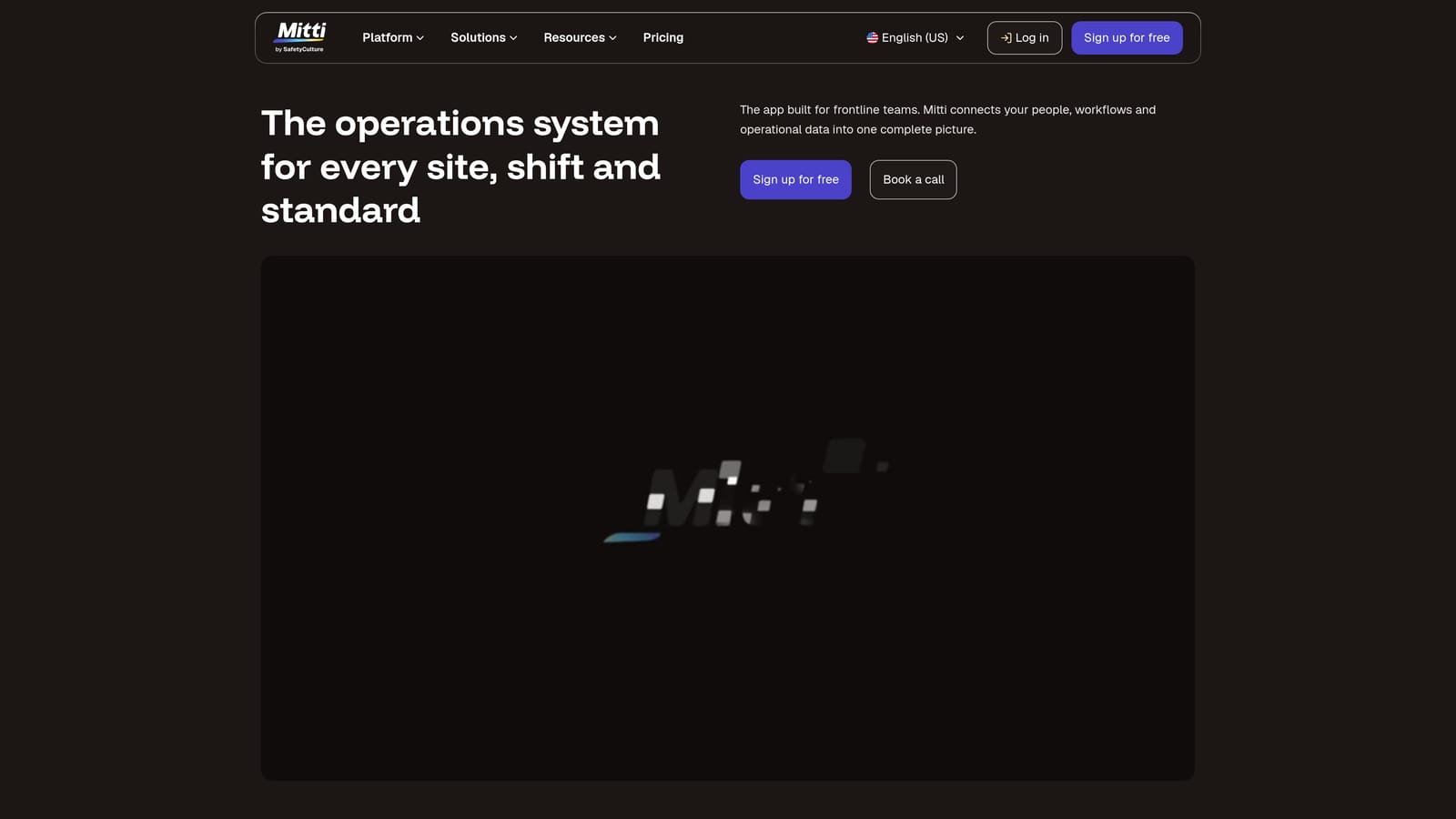
What sets it apart on this list is the link back to daily operations. When an inspection flags a recurring hazard or an incident is logged, a manager can assign a relevant lesson from within the same ecosystem rather than exporting data into a separate LMS.
- Mobile microlearning lessons that workers finish on their own phones between tasks.
- Course authoring templates that let a safety lead build a lesson without design skills.
- Assignments and completion tracking so you can see who is overdue.
- Gamified engagement, such as points and leaderboards, to lift completion on voluntary or low-priority modules.
- Links to inspections and issue reporting, so training follows real findings.
Integrations include SafetyCulture inspections, Slack, Microsoft Teams, and API access. Setup is light, and a safety or operations lead can usually run it day to day without IT. The main limitation is a lighter library for regulated, certificate-bearing safety topics, so you may need to pair it with another source for those courses.
Pricing: there is a free plan for small teams, and paid plans are charged per user. Check the website for current rates as of 2026.
Best for: Frontline teams that learn on phones and want training tied to daily inspections.
2. Vector Solutions
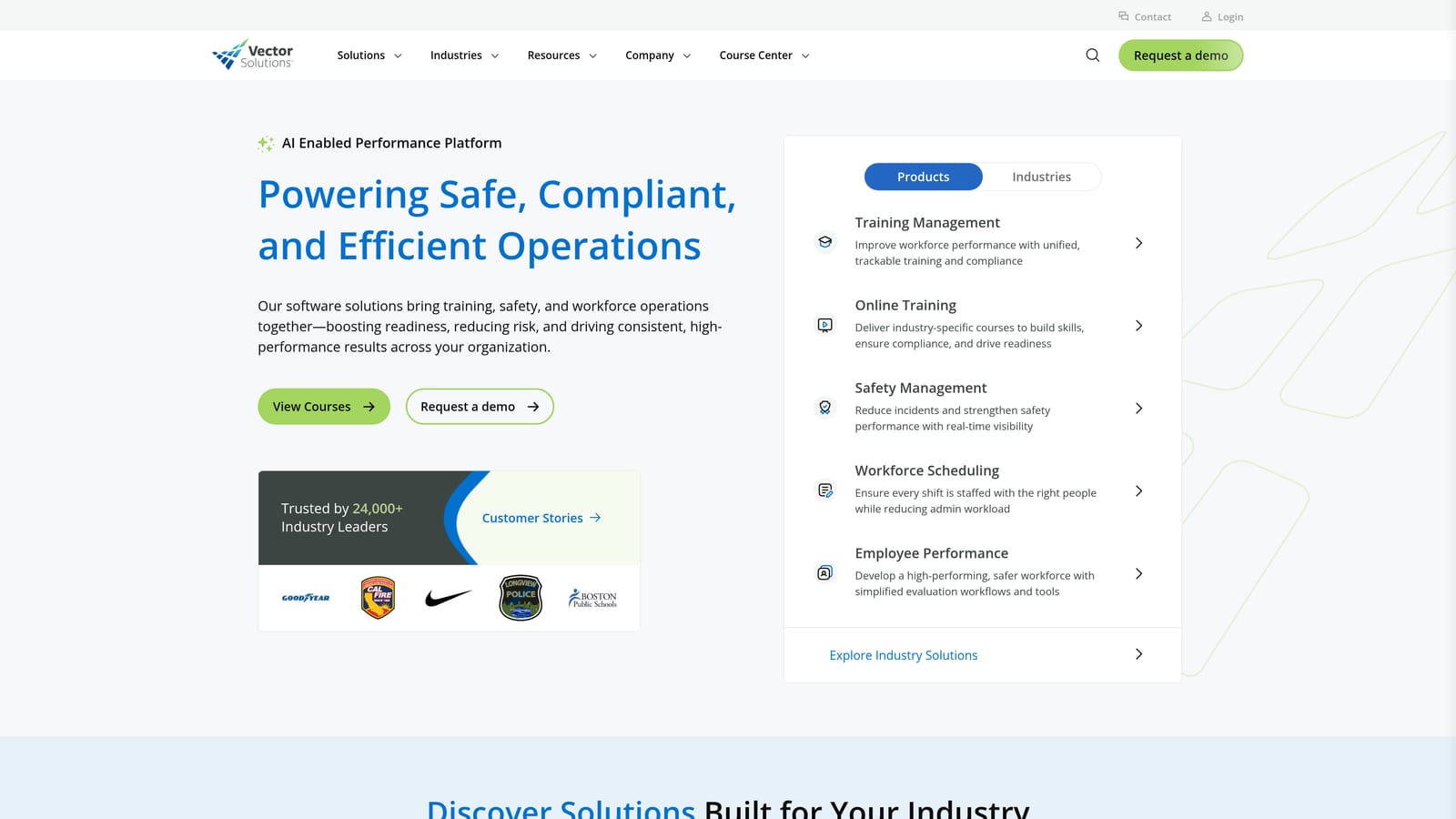
Vector Solutions combines a large safety and compliance course library with an LMS and EHS tools, aimed at industrial, public sector and education organizations. It suits buyers who want content, delivery and tracking from one vendor instead of stitching them together.
What it does distinctively well
The industry-specific course packages bundled with the LMS and EHS tools are the differentiator. A construction firm and a school district can each start from a curated set of courses rather than browsing a general catalog and guessing what applies.
Features, setup and limits
- A large safety and compliance catalog that reduces the need to build content yourself.
- An LMS with assignments and reporting for tracking completion across departments.
- Industry-specific packages that map courses to the sector you work in.
- Recertification tracking so expiring training does not slip through.
- EHS management tools for connecting training to wider safety programs.
Integrations cover HRIS connections, SSO, and Vector's own EHS tools. Expect a real implementation project with an administrator, often in HR, safety or compliance, owning it afterward. Implementation effort and cost are high for small teams, and a ten-person shop will likely find it more than it needs.
Pricing is quote-based and typically depends on user count and which modules you bundle.
Best for: Mid-size and large employers in regulated industries wanting one vendor for content and tracking.
3. 360training
360training is an online course marketplace selling regulatory training per course, including OSHA outreach and HAZWOPER. OSHA outreach training is the 10 and 30 hour program delivered by providers authorized through OSHA's Outreach Training Program. As of 2026, confirm on the course page that the specific title is OSHA-authorized before you buy.
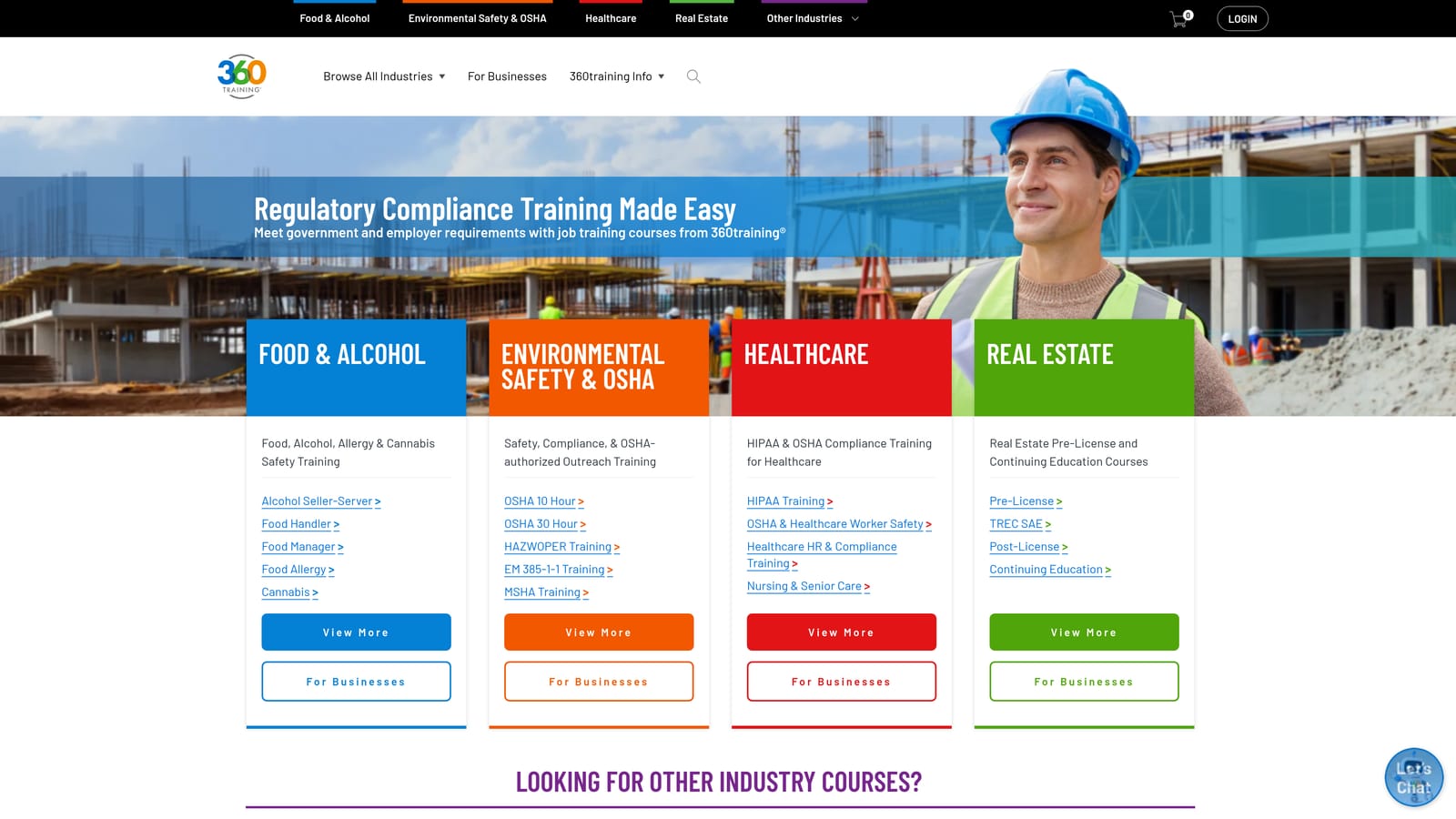
It stands out for its wide pay-as-you-go catalog of certificate courses with no platform commitment. A new hire needing an OSHA 10 card this week can buy one course and finish it without any procurement process.
- OSHA 10 and 30 hour courses for construction and general industry roles.
- HAZWOPER and environmental courses for hazardous waste and emergency response work.
- Pay-per-course purchasing, so you only spend on what you need.
- Certificate delivery after completion, giving workers a record to hand to employers.
- Team purchasing options for buying several seats at once.
Integrations are limited. LMS options exist for businesses, but verify what is currently offered. Setup is minimal, since a buyer can be learning within minutes. The tradeoff is that it is not a full LMS: you cannot easily host custom content or run deep workforce reporting across a large team.
Pricing is per course, so cost scales with the number of learners and titles. See the website for current prices.
Best for: Individuals and small employers who need specific certificates quickly.
4. HSI (Health & Safety Institute)
HSI provides online and blended CPR, AED, BLS, first aid and workplace safety courses. Blended learning means the knowledge portion is completed online, then a short in-person session lets an instructor check hands-on skills.
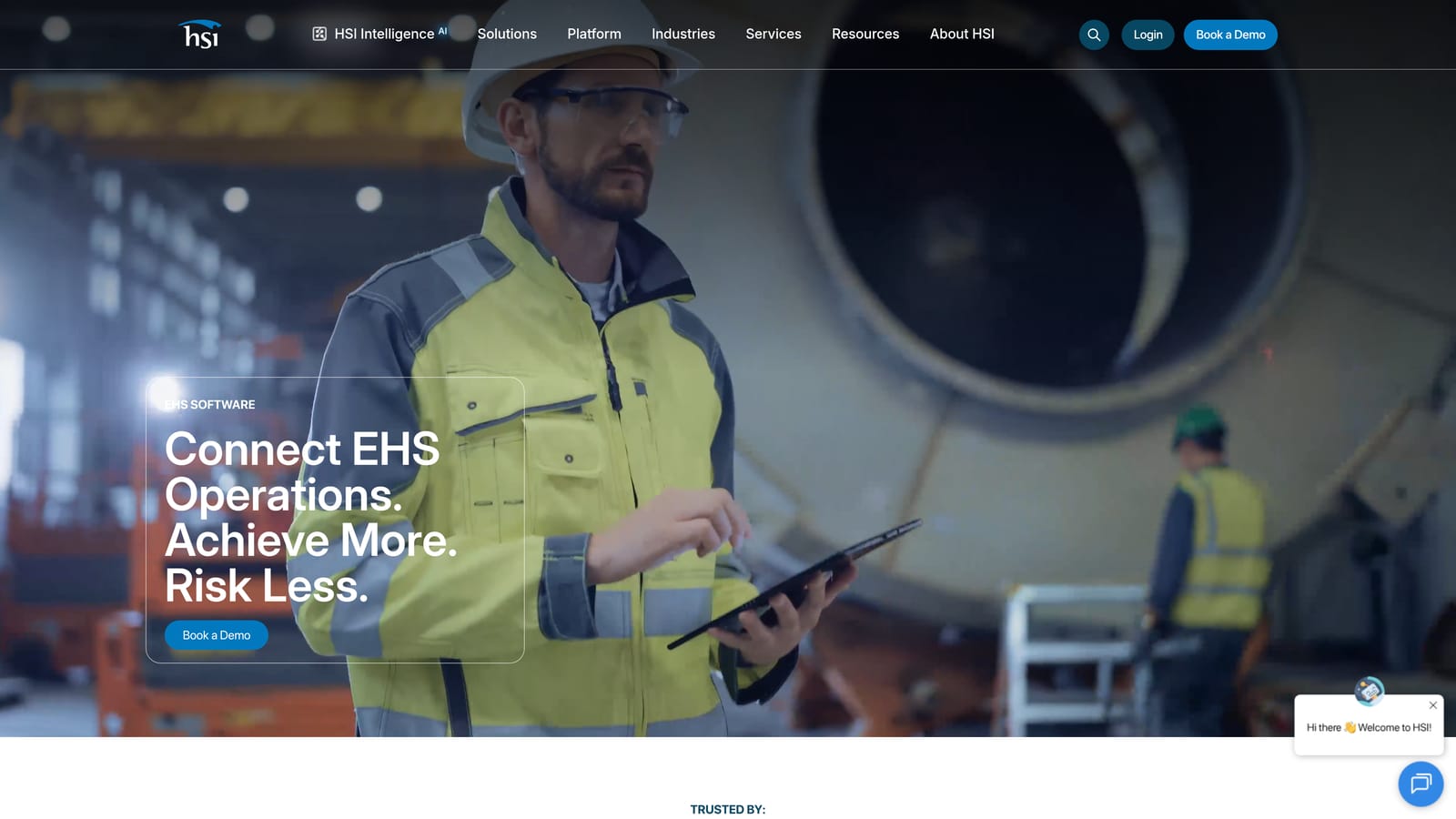
That blended pathway is its standout. Few platforms here pair online learning with a skills check, which matters because many employers and certifying bodies expect hands-on practice for CPR, AED and BLS. Verify OSHA guidance on first aid and CPR training and the rules of the certifying body before relying on an online-only course.
- Online CPR, AED and first aid courses for the classroom portion of training.
- BLS for healthcare providers, covering clinical staff requirements.
- Blended learning with an instructor skills session to satisfy hands-on expectations.
- Workplace safety titles for broader compliance topics.
- Certification card management so records stay organized.
Integrations center on instructor and training center tools, and LMS options should be verified directly. Setup is straightforward for individuals, though an employer coordinating a group needs someone to schedule skills sessions. The limitation is less depth on industrial hazard topics such as lockout/tagout or confined spaces.
Pricing is per course or program. See the website for current figures.
Best for: Employers who need CPR, AED, BLS and first aid certification programs.
5. TalentLMS
TalentLMS is a general LMS, meaning software that hosts courses, assigns them to people, and records results. It is built for teams that want to host their own safety courses and track completions without hiring a specialist.
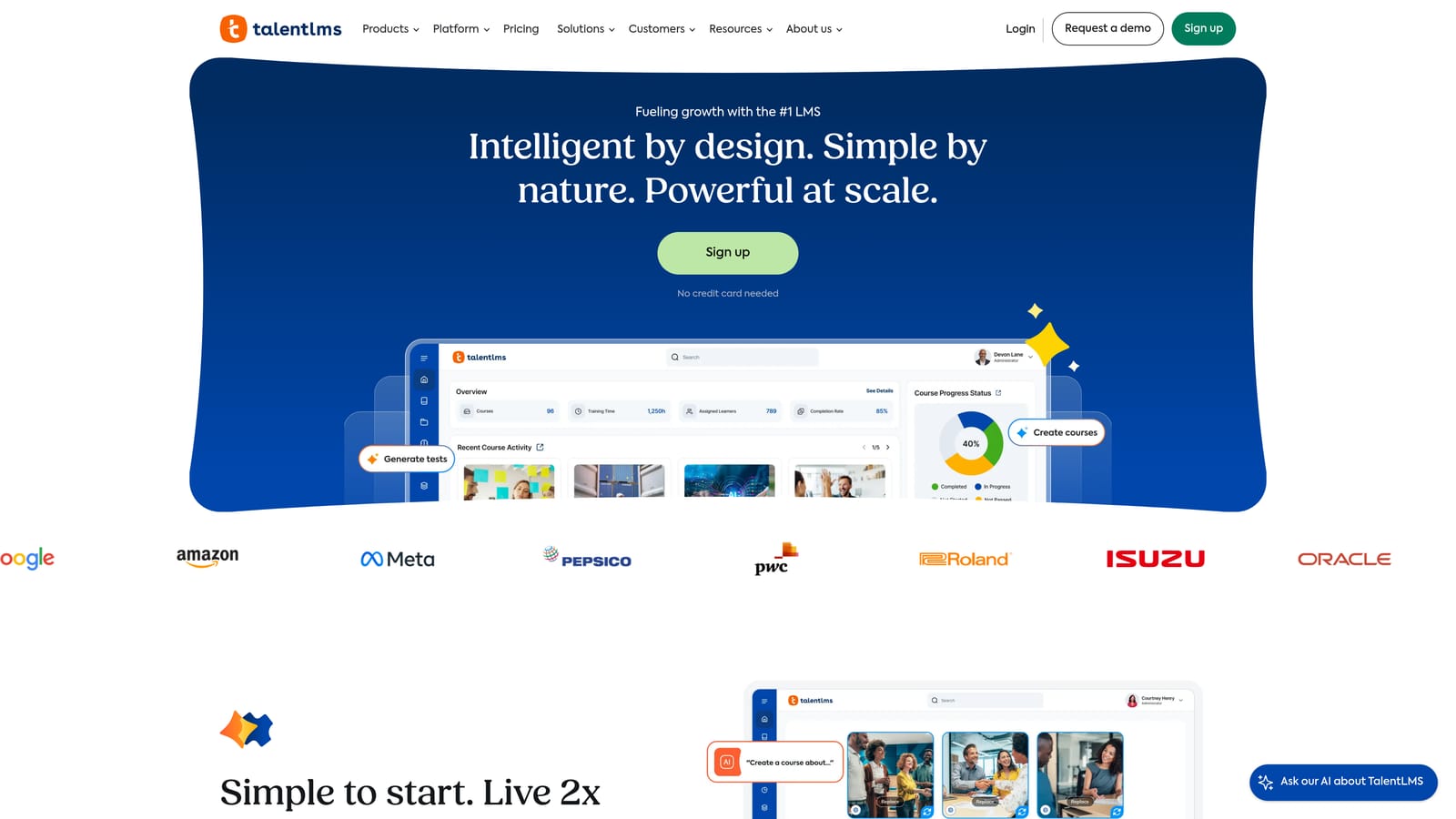
The limitation comes first here: its safety content library is limited, so you supply most of the material. If you have no existing procedures, videos or slide decks, you will be buying content elsewhere. If you do, it is the quickest route on this list to getting them online, and a self-serve team can launch without IT support.
- A course builder with video and quizzes to turn existing procedures into lessons.
- Role-based assignment so each job gets the right courses automatically.
- Automated certificates that save manual paperwork.
- A mobile app for workers away from a computer.
- Reporting dashboards for checking completion by person or group.
Integrations include Zapier, Salesforce, Zoom, Microsoft Teams and Slack. Day-to-day administration usually falls to an HR or training coordinator.
Pricing is tiered by user count. Verify current rates as of 2026, since plan structures change.
Best for: Small and mid-size teams with their own safety procedures to deliver online.
6. Absorb LMS
Absorb LMS is a configurable enterprise LMS known for reporting and automated recertification. It is designed for large organizations running training for several audiences, such as employees, contractors and customers, across many locations.
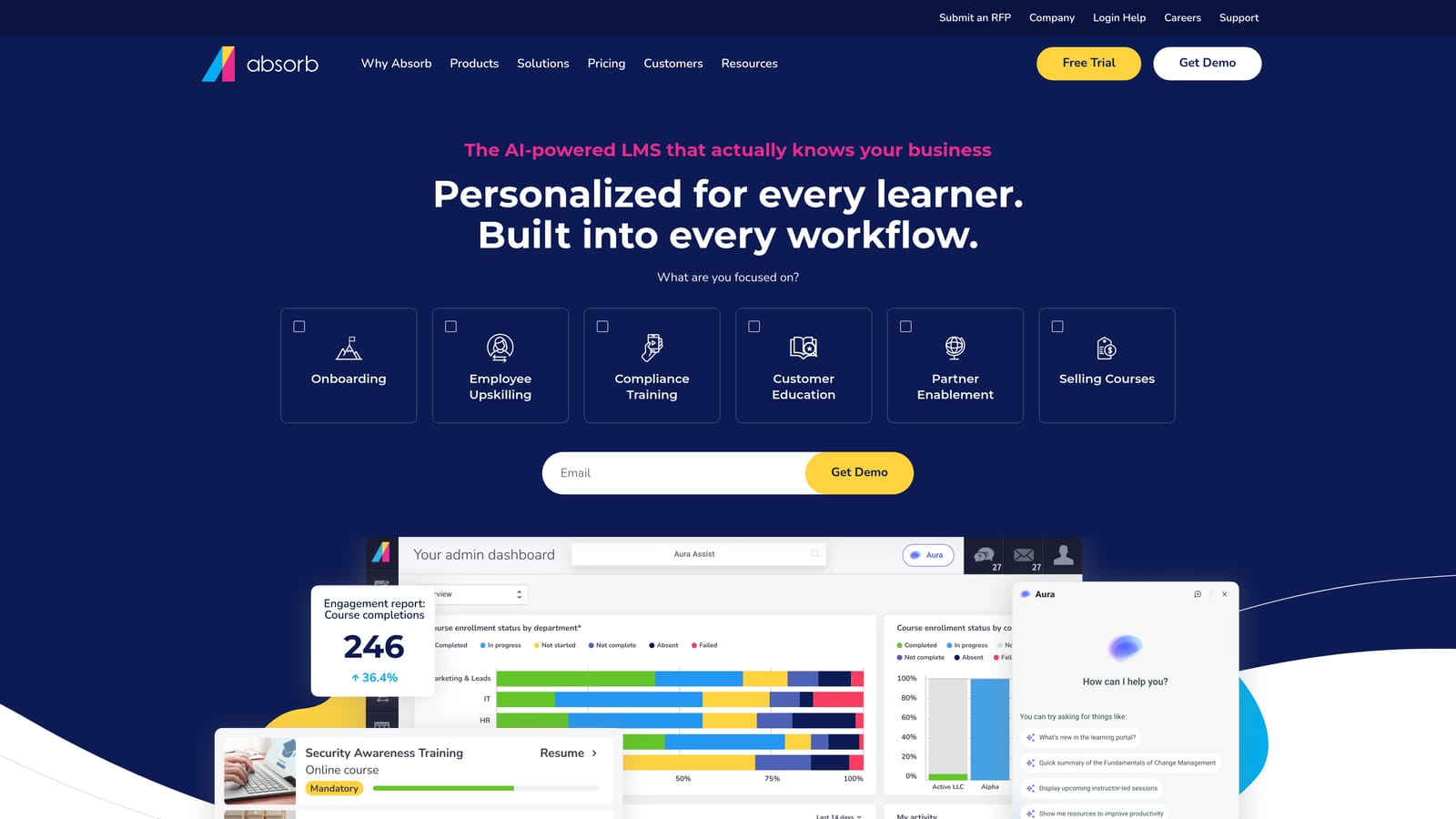
Its edge is depth of reporting and automation. When an auditor asks who completed a course, when, and whether a renewal is due, a well-configured Absorb setup can answer without a spreadsheet exercise.
- Learning paths that sequence required courses for each role.
- Automated recertification reminders that prompt learners before credentials lapse.
- Advanced reporting for audit-ready records across sites.
- A content marketplace for sourcing third-party courses.
- Ecommerce for selling courses to external learners such as contractors or customers.
Integrations include Salesforce, Workday, Zoom, and HRIS and SSO tools. Plan on an implementation phase and a dedicated administrator or learning team. The key limitation is that it has no safety-specific content focus, and third-party content costs extra, so budget for both platform and library.
Pricing is quote-based and generally reflects learner volume and configuration needs.
Best for: Enterprises needing audit-ready reporting across many locations.
7. iSpring Learn
iSpring Learn is an LMS paired with iSpring's authoring tools. It exists for teams that want to convert in-house procedures, site rules and equipment walkthroughs into trackable courses. SCORM is the common file standard that lets a course package report completion and scores to an LMS, and xAPI is a newer standard that records a wider range of learning activity.
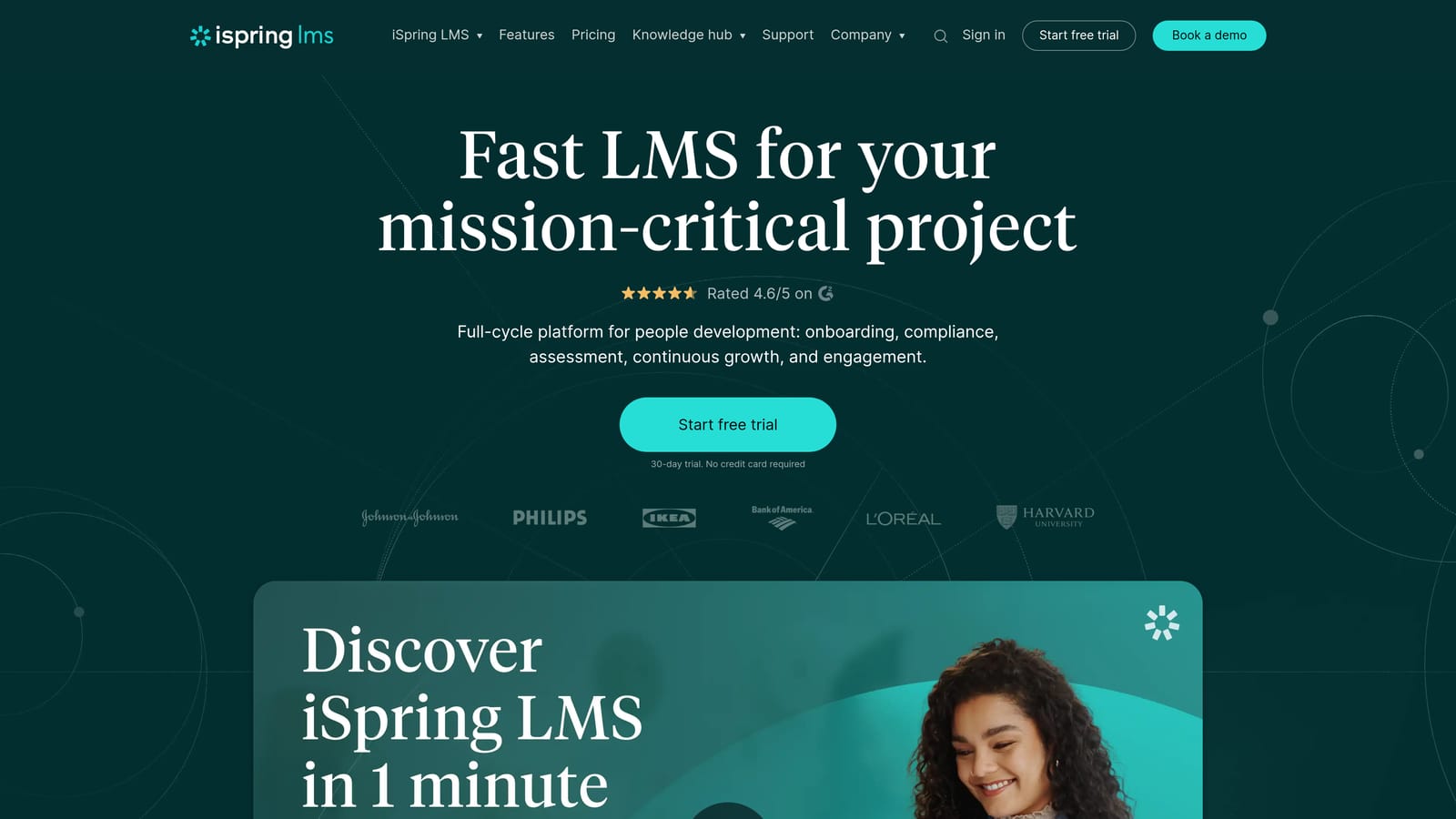
The tight link between authoring and LMS is what distinguishes it. A trainer can build a site-specific lesson in iSpring Suite, publish it, assign it and see results without exporting files between unrelated tools.
- SCORM and xAPI support, so existing courses from other sources can be uploaded.
- Quizzes and assessments that verify understanding, not just attendance.
- A mobile learning app for workers on the floor or in the field.
- Learning paths that group courses into required sequences.
- Authoring integration with iSpring Suite for fast publishing.
Integrations include Zoom, Microsoft Teams, Salesforce and SSO. It works best when someone in-house owns course creation, since there is no large ready-made safety library. Buyers without a trainer will need to license content separately.
Pricing is per active user. See the website for current rates.
Best for: Teams with an in-house trainer who builds custom safety courses.
8. Intelex
Intelex is an EHS software suite that includes a training management module tied to incidents, audits and job roles. It is a different kind of purchase from the rest of this list: training is one part of a broader safety management system.
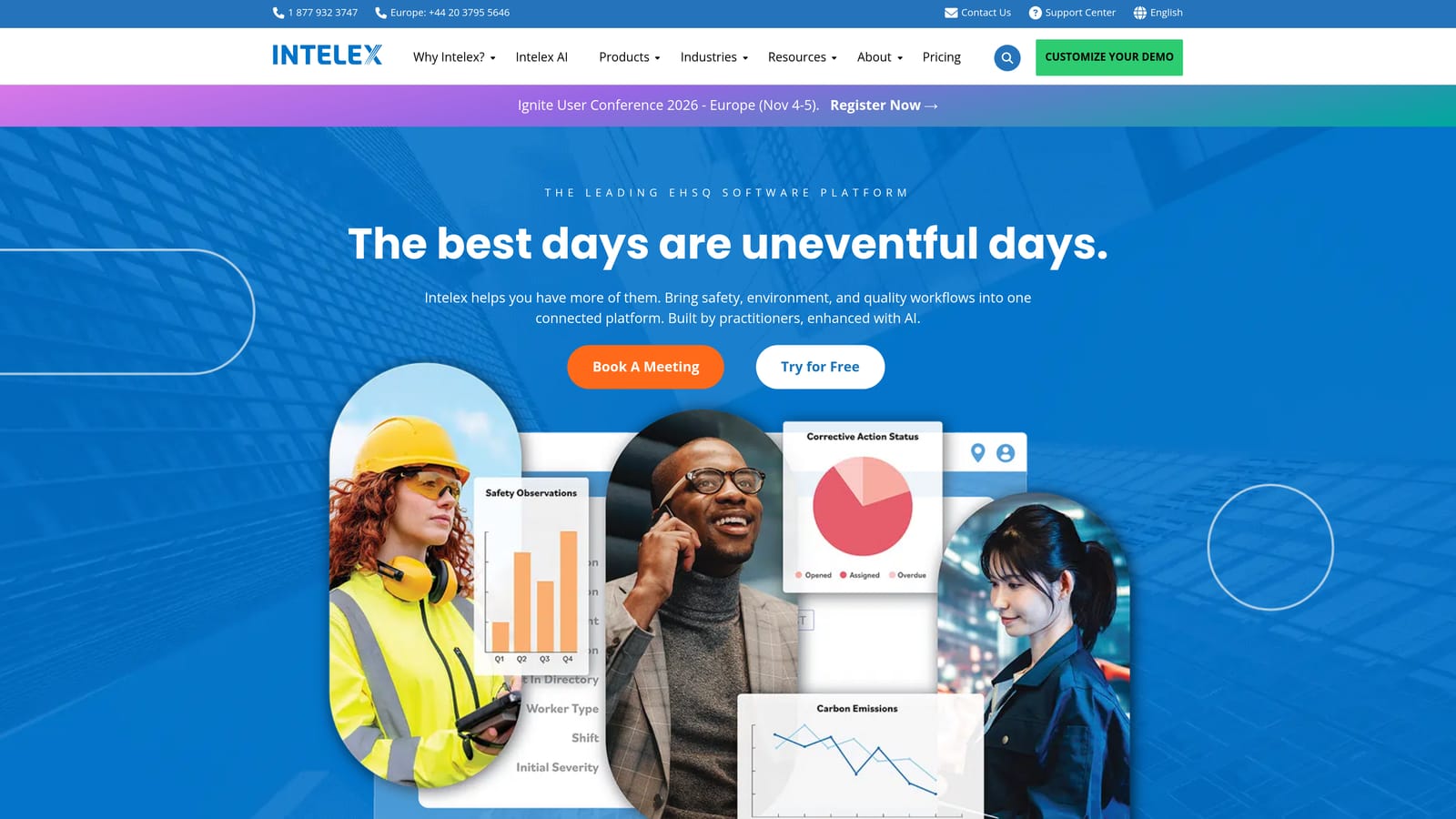
The distinguishing strength is that training requirements connect directly to incidents, audits and corrective actions. If an incident investigation concludes that operators need refresher training, that action can sit in the same system as the investigation and the record of completion.
- A training matrix by role, showing which courses each job requires.
- Incident and corrective action linking, so retraining follows real events.
- Audit management that ties findings to follow-up actions.
- Compliance tracking to see gaps before an inspection does.
- Reporting dashboards for leadership and regulators.
Integrations cover HR and ERP systems plus API access, though you should verify the current list. Implementation is substantial and usually involves EHS, IT and HR together. It is more platform than needed for teams that only want course delivery, and it does not replace a content library.
Pricing is quote-based and varies with modules and user numbers.
Best for: Organizations already investing in a full EHS management system.
Matching a Platform to Your Training Need
For frontline mobile training, SafetyCulture Training is the most natural fit, especially if you already run inspections. For regulated catalogs where you want content and tracking from one vendor, Vector Solutions is the stronger choice, while 360training works when you only need individual certificates. If your team writes its own procedures, TalentLMS or iSpring Learn will get them online fastest, and iSpring suits a dedicated trainer. For enterprise programs, Absorb LMS handles reporting at scale, and Intelex makes sense when training must connect to incidents and audits.
One caution applies to every platform above: online completion is not the same as compliance, and online-only CPR, AED or BLS is not accepted everywhere. Many employers and certifying bodies expect hands-on skills practice, so check OSHA guidance and your certifying body's rules. Software can deliver the knowledge portion and keep the records, but it cannot replace practicing compressions or using an AED on a manikin. That is where a provider like 360 Safety fits, with in-person CPR and BLS training plus AEDs, tourniquets and first aid products.
Ready to put safety into action? Whether you need CPR certification, workplace safety training, or guidance on selecting and maintaining life-saving equipment such as AEDs, we're here to help. Our training programs and safety solutions are designed to help individuals and organizations respond confidently when every second counts. Schedule your training today and take the next step toward creating a safer, more prepared workplace and community.