
Safety Compliance Software Cost: 2026 Pricing Guide
Few vendors publish prices, which makes safety compliance software cost hard to plan for. This guide compares 8 tools by OSHA coverage, pricing transparency, scalability, and company-size fit so safety managers and small business owners can shortlist options and know what to confirm with each vendor.
If you are budgeting for safety compliance software, you have probably noticed how few vendors publish a price. This list is for safety managers and small business owners who need to compare options anyway. The tools were chosen for regulatory coverage (OSHA recordkeeping, inspections, incidents, training), pricing transparency, scalability, and fit for different company sizes. Any price information below is directional only. Confirm current rates, limits, and contract terms directly with each vendor before you commit.
Quick Comparison of Safety Compliance Software Costs
- SafetyCulture: small and mid-size teams that want quick-start inspections; free tier, then paid per user per month; the fastest self-serve rollout with mobile checklists frontline staff adopt quickly.
- Vector EHS Management: mid-size, education, and public-sector organizations; quote-based; pairs EHS management with a safety training library from the same vendor.
- Cority: large employers managing worker health and safety together; quote-based; occupational health and medical surveillance data integrated with safety records.
- Intelex: companies combining EHS and quality programs with a dedicated admin; quote-based; highly configurable workflows built around your own processes.
- EHS Insight: mid-market manufacturers that want to start small and expand; quote-based, modular; a modular suite focused on OSHA compliance reporting.
- Benchmark Gensuite: multi-site enterprises building a broad program; quote-based, per-app subscriptions; the widest range of separately licensed apps on one platform.
- HammerTech: general contractors managing many subcontractors; quote-based; contractor onboarding and site access tied to compliance status.
- Sphera: process industries with high-hazard operations; quote-based enterprise licensing; process safety depth for chemical, energy, and heavy industry.
1. SafetyCulture
SafetyCulture is a mobile-first inspection and operations platform built around checklists, issue tracking, and training for frontline teams. It is designed for buyers who want inspections off paper quickly and do not want a months-long implementation project.
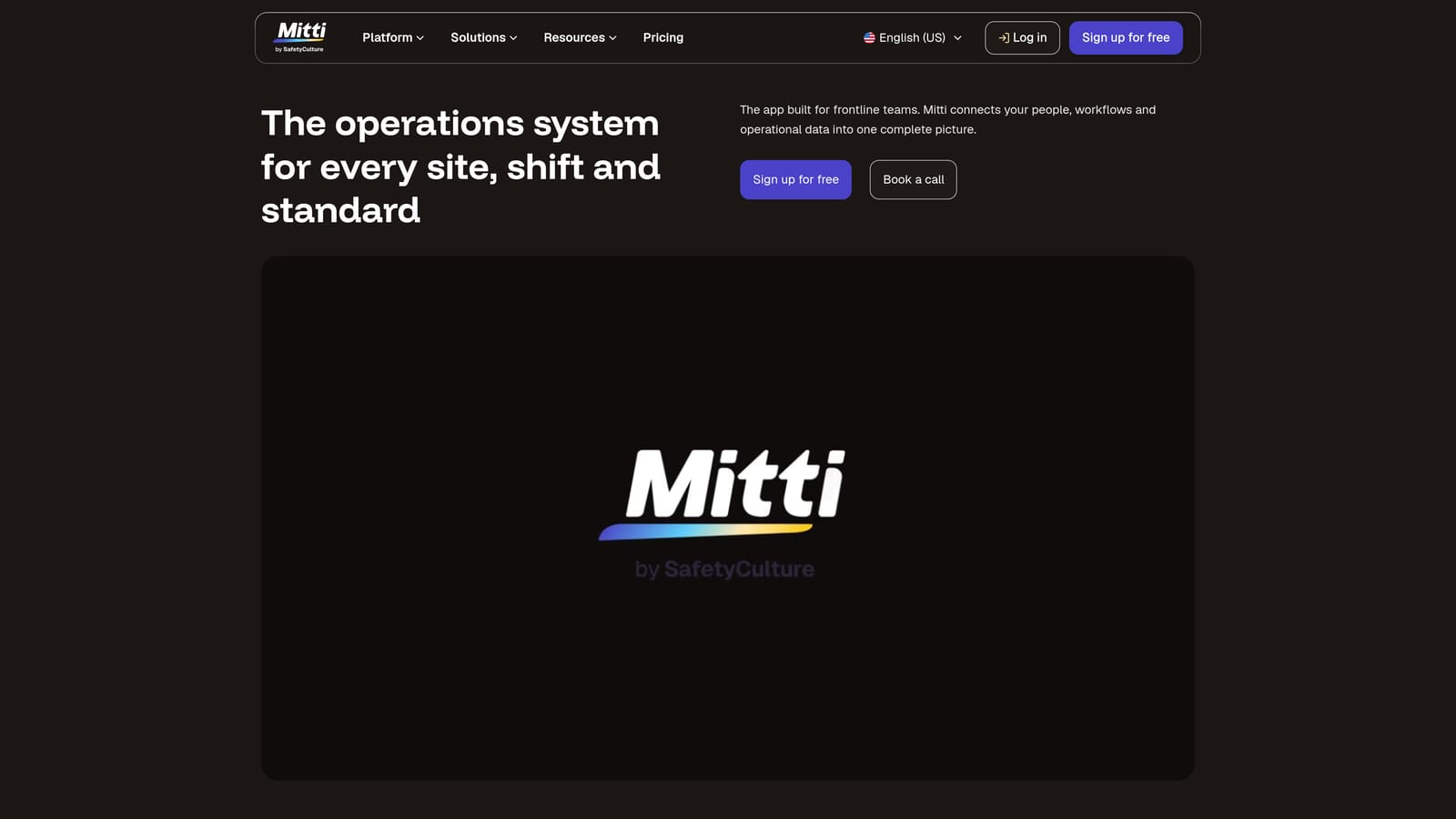
Its distinctive strength on this list is speed of rollout. A supervisor can build or adapt a checklist template, assign it, and have crews completing inspections on phones within days, and the app is simple enough that frontline staff tend to adopt it without heavy coaching. Most other tools here are sales-led and take far longer to configure.
- Digital inspection checklists replace paper walkthroughs and give you time-stamped records for audits.
- Corrective actions and issue tracking assign problems to an owner with a due date, so findings do not stall.
- Incident reporting lets workers log events from the field instead of waiting for end-of-shift paperwork.
- Training courses deliver short lessons to the same devices crews already use for inspections.
- Sensor monitoring flags conditions such as temperature without a manual check.
It connects to Slack, Microsoft Teams, and Zapier, and offers API access, so alerts and workflows can flow into tools your team already uses. Setup is largely self-serve, and day-to-day ownership usually sits with a safety lead or operations manager rather than an IT administrator.
The limits matter for cost planning. Pricing is per seat, so expenses climb as you add field workers, and it lacks the deep enterprise EHS modules (such as occupational health records or process safety) that larger regulated employers need. It is a weaker fit if you need a single system of record for complex multi-site compliance programs.
Pricing: a free tier is available, with paid plans charged per user per month. As of October 2026, check the vendor's site for current free tier limits and paid rates, since both change.
Best for: Small and mid-size teams wanting low-cost, quick-start inspections.
2. Vector EHS Management
Vector EHS Management is EHS software from Vector Solutions covering incidents, inspections, audits, and corrective actions. It is aimed at organizations that want incident and audit management alongside training content, particularly in education and the public sector.
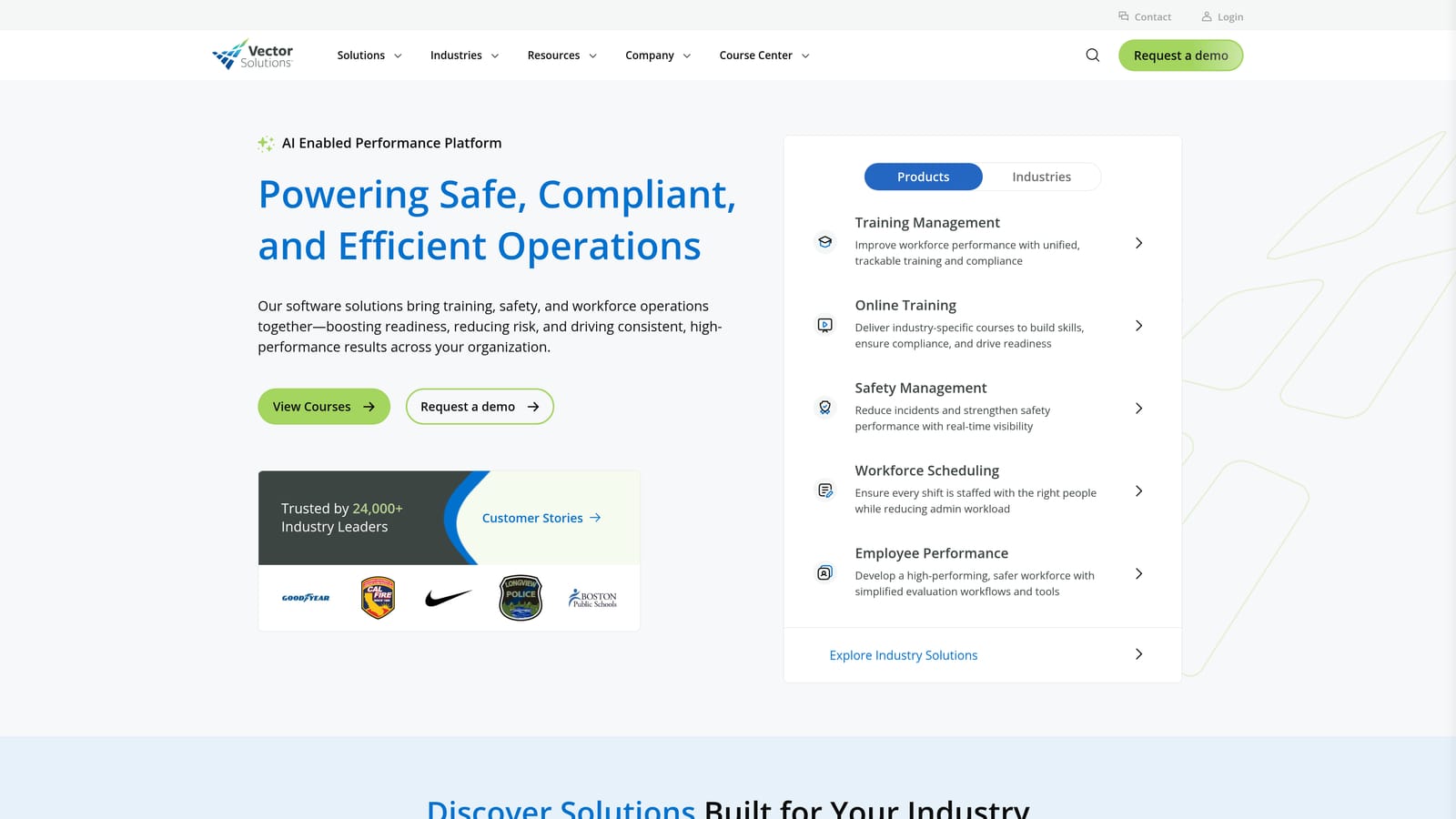
What sets it apart is the pairing with a safety training library from the same vendor. Instead of buying a compliance system and a separate course provider, you can negotiate both together and connect training completion to incident and inspection records. That can simplify vendor management and sometimes the contract.
What you get
- Incident management captures events and investigations in one place, so trends are visible.
- Inspections and audits standardize routine checks and produce records you can show an inspector.
- Corrective action tracking keeps follow-up tied to named owners.
- OSHA reporting support reduces the manual work of preparing recordkeeping logs.
- Dashboards give managers a view of open items and recurring problems.
Setup, fit, and limits
Integrations include HR systems, Vector Solutions training, and an API. Expect a sales-led purchase and a real onboarding period, with an administrator who owns configuration. Pricing is less transparent than self-serve tools, and the implementation timeline is longer than a mobile checklist app.
It is not the right choice for a ten-person shop that only needs digital walkthroughs. Pricing is quote-based, and the quote will depend on scope, such as the modules and training content you include and the size of your organization. Confirm module names and packaging with the vendor, as naming under Vector Solutions has evolved.
Best for: Mid-size, education, and public-sector organizations wanting software and training together.
3. Cority
Cority is an enterprise platform that spans safety, occupational health, industrial hygiene, and sustainability. It is built for large employers that treat worker health and workplace safety as one program.
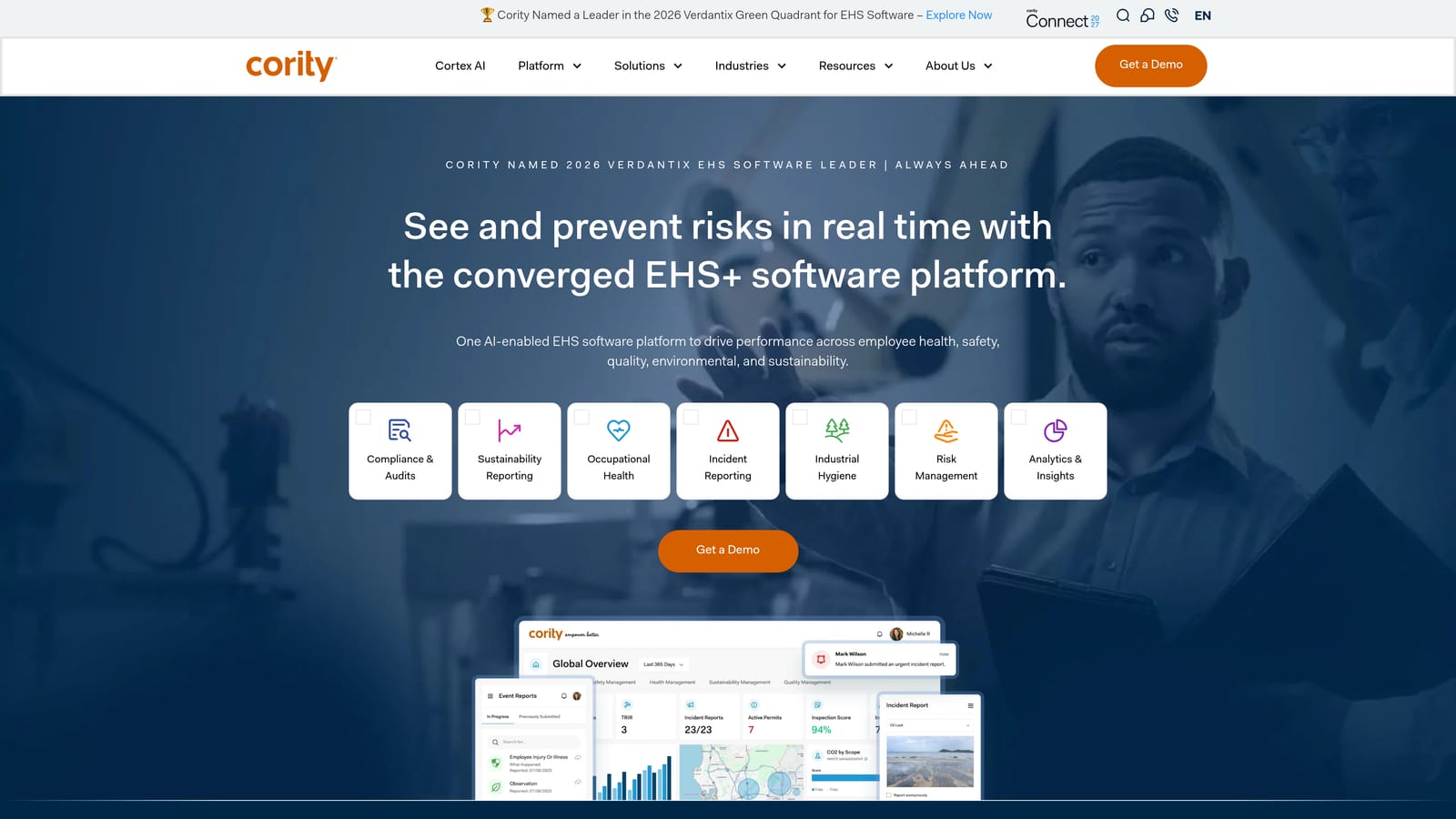
Its clearest differentiator is the integration of occupational health and medical surveillance data with safety records. If you run on-site clinics, respiratory fitness programs, hearing conservation, or exposure monitoring, linking those records to incidents and audits is something most checklist-focused tools on this list do not attempt.
- Safety incident management records events, investigations, and follow-up actions.
- Occupational health records keep medical surveillance data in a controlled, confidential system.
- Industrial hygiene tracks exposures and sampling so you can show monitoring is happening.
- Audit management schedules and documents audits across locations.
- Sustainability reporting lets safety and environmental data share a platform.
Integrations cover HRIS, ERP, and an API, which matters because health and safety data relies on accurate employee records. Implementation is a project, typically involving vendor services, data migration, and an internal owner from EHS, HR, or occupational health.
The limitation is weight. Small teams with simple inspection and recordkeeping needs will pay for capabilities they never use, and the rollout effort will outstrip the benefit. Pricing is quote-based, and the factors that usually move such quotes include the modules licensed, number of employees or sites, and services for implementation. No published figures exist to rely on, so request a written proposal that separates license from services.
Best for: Large employers managing worker health and safety together.
4. Intelex
Intelex is a configurable EHS and quality management platform, owned by Fortive as of this writing (verify current ownership and branding with the vendor). It is built for organizations whose processes do not match an off-the-shelf template.
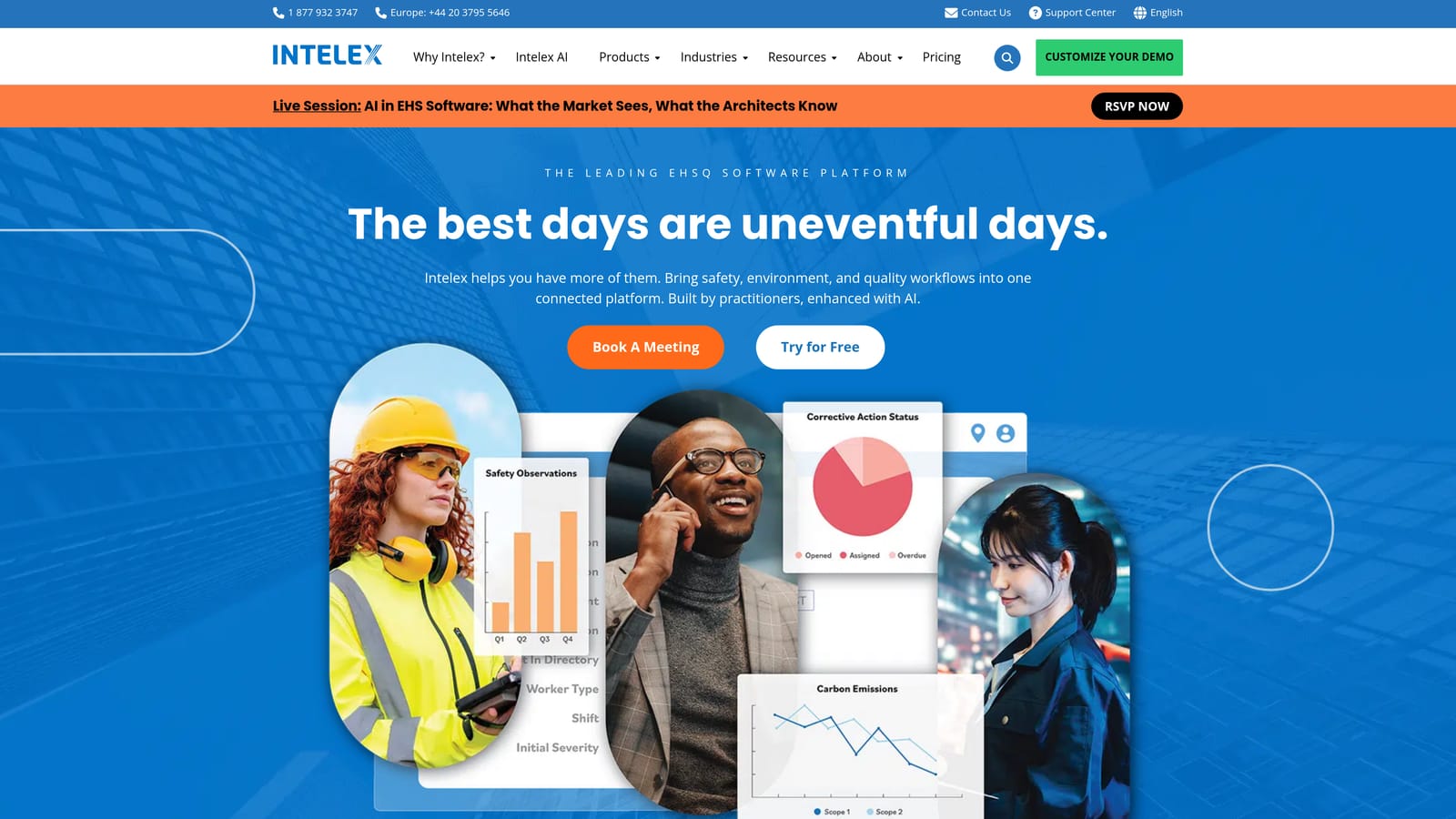
The standout trait is configurability. Workflows, forms, and approvals can be shaped around how your company actually investigates incidents or handles audits, and it can cover EHS and quality in one system. That is valuable if you have an established process you refuse to rewrite for software.
- Configurable workflows route tasks and approvals the way your organization works.
- Incident management documents events and investigations with consistent fields.
- Audits and inspections support scheduled checks with tracked findings.
- Risk assessment helps you rank hazards and document controls.
- Document control keeps policies and procedures versioned and current.
It integrates with ERP and HR systems and offers an API. Setup is where cost can creep. Configuration takes effort, outside consulting is common, and you need a dedicated administrator to maintain it, so total cost of ownership can exceed the license line by a wide margin.
It is a poor match for companies without admin capacity or those wanting to start in a week. Pricing is quote-based and typically shaped by users, modules, and services. When comparing quotes, ask what configuration the vendor expects you to buy and how much of it your own admin could handle.
Best for: Companies combining EHS and quality programs with a dedicated admin.
5. EHS Insight
EHS Insight is modular EHS software for compliance reporting, incidents, inspections, and training. It targets mid-market companies, with manufacturers as its core audience.
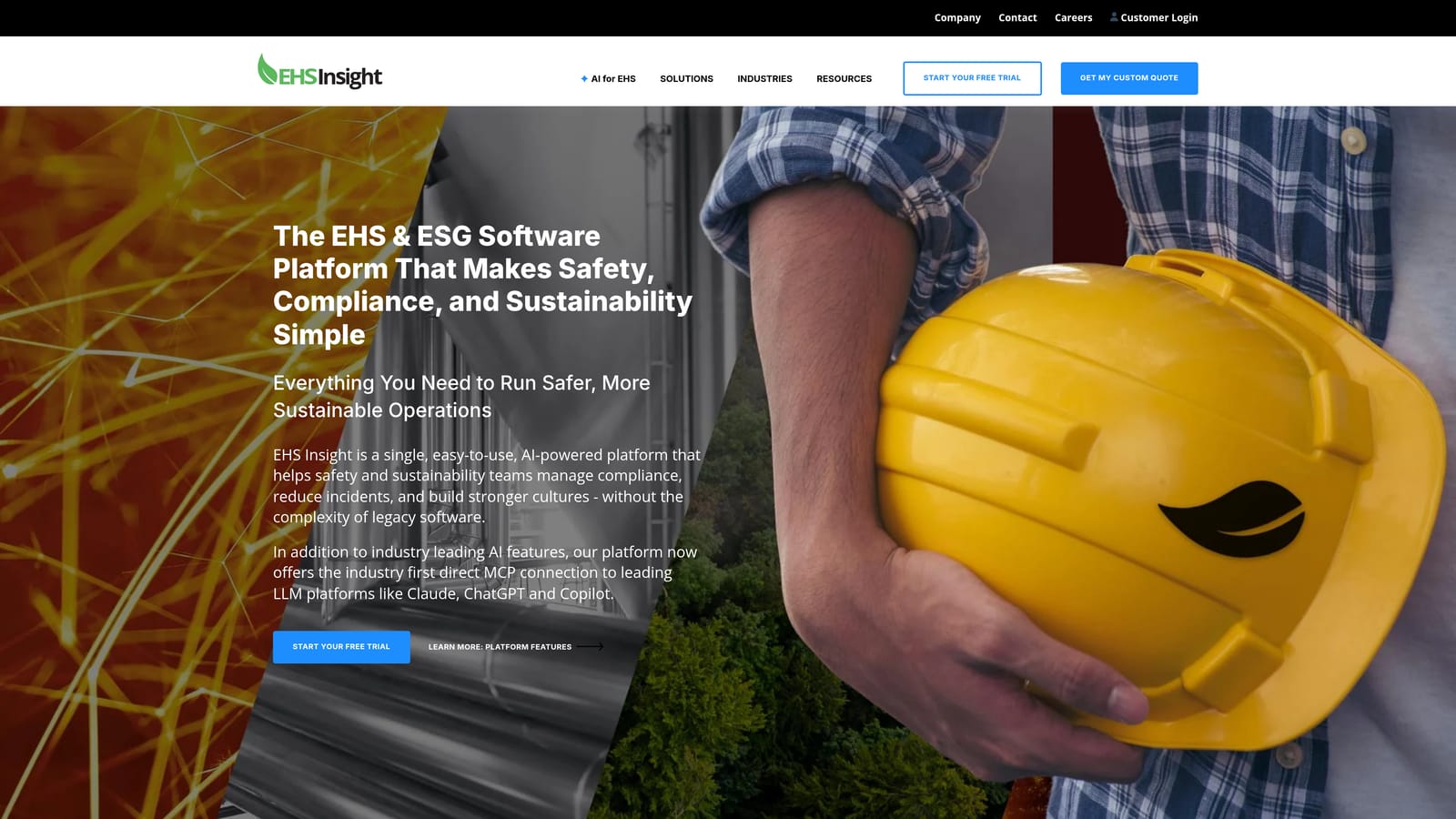
Its edge is the combination of modularity and a focus on OSHA compliance reporting. Because you can start with a few modules, such as incident tracking and recordkeeping, and add others later, your first-year spend can be tied to your most pressing obligation instead of a full suite.
That recordkeeping focus is worth understanding. OSHA requires many employers to maintain injury and illness records on Form 300 (the log), Form 300A (the annual summary), and Form 301 (the incident report). Software that populates and organizes these forms removes a recurring administrative burden, though you remain responsible for deciding what is recordable.
- OSHA recordkeeping support helps generate the logs and summaries you must retain.
- Incident tracking centralizes reports so investigations are not scattered across email.
- Inspections record findings and assign follow-up.
- Training management tracks who has completed required courses and who is overdue.
- Analytics surface trends such as repeat injury types or locations.
Integrations include HRIS, business intelligence tools, and an API. It is less mobile-first than checklist-focused apps, so crews doing frequent field inspections may find it less convenient than SafetyCulture. Pricing is quote-based and modular, so cost rises as you add modules, users, or sites. Ask for each module priced separately so you can see what the expansion path will cost.
Best for: Mid-market manufacturers starting with a few modules and expanding.
6. Benchmark Gensuite
Benchmark Gensuite offers a large catalog of EHS, sustainability, and risk apps on a single platform. It is built for enterprises that want to assemble a broad program over time.
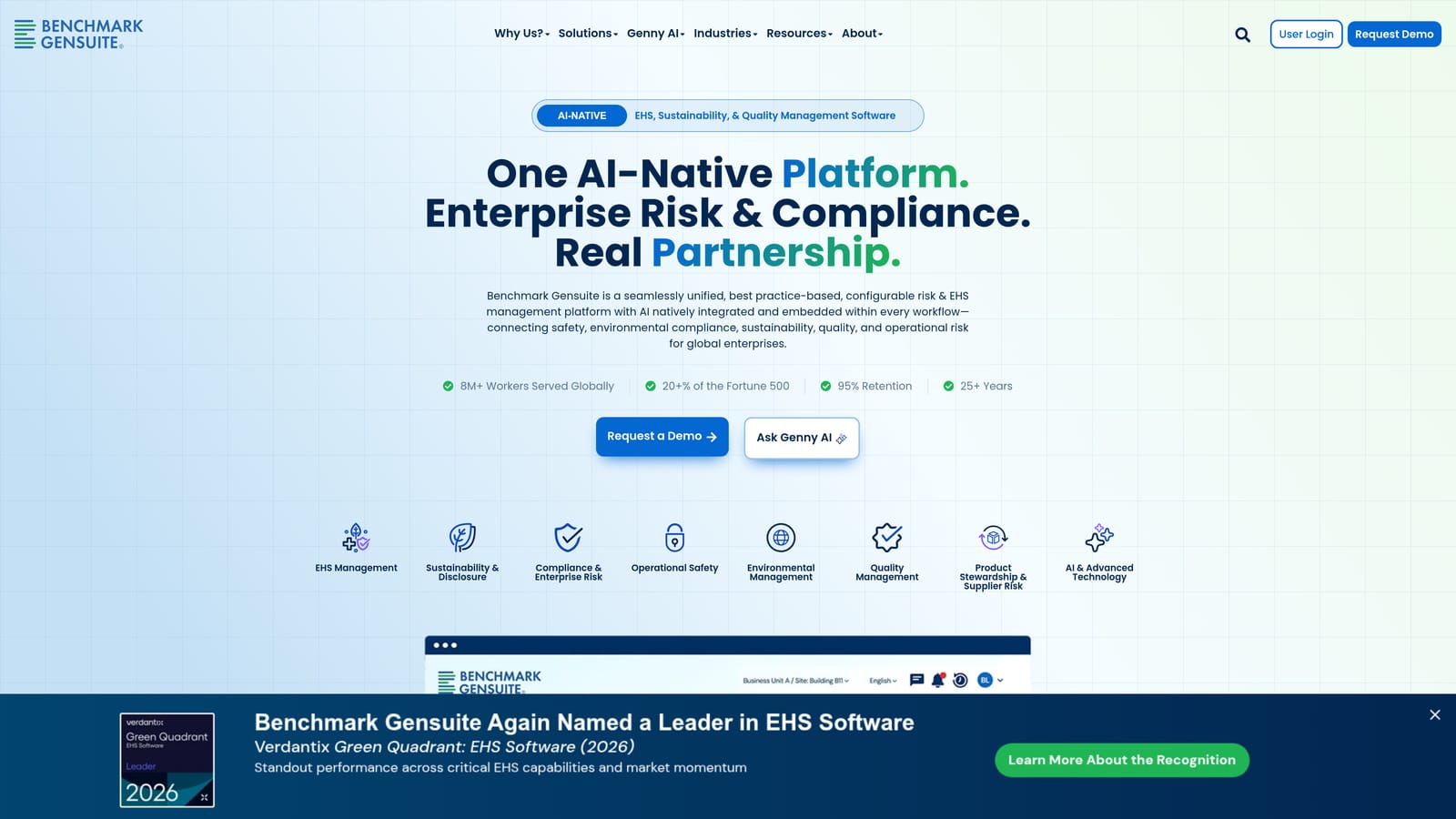
The distinguishing factor is breadth. It offers the widest range of separately licensed apps here, from incident and audit management to permitting and risk management, plus sustainability applications. A company can add capability as its program matures without changing platforms.
- Incident management captures events and investigations across sites in a common format.
- Audit management standardizes audits for consistent scoring and follow-up.
- Permitting controls high-risk work authorizations such as hot work.
- Risk management documents hazards, assessments, and controls.
- Sustainability apps let environmental and safety reporting share one environment.
It integrates with ERP and enterprise data systems and provides an API. Setup scales with scope: more apps and sites mean more configuration, training, and governance. Expect an internal program owner and likely vendor services for larger rollouts.
The trade-off is complexity. App-by-app licensing is flexible, but it can confuse smaller buyers and make total cost hard to forecast, because each added app has its own subscription. Pricing is quote-based with per-app subscriptions. Ask for a multi-year price schedule that shows what each future app will cost, so a modest first purchase does not become a surprise later.
Best for: Multi-site enterprises building a broad EHS and sustainability program.
7. HammerTech
HammerTech is a construction workforce and site safety management platform. It is designed for contractors who must prove that every worker on a project is qualified before they step on site.

Its distinctive feature is linking contractor onboarding and on-site access to compliance status. Workers complete digital inductions, subcontractors are prequalified, and access can depend on whether credentials and training are current. No other tool on this list is built around that gatekeeping workflow.
- Digital site inductions get workers oriented before arrival and record completion.
- Subcontractor prequalification screens firms on safety and documentation before they start work.
- Access control ties entry to valid training and credentials.
- Incident reporting captures events on the project where they happen.
- Compliance tracking shows which workers or firms have expiring or missing items.
It integrates with construction management software and access control hardware, plus an API. Setup involves coordination with project teams and, where you use gates or turnstiles, hardware. A project or safety manager typically runs it day to day, with subcontractors doing much of the data entry.
It is built for construction, so it is a poor fit for offices, factories, or warehouses. Pricing is quote-based. Costs are commonly influenced by the number of projects and workers, though you should confirm the model with the vendor, including whether hardware is billed separately.
Best for: General contractors managing many subcontractors on projects.
8. Sphera
Sphera provides enterprise risk, process safety, and product stewardship software. It is aimed at companies in chemicals, energy, and other heavy industries where a single failure can be catastrophic.
Process safety depth is what separates it. Tools for management of change and operational risk assessment address hazards that general incident and inspection tools do not, such as changes to equipment or procedures in high-hazard facilities.
- Process safety management supports programs for facilities handling hazardous materials.
- Management of change documents and approves modifications before they create new risks.
- Operational risk assessment helps teams evaluate and prioritize risks in live operations.
- Incident management records events and investigations alongside process data.
- Product stewardship supports chemical and product compliance obligations.
It integrates with ERP and asset management systems, along with an API, which matters because process safety depends on equipment and maintenance records. Implementation is a substantial enterprise project with dedicated internal owners, often across engineering, operations, and EHS.
It is not for small or non-industrial businesses. Enterprise pricing and complexity would swamp the benefit if your risks are slips, strains, and ordinary inspections. Pricing is quote-based enterprise licensing, so ask for a breakdown of license, implementation, and ongoing support before comparing it with any other bid.
Best for: Process industries with high-hazard operations.
Matching a Tool to Your Budget and Asking Vendors the Right Cost Questions
Safety compliance software cost is rarely just the license. Per-seat pricing charges by user, per-module pricing charges for each capability, and per-site pricing charges by location. Implementation, configuration, and support fees sit on top. Equally, software alone does not make a company compliant. It organizes records and reminders, but your people still have to inspect, investigate, and train.
Three standout picks cover most situations:
- Small team on a budget: SafetyCulture, because the free tier and self-serve rollout keep early spending low.
- Mid-size manufacturer: EHS Insight, because modules let you start with OSHA recordkeeping and add more later.
- Construction: HammerTech, for subcontractor onboarding and access control.
- Enterprise or process industry: Cority for combined health and safety, Benchmark Gensuite for broad multi-site programs, or Sphera for high-hazard operations.
Before signing, put these questions to every vendor in writing:
- Seats: who counts as a user, and do occasional or read-only users cost extra?
- Modules: which features in the demo are separately licensed?
- Implementation: what are the setup, configuration, data migration, and training fees?
- Support: what level is included, and what costs more?
- Renewal increases: is there a cap on annual price increases, and what is the contract term?
Some safety needs never appear in a software budget. CPR and BLS training, AEDs, tourniquets, and first aid supplies are what protect people in the first minutes of an emergency, and no compliance platform replaces them.
Ready to put safety into action? Whether you need CPR certification, workplace safety training, or guidance on selecting and maintaining life-saving equipment such as AEDs, we're here to help. Our training programs and safety solutions are designed to help individuals and organizations respond confidently when every second counts. Schedule your training today and take the next step toward creating a safer, more prepared workplace and community.