
Top Osha Compliance Solutions: 9 Tools Compared 2026
This guide sorts nine of the top OSHA compliance solutions by the job each does best, including inspections, training, injury recordkeeping, chemical safety, and emergency response. Small and midsize employers can use the comparison, selection criteria, and stated limits of each option to match a tool to a specific compliance gap instead of searching for one all-in-one product.
Safety managers, HR leads, and owners who have to show OSHA compliance rarely need one product. They need several jobs done: inspections, training, injury recordkeeping, chemical safety, and emergency response. This list sorts the top OSHA compliance solutions by the job each does best, so you can match a tool to a gap instead of hunting for a single winner. Tools were chosen on OSHA-relevant coverage, ease of rollout for non-specialist safety staff, transparency of pricing, and the clear limits of each option. 360 Safety is the publisher of this article and appears first; it is described on the same terms as the rest.
Quick Comparison of the Nine Solutions
- 360 Safety: employers that need trained first aid responders and emergency equipment on site; pricing on website; pairs hands-on CPR and BLS training with AEDs, tourniquets, and first aid products from one source.
- SafetyCulture: small teams digitizing walkthroughs and hazard audits; free tier, paid plans on website; the quickest move from paper checklists to mobile inspections.
- VelocityEHS: manufacturers and industrial sites with chemical hazards; quote-based; SDS and chemical management alongside OSHA recordkeeping forms.
- Intelex: multi-site companies needing tailored workflows; quote-based; highly configurable processes across sites and regulatory regimes.
- Cority: employers with medical surveillance or exposure monitoring duties; quote-based; native occupational health data tied to safety records.
- KPA Flex: companies without a dedicated safety professional; quote-based; safety consultants included with the software.
- ClickSafety: contractors and workers needing OSHA 10/30 cards; per-course pricing on website; construction-specific Outreach courses and site training.
- Vector Solutions: employers needing documented training across many OSHA topics; quote-based; a broad course catalog managed in one learning system.
- OSHA On-Site Consultation Program: small businesses wanting an independent first hazard review; free; expert assessment with no citations or penalties from the consultation.
1. 360 Safety
360 Safety provides CPR and BLS training along with life-saving equipment, and it covers the workplace first aid and emergency response side of OSHA expectations. It is designed for employers who need people on site who can act in a medical emergency, and the gear for them to act with. It is also the publisher's own company, so weigh this entry with that in mind.
What sets it apart on this list is the combination. Most other entries are software or courses. 360 Safety pairs hands-on lifesaving training with the physical equipment (AEDs, tourniquets, first aid kits) in one source, which means the people trained and the devices they will pick up come from the same relationship.
The regulatory context matters here. The first aid provision at 29 CFR 1910.151(b) expects trained first aid responders to be available when there is no nearby infirmary or clinic. OSHA recommends AEDs in many workplaces but does not mandate them, so equipment decisions come down to your risk profile and your judgment.
- CPR training gives designated employees practical skills for cardiac emergencies.
- BLS training suits staff who need a higher level of response skill, such as those in healthcare-adjacent roles.
- AEDs put defibrillation within reach of trained responders before EMS arrives.
- Tourniquets support bleeding control in higher-risk settings such as industrial and construction work.
- First aid products let you stock and maintain kits matched to your site.
It is not a software platform, so there are no integrations to configure, and rollout is mostly a matter of scheduling training and placing equipment. The main limitation is scope: it does not handle inspections, injury recordkeeping, or SDS management, so it must be paired with a compliance platform. Pricing is listed on the 360 Safety website and depends on the training format, group size, and equipment chosen.
Best for: Employers that need trained first aid responders and emergency equipment on site.
2. SafetyCulture
SafetyCulture is a mobile-first inspection and workflow platform for audits, checklists, and corrective actions. It is built for teams whose safety program currently lives on clipboards and spreadsheets.
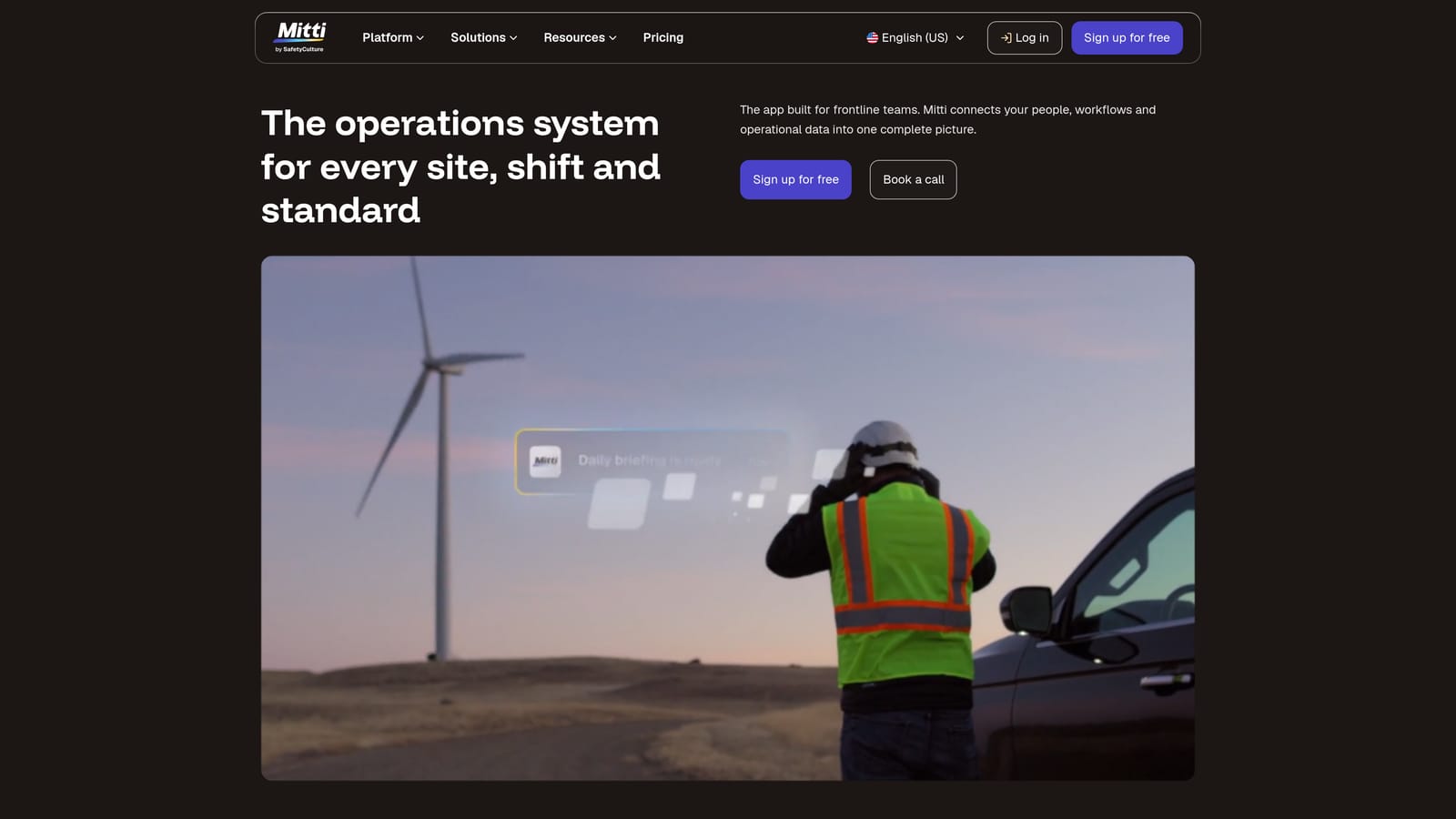
Its distinct strength is speed of adoption. Supervisors can build a template, run an inspection on a phone, and assign a fix in the same flow, with a free entry tier that lets you test it before committing budget. Confirm the current free tier limits on the vendor's site, since they change.
- Customizable inspection templates let you mirror your own walkthroughs, from forklift checks to housekeeping audits.
- Offline mobile app keeps inspections going in basements, yards, and remote sites without signal.
- Corrective action assignment turns a failed checklist item into a tracked task with an owner.
- Sensors and reporting dashboards show trends across sites and flag recurring problems.
It connects with Slack, Microsoft Teams, and Zapier, and offers API access for custom links. Setup is light, and a safety coordinator or site supervisor can usually run it day to day without IT help.
The limitation is scope. It is not a full OSHA recordkeeping or chemical management system, so you will not generate OSHA 300 logs or manage SDS libraries here. Pricing starts with a free tier, and paid plans are per seat, so cost rises as more inspectors join. Check the website for current figures.
Best for: Small teams digitizing walkthroughs and hazard audits.
3. VelocityEHS
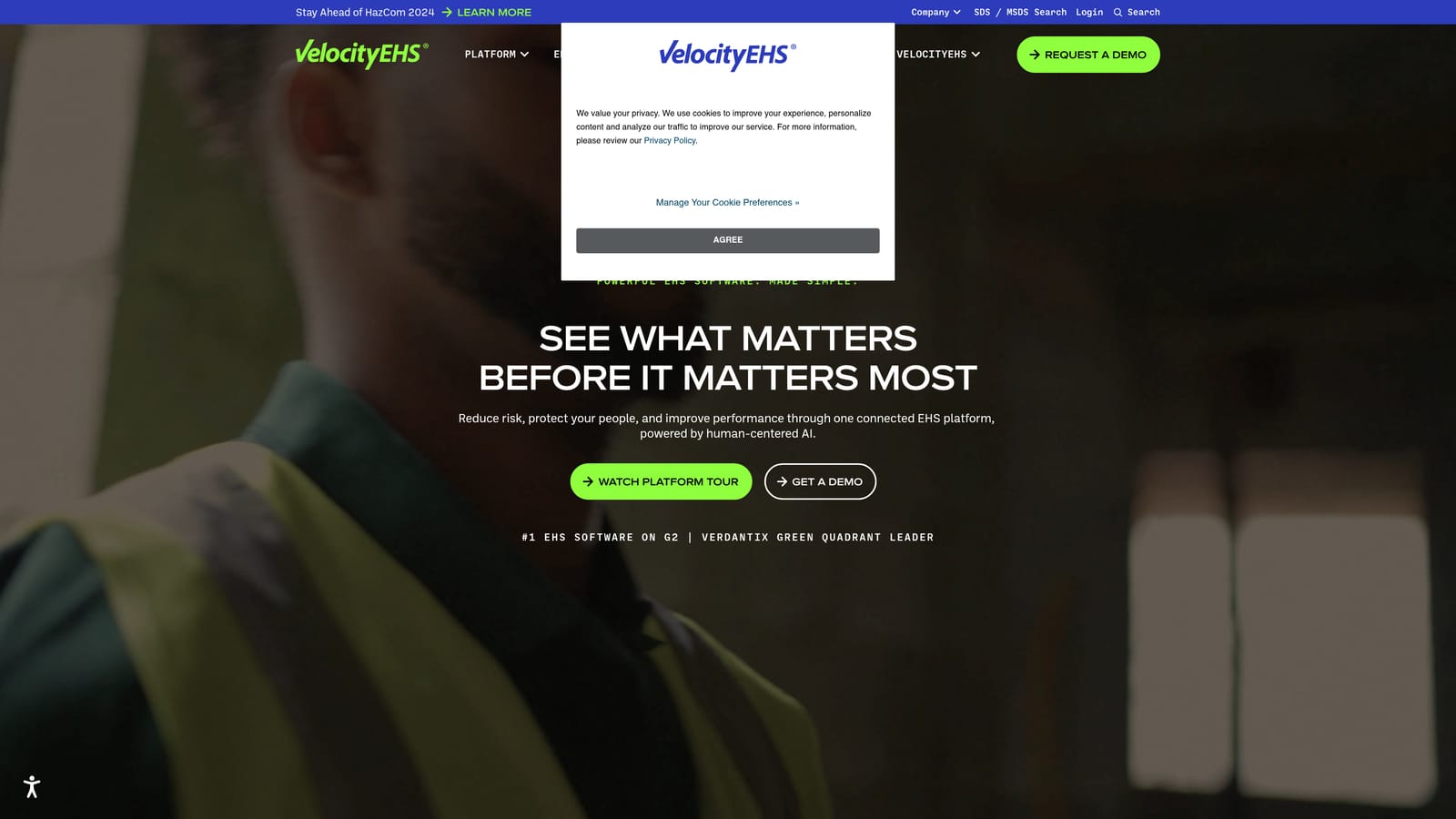
VelocityEHS is a cloud EHS suite with incident, chemical, and OSHA recordkeeping modules. It targets employers whose compliance burden involves hazardous materials and a steady flow of injury paperwork.
Recordkeeping and chemicals
Two terms matter here. The OSHA 300 log is the running record of work-related injuries and illnesses, summarized annually on the 300A and supported by the 301 incident report. An SDS (safety data sheet) is the manufacturer document describing a chemical's hazards and handling. VelocityEHS handles both sets in one system, and its depth on SDS and chemical management is the standout against most of this list.
- Incident management captures events and moves them through investigation and follow-up.
- OSHA 300/300A/301 forms are populated from incident data, reducing re-keying.
- SDS and chemical management keeps sheets current and accessible to the workers who handle the products.
- Ergonomics and training modules extend coverage to common injury drivers and documentation.
Rollout and cost
It integrates with HR and ERP systems through an API and supports single sign-on. Expect a guided implementation and an administrator, typically an EHS manager, who owns the system. Electronic submission rules under 29 CFR 1904.41 depend on employer size and industry, so verify current thresholds before assuming they apply to you.
The trade-off is cost and weight. Pricing is quote-based and modular, so each added module raises the bill, and very small employers may be overbuilt.
Best for: Manufacturers and industrial sites with chemical hazards and recordkeeping burdens.
4. Intelex
Intelex is a configurable enterprise EHS and quality platform from Fortive. It is designed for organizations that want to model their own processes rather than adopt a vendor's defaults.
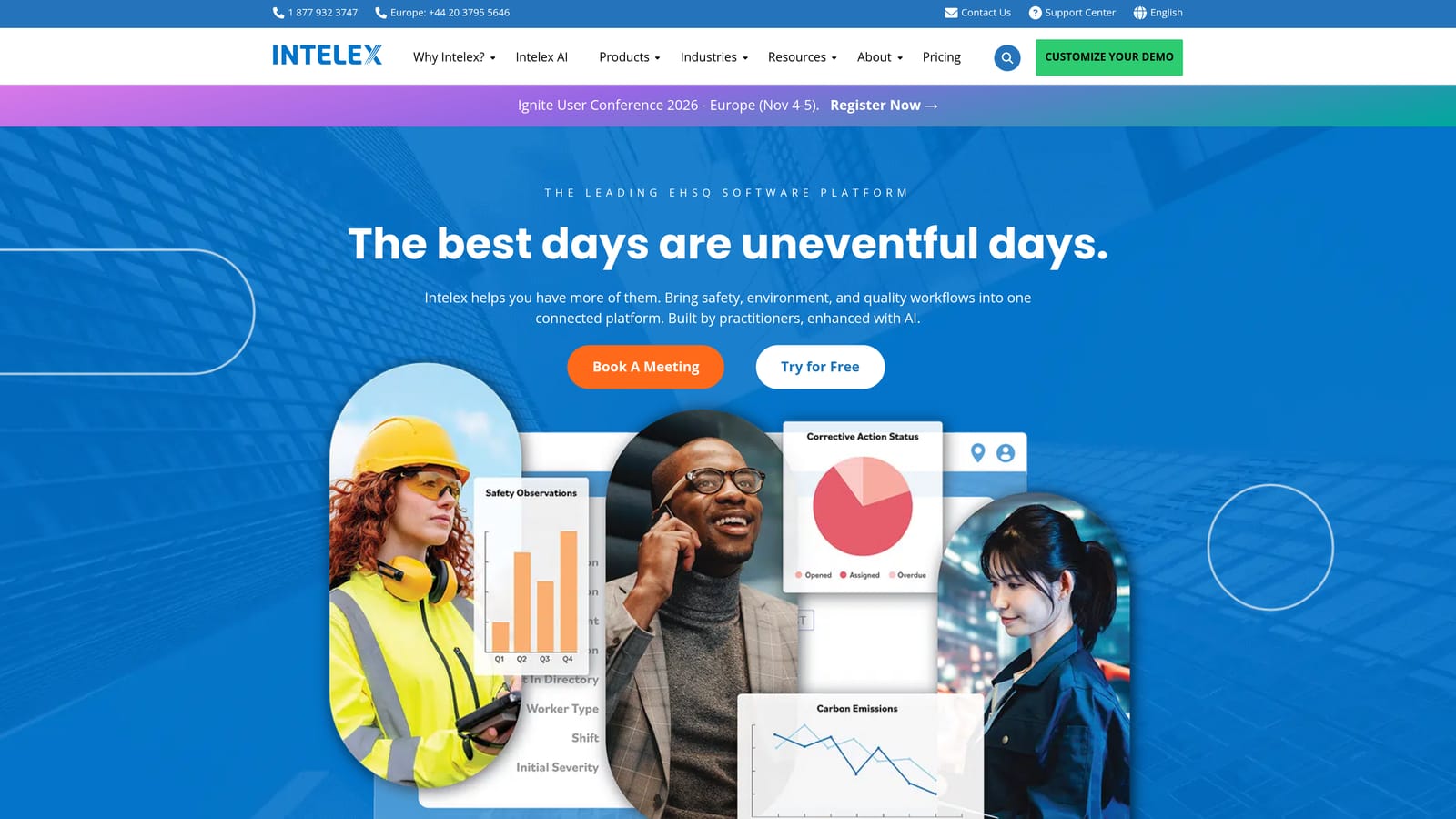
The distinctive strength is configurability. Workflows can be shaped to differ by site, region, or regulatory regime, which matters for companies operating under OSHA in some places and other rules elsewhere.
- Audit and inspection management standardizes how sites check themselves and follow up on findings.
- Incident reporting gives every location one intake path and one data set.
- Risk assessment structures hazard ranking so resources go to the biggest exposures.
- Management of change forces review when processes or equipment are altered, a common source of new hazards.
It offers ERP and HRIS connectors plus API access. Setup effort is substantial: expect a configuration project, often with vendor or partner help, and a dedicated administrator afterward. That investment is the reason it suits larger organizations and not single-site shops.
Pricing is quote-based and generally scales with modules, users, and sites. A ten-person company with one location will pay for flexibility it will not use, and would likely be better served by a lighter tool earlier on this list.
Best for: Multi-site companies needing tailored EHS workflows.
5. Cority
Cority offers enterprise EHS and occupational health software. Its audience is employers whose obligations go beyond injury tracking into health monitoring of the workforce.
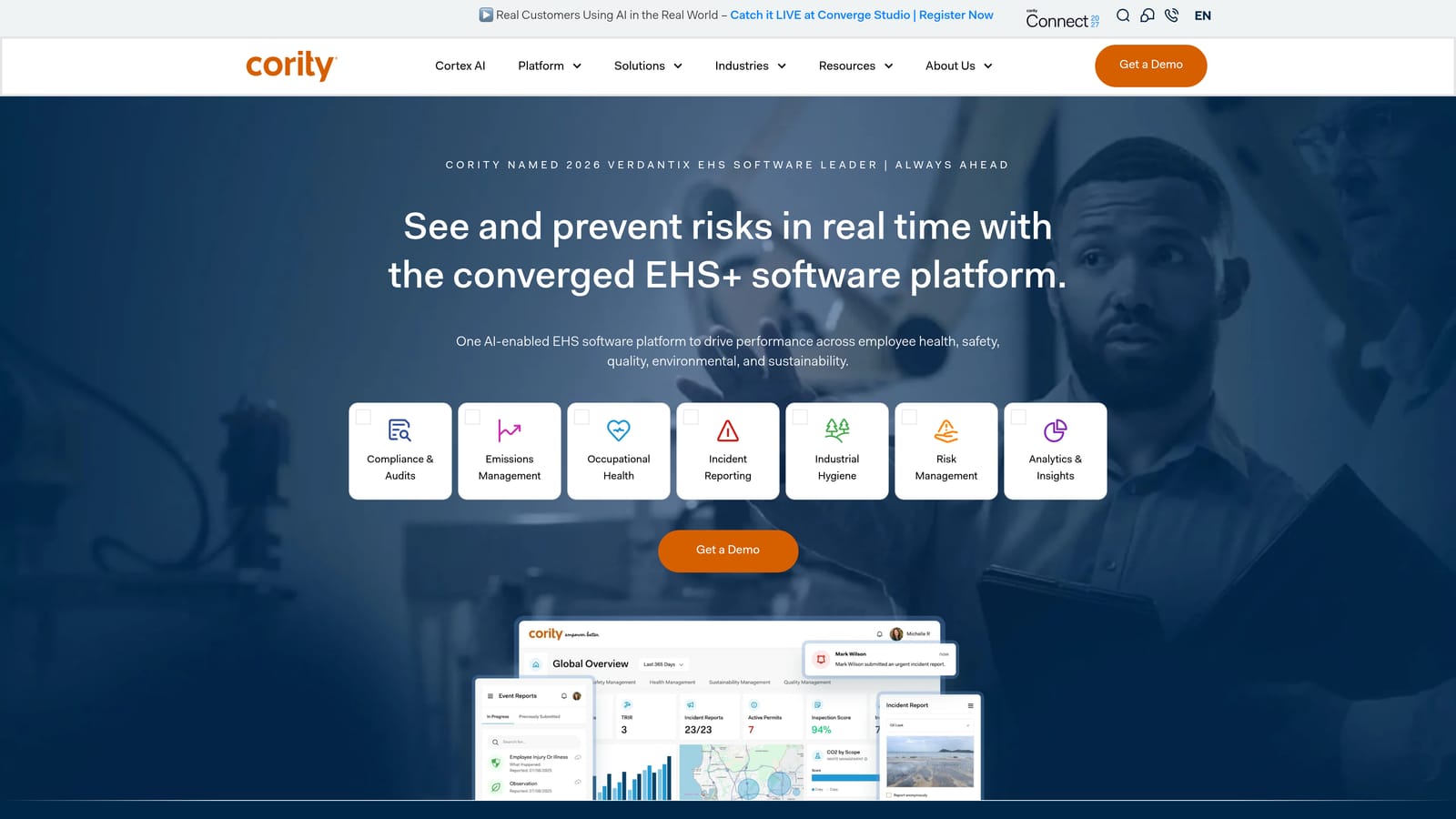
What it does that others here do not is link occupational health data to safety data natively. Exposure readings, medical surveillance results, and incident records can be viewed together, which helps when standards require monitoring programs for noise, chemicals, or respiratory hazards.
- Occupational health and medical surveillance schedules and records exams so nothing lapses.
- Industrial hygiene and exposure tracking stores sampling results and compares them to limits.
- Incident management keeps injuries and illnesses in the same system as exposure history.
- Safety analytics surfaces patterns across locations and job roles.
It integrates with HR and payroll systems, supports single sign-on, and offers API access. Because medical data is sensitive, rollout usually involves HR, occupational health staff, and IT together, and ongoing ownership often sits with an EHS or occupational health lead.
The limitation is scale. Enterprise depth and quote-based pricing make it excessive for small employers without surveillance duties. Cost typically moves with modules, employee count, and the number of sites.
Best for: Employers with medical surveillance or exposure monitoring obligations.
6. KPA Flex
KPA Flex bundles EHS software with access to safety consultants and written program templates. It is aimed at employers where compliance falls to someone who has other full-time duties.
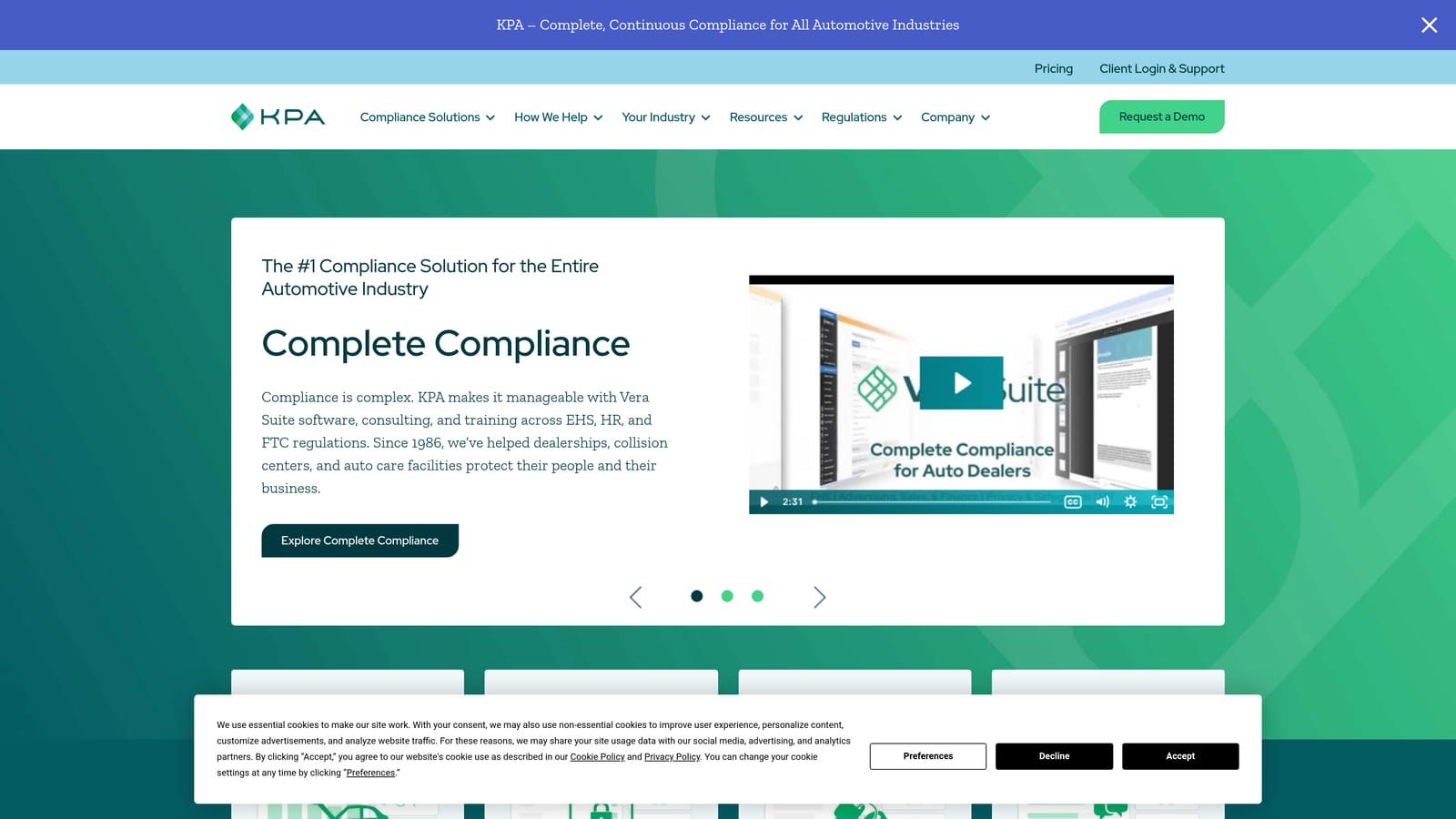
The standout is the human layer. Software alone tells you what to track, but a consultant can tell you which written programs your operation likely needs and review whether yours make sense. That matters for the many OSHA obligations that require a documented program, such as hazard communication or lockout/tagout.
- Written safety program templates give you a starting draft instead of a blank page.
- Consultant support offers expert answers when a requirement is unclear.
- Incident and inspection tracking keeps records and corrective actions in one place.
- Training management logs who completed what and flags what is overdue.
It connects to HR systems and offers API access. Setup is moderate, and a single HR or operations manager can typically administer it with consultant help.
The service layer raises cost compared with software-only options, and pricing is quote-based. If you already employ a trained safety professional, you may be paying for advice you do not need.
Best for: Companies without a dedicated safety professional.
7. ClickSafety
ClickSafety is an online safety training provider with a construction focus, including OSHA Outreach courses. Outreach Training is the voluntary OSHA program behind the 10-hour and 30-hour cards. Federal rules do not require these cards generally, but some states and many project contracts do.
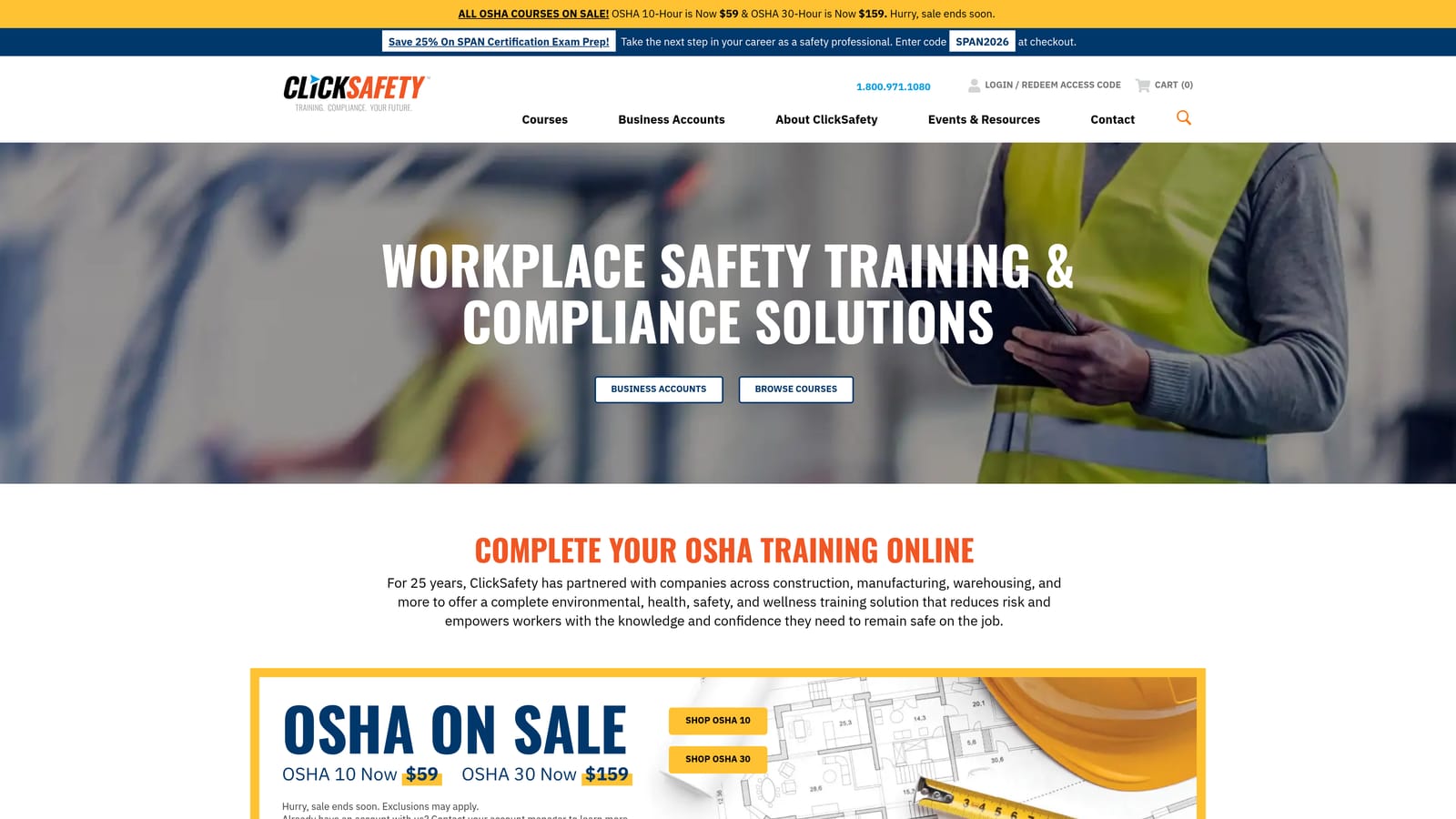
Its distinguishing strength is the construction catalog. Beyond the OSHA 10 and OSHA 30 courses, it covers site-specific topics such as fall protection. Before buying, verify its current OSHA authorization status, because a card is only valuable if issued through an authorized provider.
- OSHA 10 and OSHA 30 online courses let workers and supervisors earn cards without classroom time.
- Construction-specific topics keep content relevant to trades and job sites.
- Fall protection and site training addresses one of the most cited hazard areas in construction.
- Completion records give you proof of training for owners, general contractors, and audits.
It supports learning management system tracking. Setup is minimal: workers enroll and finish at their own pace, and an office administrator or safety coordinator monitors completion.
It is training only, with no inspection or recordkeeping tools. Pricing is per course, so cost scales with the number of workers and the courses assigned. See the website for current rates.
Best for: Contractors and workers needing OSHA 10/30 cards.
8. Vector Solutions
Vector Solutions combines an online training library with EHS software for training assignment and tracking. It suits employers who need to prove that many different groups of workers were trained on many different topics.
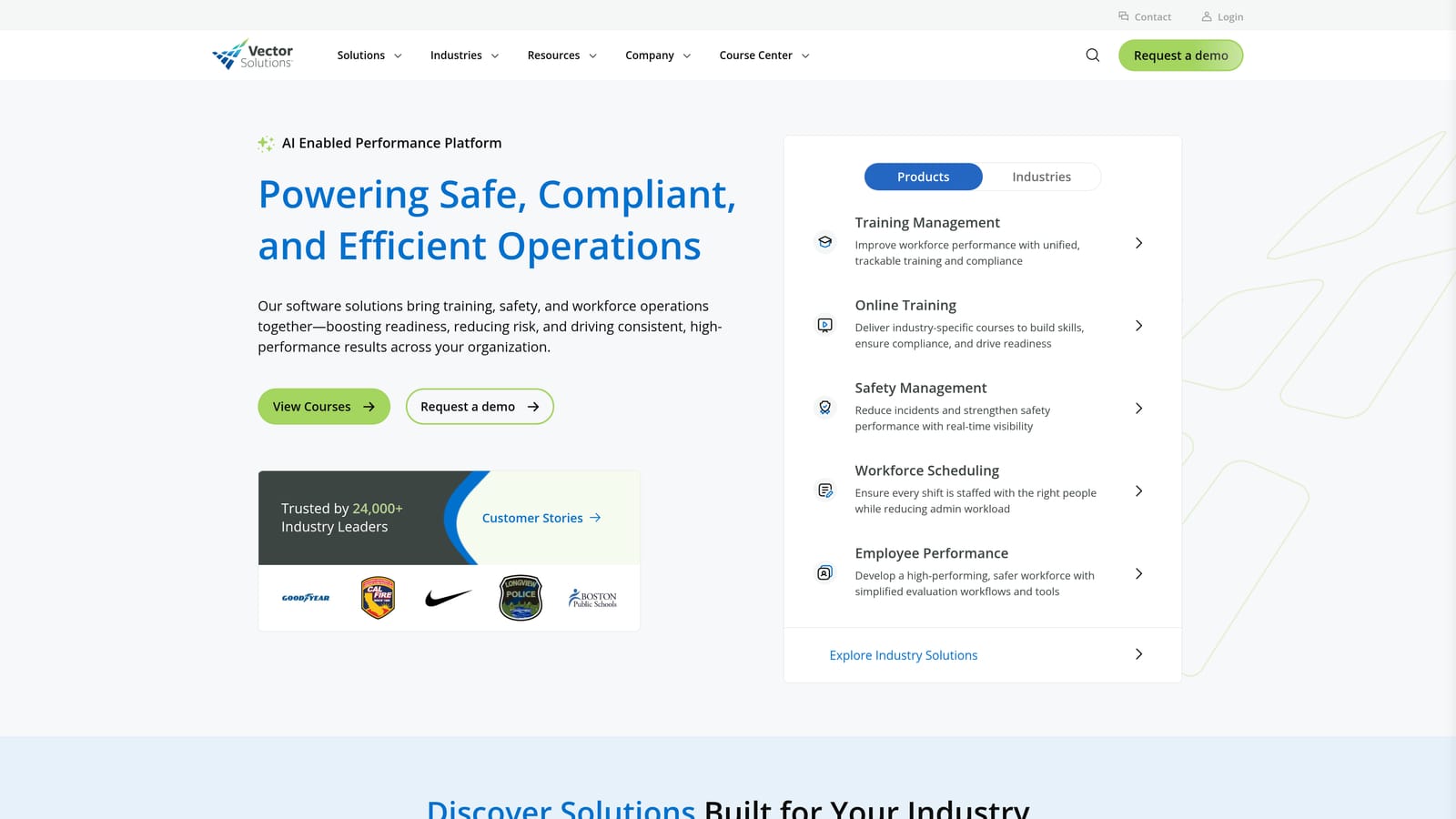
Its edge is breadth in one learning system. A single catalog of OSHA-topic courses, such as hazard communication and powered industrial trucks, can be assigned by role and tracked centrally, with reports ready for an audit or inspector request.
- Large safety course library covers a wide span of OSHA topics without sourcing multiple vendors.
- Training assignment and tracking sets due dates by role and shows who is behind.
- EHS management software adds incident and inspection functions to the same environment.
- Compliance reporting produces records you can hand over on request.
It integrates with HRIS platforms, supports single sign-on, and offers API access. Expect an administrator, often in HR or safety, to configure assignments and maintain them.
Catalog breadth can overwhelm a small team deciding what to assign, and state plan requirements need manual checking, since states running their own OSHA programs can differ from federal rules. Pricing is quote-based and typically moves with user count and the modules chosen.
Best for: Employers needing documented training across many OSHA topics.
9. OSHA On-Site Consultation Program
The OSHA On-Site Consultation Program is a free, confidential service for small and medium-sized businesses. It is delivered through state agencies or universities and is kept separate from enforcement.
No other entry offers a government-funded expert walking your site at no charge, with no citations or penalties resulting from the consultation. You are expected to correct serious hazards that are found, but the visit itself does not trigger enforcement.
- On-site hazard identification gives you an outside view of risks your team may no longer notice.
- Safety program guidance helps you build or fix written programs.
- No citations or penalties from the consultation lowers the risk of asking for help.
- SHARP recognition pathway (Safety and Health Achievement Recognition Program) rewards strong programs, and can bring a time-limited exemption from routine inspections.
There is nothing to integrate and little to set up beyond requesting a visit and preparing your site. A manager or owner usually acts as the contact.
It is advisory only. There is no ongoing tracking, no software, and availability and wait times vary by state, so you may need to contact your state's program to see what is offered. Cost is free.
Best for: Small businesses wanting an independent first hazard review at no cost.
Matching the Right Solution to Your Situation
OSHA does not certify software or training products, and "OSHA-compliant" is a vendor claim, not a government seal. Treat each tool as support for a specific duty, and expect to combine two of them.
- Small employer starting out: request an OSHA On-Site Consultation visit for an independent hazard review, then use SafetyCulture to run the inspections and fixes that follow. If nobody on staff owns safety, KPA Flex adds expert guidance.
- Multi-site operation: Intelex fits when you need workflows tailored by location, and VelocityEHS or Cority fit when chemicals or health monitoring drive the workload.
- Construction contractors needing OSHA 10/30: ClickSafety covers the cards, and a platform such as SafetyCulture covers site inspections.
- Workplaces needing CPR, BLS, and AED readiness: 360 Safety supplies the training and equipment, but pair it with a recordkeeping or inspection platform, since it does not cover those.
Ready to put safety into action? Whether you need CPR certification, workplace safety training, or guidance on selecting and maintaining life-saving equipment such as AEDs, we're here to help. Our training programs and safety solutions are designed to help individuals and organizations respond confidently when every second counts. Schedule your training today and take the next step toward creating a safer, more prepared workplace and community.