
Workplace Incident Reporting System: 8 Top Picks for 2026
A practical guide to workplace incident reporting system.
Safety managers, HR leads, and operations owners who are still collecting incident reports on paper, spreadsheets, or email will find a shortlist here built around company size, industry, and regulatory burden. Each tool was judged on mobile reporting, investigation and corrective action workflows, recordkeeping support, analytics, integrations, and fit for different kinds of employers. Two definitions help when reading the entries: a near miss is an event that could have caused harm but did not, and a corrective action (often called CAPA) is a tracked task that fixes the cause of an incident.
Quick Comparison of the Incident Reporting Systems
- SafetyCulture: small and mid-size teams wanting fast frontline adoption; free tier, paid per seat; inspections and incident reports share one mobile app, so an incident can trigger an inspection.
- VelocityEHS: US manufacturers and industrial employers with OSHA duties; quote-based; built-in OSHA recordkeeping and electronic submission support.
- Intelex: large multi-site organizations with dedicated EHS staff; quote-based; the deepest workflow configuration for complex approval chains.
- Cority: regulated industries such as healthcare, energy, and heavy manufacturing; quote-based; links injury reports to occupational health and case records.
- EcoOnline: international employers handling chemicals in several languages; quote-based; incident reporting paired with safety data sheet management.
- Resolver: organizations routing safety, security, and HR incidents through one system; quote-based; confidential case handling for sensitive reports.
- HammerTech: general contractors managing many employers on one site; quote-based; ties incidents to individual subcontractors and project sites.
- Origami Risk: teams with in-house risk managers; quote-based; follows an injury from first report through claim outcome.
1. SafetyCulture
SafetyCulture is a mobile-first operations platform where frontline workers submit incident, near miss, and hazard reports from a phone, and managers assign follow-up actions. It is designed for teams that have never had a formal system and need people to actually use one. Reporting rates tend to depend on how easy it is to file, and this tool puts ease first.
Its distinguishing strength is that inspection checklists and incident reports sit in the same app. A reported incident can lead directly into an inspection of the area where it happened, without switching tools or re-entering details.
- Mobile incident and near miss reporting with photos, so the scene is documented at the moment it is reported.
- Offline capture, which keeps reports possible in basements, warehouses, and remote sites without signal.
- Customizable report templates that let you ask only the questions your sites need.
- Corrective action assignment so each finding has an owner and a follow-up.
- Analytics dashboards that show repeat locations and incident types.
It connects with Microsoft Teams, Slack, Zapier, and Power BI. Setup is light: a safety lead or operations manager can build templates and invite staff without IT involvement.
The limitation is depth. Enterprise compliance and regulatory modules are less developed than in dedicated EHS suites, so a company with heavy recordkeeping or complex approval chains may outgrow it. Pricing starts with a free tier; paid plans are per seat, and rates change, so confirm current figures on the vendor site.
Best for: Small and mid-size teams that want fast frontline adoption.
2. VelocityEHS
VelocityEHS is an EHS software suite whose incident management module covers reporting, investigation, and OSHA recordkeeping. It is aimed at employers who must maintain injury and illness records and want the log produced from the same data as the report.
The standout is built-in support for OSHA Forms 300, 300A, and 301, along with electronic submission support. That removes a common spreadsheet chore at year end. It does not replace judgment, though: a person still has to decide whether a case is recordable under OSHA rules.
What you get
- Incident reporting and investigation in one record, so details are not retyped.
- Root cause analysis tools that move the team past "worker error" to underlying causes.
- OSHA 300, 300A, and 301 form support that populates logs from reported cases.
- Corrective action tracking with due dates and owners.
- A mobile app for reporting from the floor.
Fit and cost
It integrates with HR and payroll systems and Microsoft tools, and offers API access. Expect a heavier implementation than a simple reporting app, and a named administrator, usually an EHS coordinator, to run it. Pricing is quote-based, so budget for a sales process. Smaller teams that only need basic reporting may find it more than they need.
Best for: US manufacturers and industrial employers with OSHA recordkeeping duties.
3. Intelex
Intelex is a configurable EHSQ platform for large organizations that need tailored incident workflows and cross-site analytics. Its buyer is typically a corporate EHS department standardizing how dozens of facilities report and approve incidents.
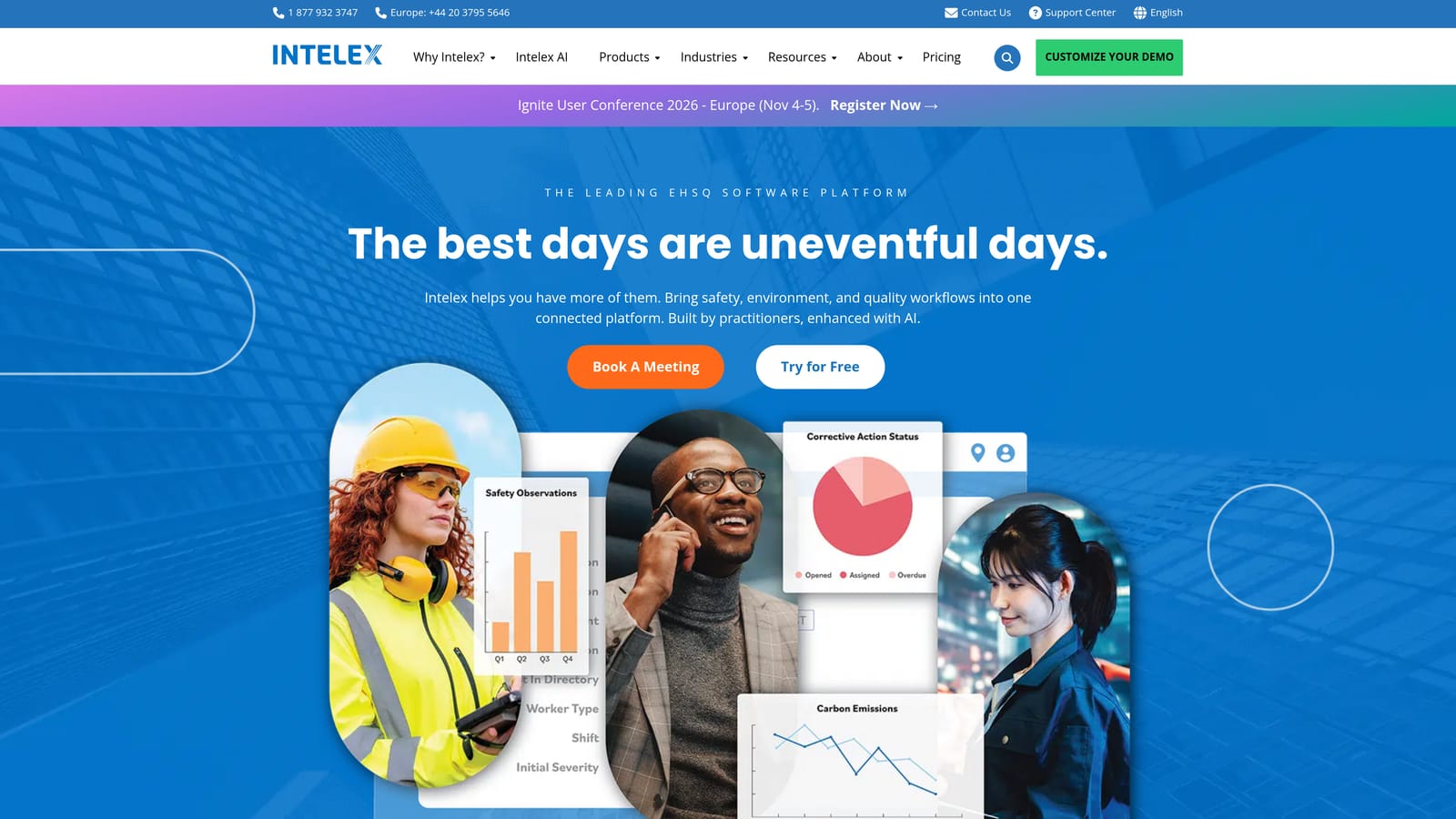
What sets it apart is configurability. Forms, routing rules, and approval chains can be shaped to match how a complex organization actually works, such as different sign-offs by region, severity, or business unit. Most other tools on this list ask you to adopt their workflow.
- Configurable forms and approval workflows that mirror your internal escalation rules.
- Incident investigation tools for documenting causes and findings.
- Audit and risk linkage, so an incident can connect to prior audit findings and risk entries.
- Multi-site dashboards that compare locations in one view.
- Mobile reporting for field staff.
It integrates with ERP and HR systems and business intelligence tools, and has API access. Setup takes real effort and usually needs dedicated EHS staff or consultants to design and maintain the configuration. That is the trade-off: flexibility costs time and money, and small businesses will find both high. Pricing is quote-based and typically varies with modules and user counts.
Best for: Large multi-site organizations with dedicated EHS staff.
4. Cority
Cority is enterprise EHS and occupational health software that connects incident records to health and medical case data. It suits employers that run on-site clinics or nurses, or that manage return-to-work and surveillance programs alongside safety.
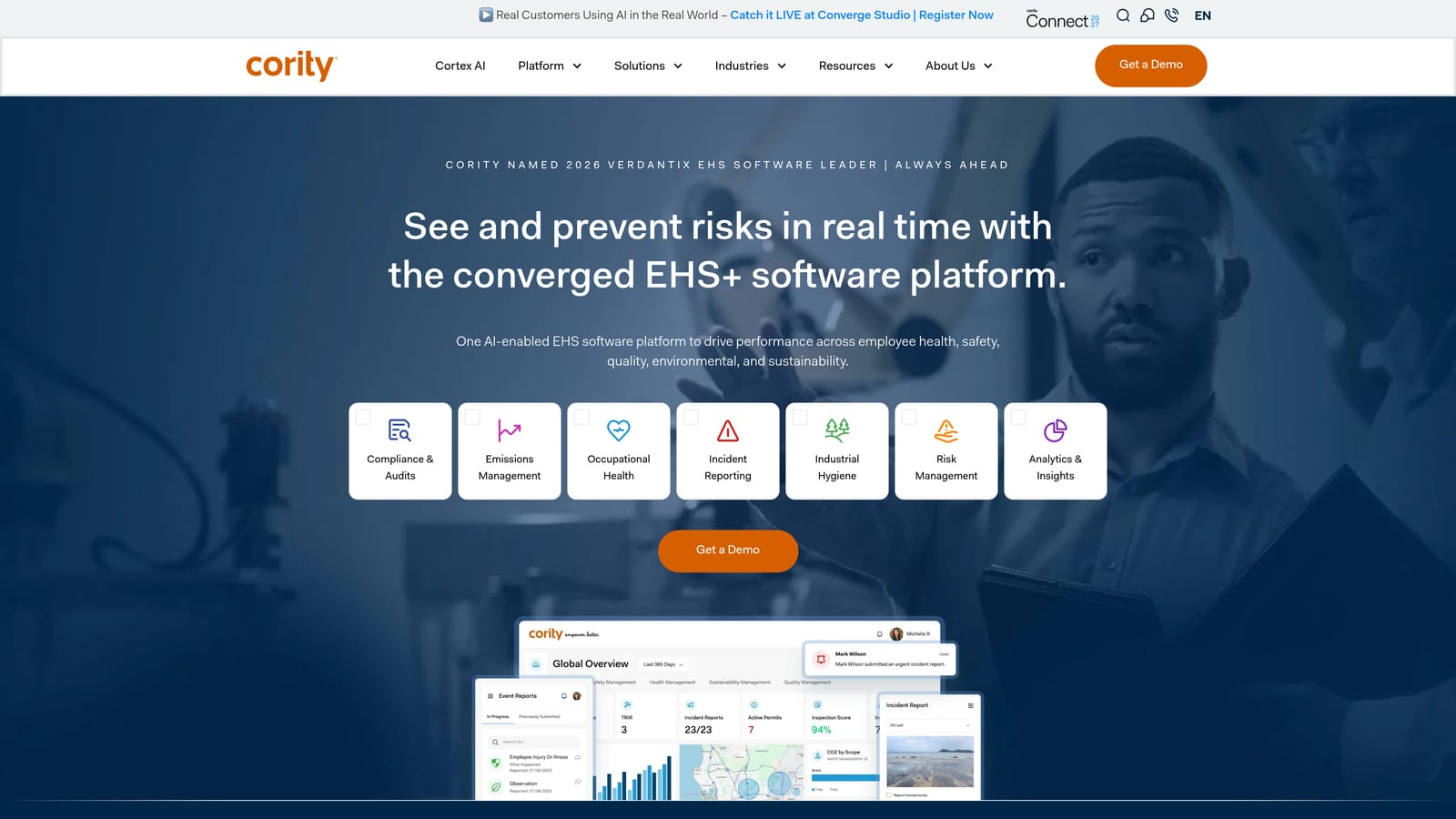
The distinctive piece is the link between an injury report and the occupational health record. When a worker is hurt, the incident, the treatment, restrictions, and follow-up can live in a connected system rather than in separate files owned by safety and health teams. That also raises the bar for privacy controls, so confirm how medical data is segregated.
- Incident and injury management that captures the event and the affected employee.
- Occupational health integration, tying injuries to medical case management.
- Regulatory reporting to help meet agency requirements.
- Analytics for spotting trends across sites and injury types.
- Mobile data capture for reporting away from a desk.
It works with HRIS platforms and ERP systems and offers API access. Implementation is substantial, and ongoing use usually involves EHS staff and occupational health professionals. For a team that needs only basic incident logging, it is too heavy. Pricing is quote-based.
Best for: Regulated industries such as healthcare, energy, and heavy manufacturing.
5. EcoOnline
EcoOnline is a safety and chemical management platform with incident reporting, investigation, and action tracking, and it is popular with European employers. It is built for organizations where chemical handling and incident reporting are managed by the same safety team.
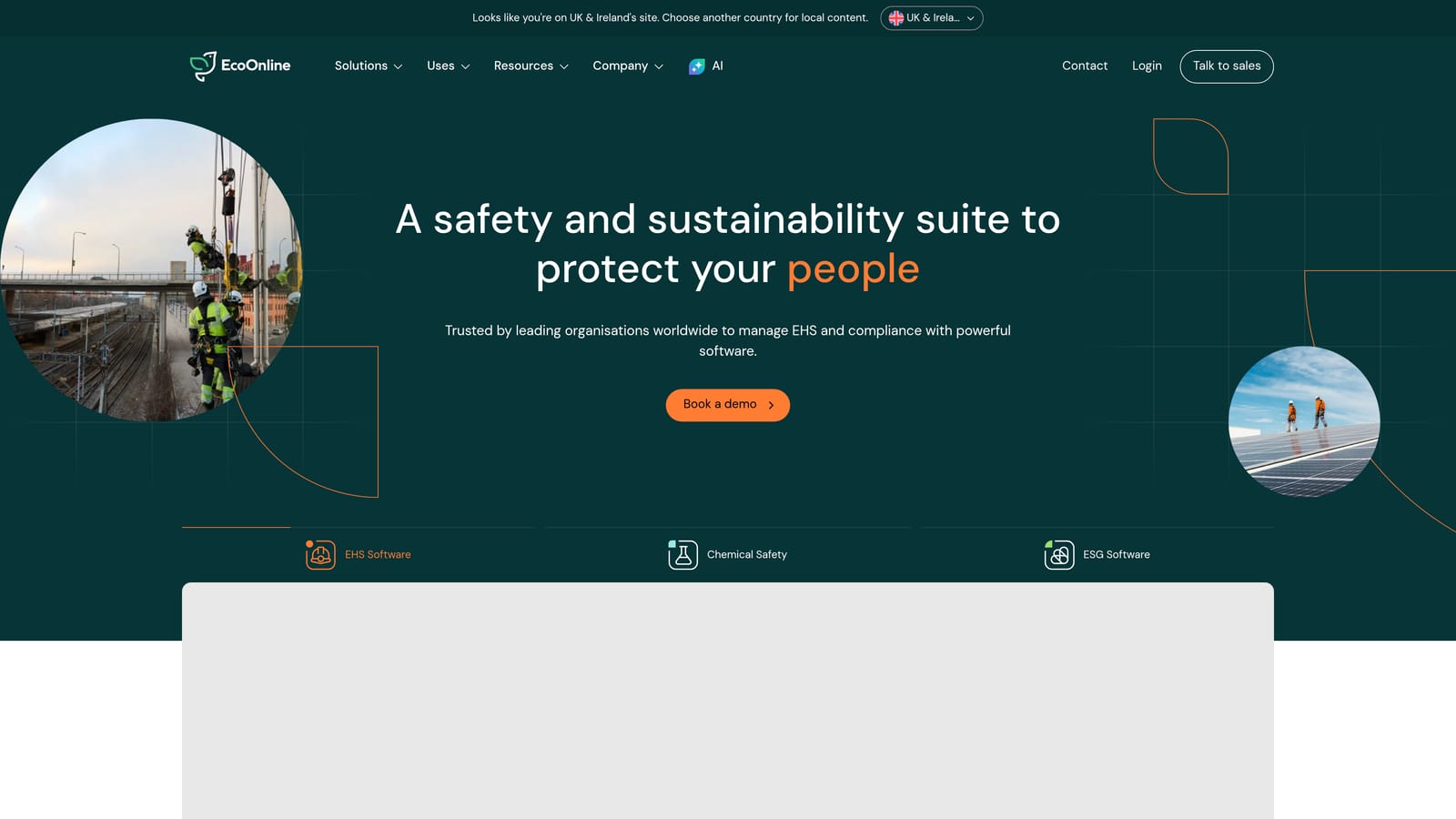
Its differentiator is pairing incident reports with safety data sheet management. If a worker reports an exposure or spill, the relevant chemical information sits in the same system, which shortens the path from report to response. Multi-language support also helps when a workforce spans countries.
- Employee reporting forms that make it simple for any worker to raise an event.
- Investigation and actions so follow-up is assigned and tracked.
- Safety data sheet management for chemical inventories.
- Multi-language support for mixed or international workforces.
- Risk assessments linked to the problems that incidents reveal.
Integrations include HR systems and single sign-on, plus API access. Setup is moderate and usually owned by an EHS or chemical safety lead. The caution for US buyers is that OSHA-specific features should be confirmed during a demo, particularly around Forms 300, 300A, and 301. Pricing is quote-based.
Best for: International employers handling chemicals across several languages.
6. Resolver
Resolver is risk and incident case management software used by safety, security, HR, and compliance teams. Rather than starting from industrial safety, it starts from the idea that many incidents are cases that need controlled handling.
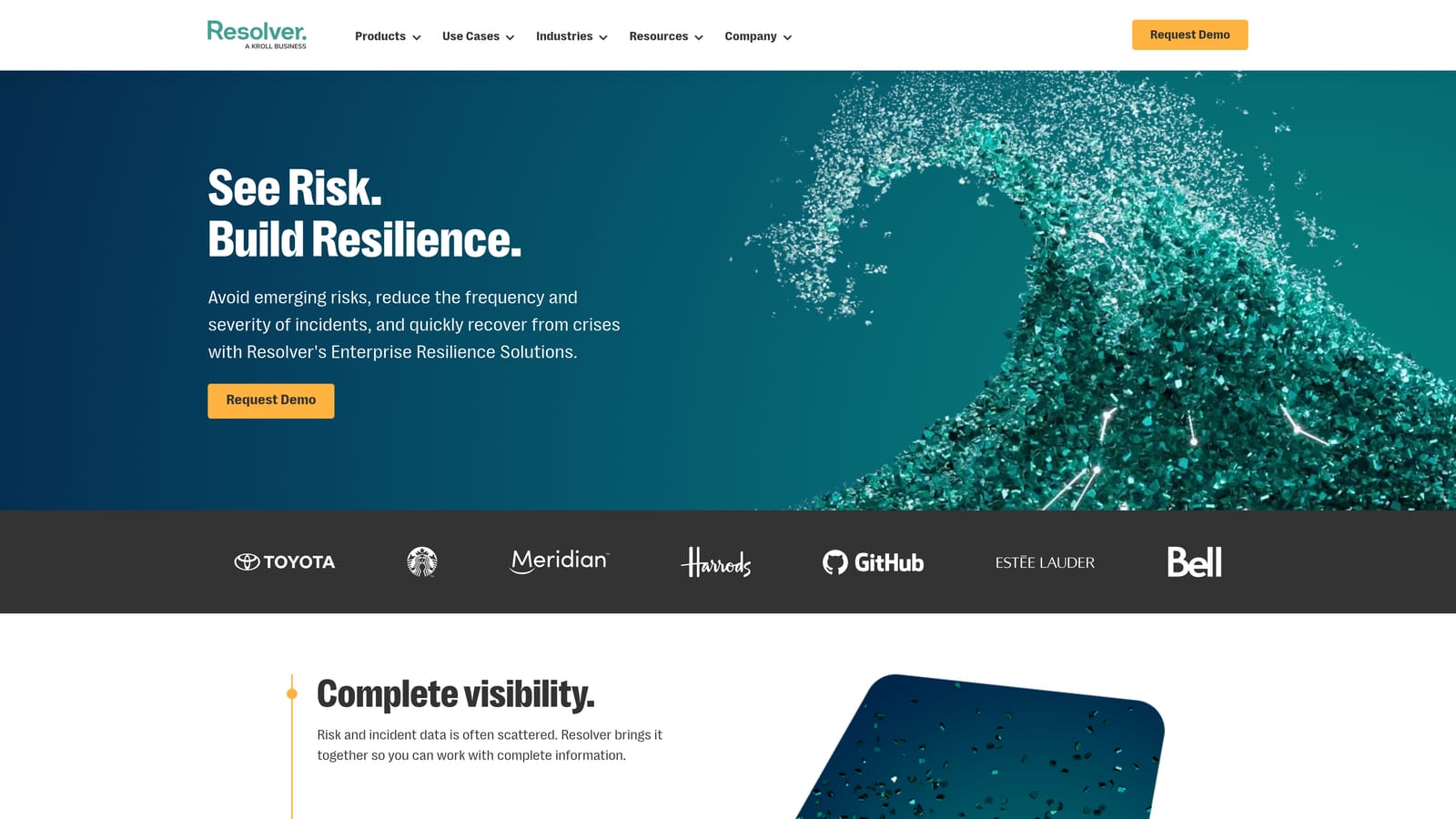
Its standout is confidential case handling. Reports about harassment, workplace violence, or other sensitive matters can be restricted to the people who should see them, with audit trails recording who did what. Other tools here treat reports mainly as safety events; this one treats them as cases that may involve legal or HR consequences.
- Incident and case management that follows a matter from intake to closure.
- Controlled access so sensitive reports are visible only to authorized roles.
- Investigation workflows with structured steps and documentation.
- Audit trails that support defensible, reviewable decisions.
- Risk and compliance modules for broader program needs.
It supports single sign-on, HR and security system connections, and API access. Setup involves defining case types and permissions, often with input from HR, security, and safety together. The limitation is that it is less focused on industrial safety features such as OSHA log automation, so a manufacturer may need a companion tool. Pricing is quote-based.
Best for: Organizations that route safety, security, and HR incidents through one case system.
7. HammerTech
HammerTech is a construction workforce and safety platform that combines contractor onboarding, site inductions, and incident reporting. It is made for the general contractor whose site is populated by many subcontractor employers, each with their own workers.
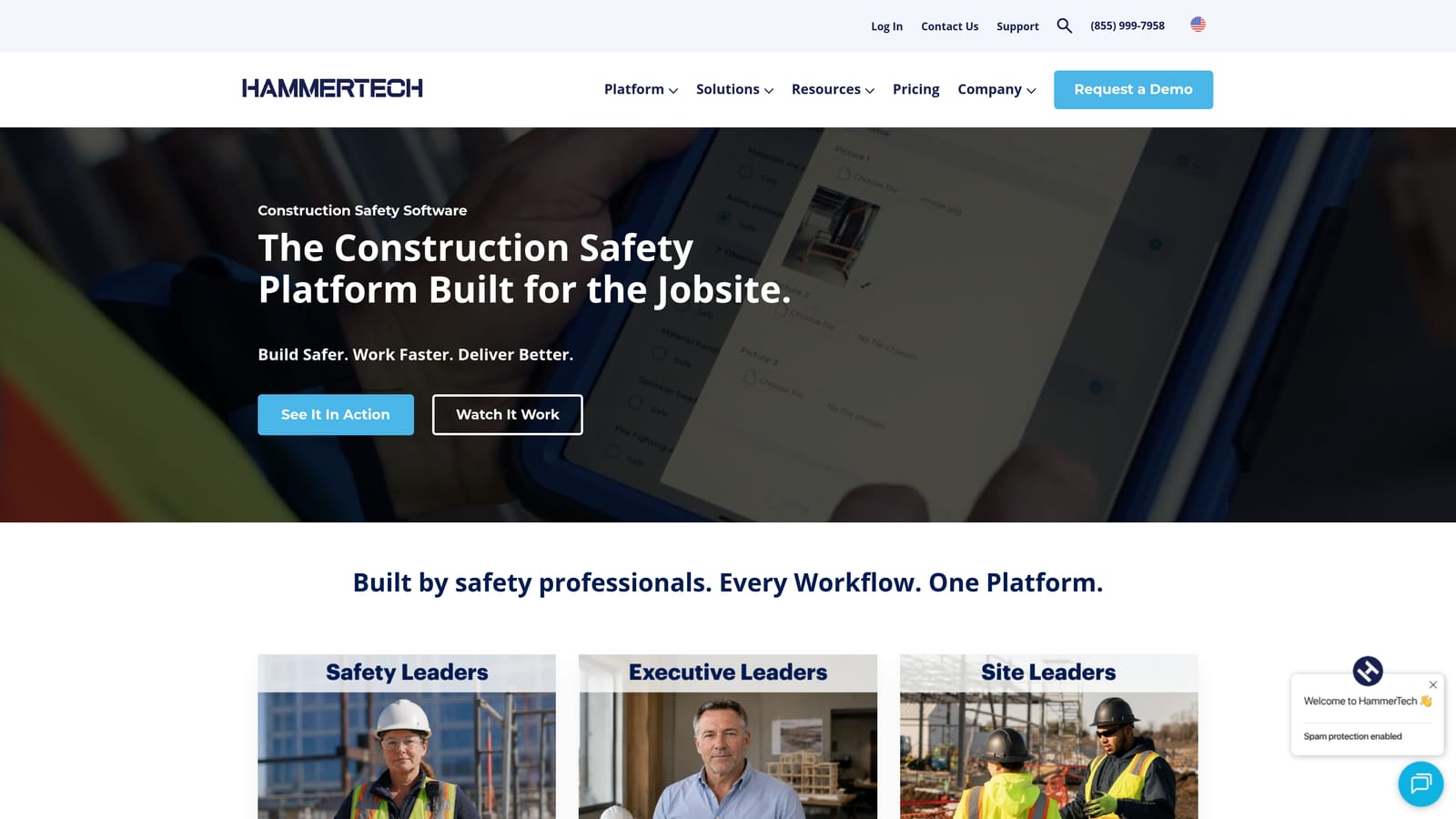
The distinguishing capability is tying incidents to individual subcontractors and project sites. A contractor can see which employer's workers are involved in events, whether those workers were inducted, and how performance compares across projects. Generic tools rarely connect reporting to site access and prequalification this directly.
- Site-level incident reporting that records where on a project an event occurred.
- Contractor prequalification and onboarding to vet firms before they arrive.
- Digital inductions so workers are confirmed as briefed before entering.
- Subcontractor visibility across companies and projects.
- Safety analytics comparing sites and contractors.
It integrates with construction project management tools and access control systems, and offers API access. Day-to-day use typically sits with site safety managers and project administrators. It is built for construction, so it fits poorly in offices, retail, or healthcare. Pricing is quote-based and likely tied to project and workforce scale.
Best for: General contractors managing many employers on one site.
8. Origami Risk
Origami Risk is a risk management platform that connects incident reports to claims, insurance, and safety program data. Its buyer is the risk manager who cares as much about what an injury costs as about how it happened.
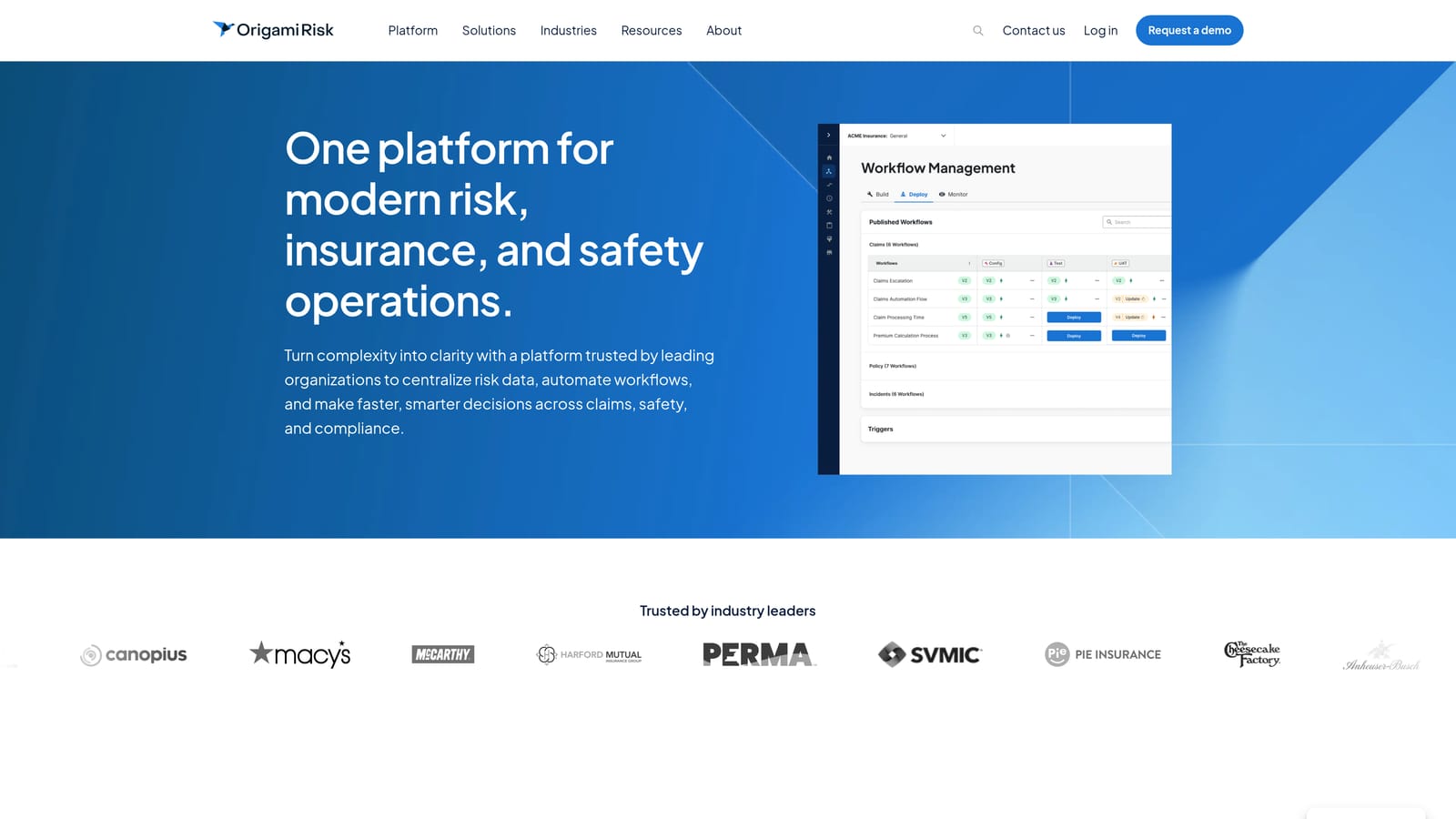
It stands out by following an injury from first report through claim outcome. When an incident becomes a workers' compensation claim, the original report, claim handling, and cost data are connected, which helps show whether safety investments reduce losses.
- Incident intake that starts the record at first report.
- Claims and workers' compensation linkage, carrying the event through to resolution.
- Configurable workflows to match internal routing and approvals.
- Analytics and reporting that connect safety trends with loss data.
- Safety program tools for inspections and follow-up.
It integrates with insurance and TPA systems and HR platforms, with API access. A risk manager or small risk team usually administers it. Because it is a risk management platform first, test the frontline reporting experience before buying; if workers find it cumbersome, reporting rates will suffer. Pricing is quote-based.
Best for: Teams with in-house risk managers who track injuries through to claims.
Matching a System to Your Situation
Pick by the problem you have, not the longest feature list. For small teams, SafetyCulture is the practical starting point because it is easy to adopt and has a free tier. For OSHA recordkeeping, VelocityEHS is the most direct fit, though a person still has to make recordability decisions. Multi-site enterprises with complex approvals should look at Intelex, or at Cority when occupational health data matters. Construction firms should shortlist HammerTech, and teams that follow injuries into claims should evaluate Origami Risk. EcoOnline suits chemical-heavy international operations, and Resolver suits organizations that need confidential case handling.
Whatever you choose, confirm current OSHA rules at osha.gov, including the requirement to report fatalities within 8 hours and in-patient hospitalizations, amputations, or loss of an eye within 24 hours, and ask every vendor for current pricing.
A reporting system also works best alongside prepared responders. Software records what happened, but people with CPR and BLS training, plus workplaces stocked with AEDs, tourniquets, and first aid supplies, determine how an emergency turns out.
Ready to put safety into action? Whether you need CPR certification, workplace safety training, or guidance on selecting and maintaining life-saving equipment such as AEDs, we're here to help. Our training programs and safety solutions are designed to help individuals and organizations respond confidently when every second counts. Schedule your training today and take the next step toward creating a safer, more prepared workplace and community.