
Workplace Safety Management System Software Compared
A practical guide to workplace safety management system.
If you are replacing spreadsheets and paper inspection forms, or outgrowing a tool that no longer fits, this list is for you. The platforms below were chosen for how well they handle inspections, incident reporting, corrective actions, training records, and compliance, and for how much effort they take to roll out and what they cost to adopt. The term can mean two things: the program itself (policies, hazard control, training, and review, as described in ISO 45001 or OSHA's recommended practices) or the software that supports it. Here it means the software.
Quick Comparison of the Platforms
- SafetyCulture: small and mid-sized teams moving off paper checklists; free tier, paid plans per seat per month; fastest frontline adoption through a mobile-first inspection app.
- VelocityEHS: manufacturers and warehouses with ergonomic and chemical exposure; quote-based; built-in ergonomics tools aimed at musculoskeletal injury risk.
- Cority: large employers running health monitoring programs; quote-based; occupational health and medical surveillance depth alongside safety records.
- Intelex: organizations combining safety and quality programs; quote-based; unified EHS and quality management with high configurability.
- Benchmark Gensuite: multi-site global enterprises; quote-based; standardizes EHS processes across many global sites.
- Sphera: chemical, energy, and heavy manufacturing operators; quote-based; process safety and management-of-change tools for hazardous operations.
- HammerTech: general contractors managing many subcontractors; quote-based; contractor onboarding and credential checks before site entry.
- Ideagen EHS: international teams with UK and European sites; quote-based; strong fit for UK and European regulatory reporting.
- EHS Insight: US mid-sized employers focused on OSHA compliance; quote-based; OSHA log and form automation.
1. SafetyCulture
SafetyCulture is a mobile-first inspection and operations platform built around checklists, issue reporting, actions, and training for frontline teams. It is designed for buyers who want supervisors and workers to actually use the system, rather than for a safety department that wants a deep regulatory back end.
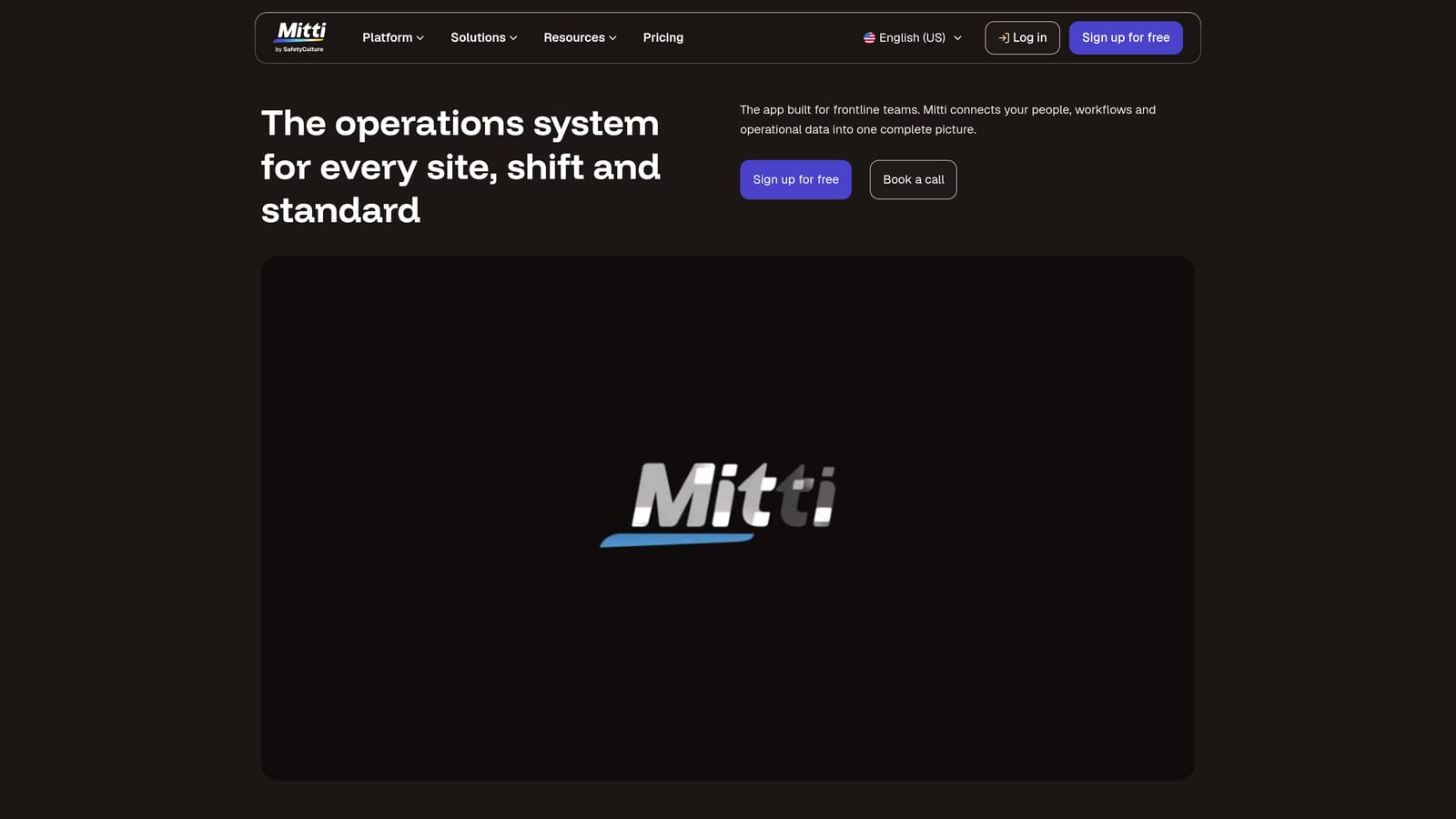
Its edge over the rest of this list is speed of adoption. A free entry tier lets a team build a few inspections and test them on the floor before anyone signs a contract, which no enterprise suite here offers. Most others require a sales process and a configuration project first.
- Mobile inspections work offline and capture photo evidence, so a walk-through in a basement or remote yard still produces a record.
- A large template library gives you a working checklist on day one instead of a blank form.
- Issue and corrective action tracking assigns problems to a person with a due date, so findings do not die in a notebook.
- Training and sensor monitoring add-ons extend the tool beyond inspections if you want one app for more.
Integrations include Slack, Microsoft Teams, Zapier, and API access, which covers notifications and light automation. Setup is modest: a safety lead or operations manager can run it without IT or a dedicated administrator.
The limitation is depth. It has less regulatory reporting and occupational health capability than enterprise EHS suites, so a company that needs formal OSHA log automation, medical surveillance, or process safety workflows will outgrow it. Pricing starts with a free tier, and paid plans are charged per seat per month; as of 2026 you should confirm current rates and free-tier limits on the vendor's site, since add-ons and seat counts move the total.
Best for: Small and mid-sized teams moving off paper checklists.
2. VelocityEHS
VelocityEHS is a cloud EHS suite sold as modules covering incidents, inspections, chemicals, ergonomics, and training. It targets industrial employers that want to start with one problem area and add others over time.
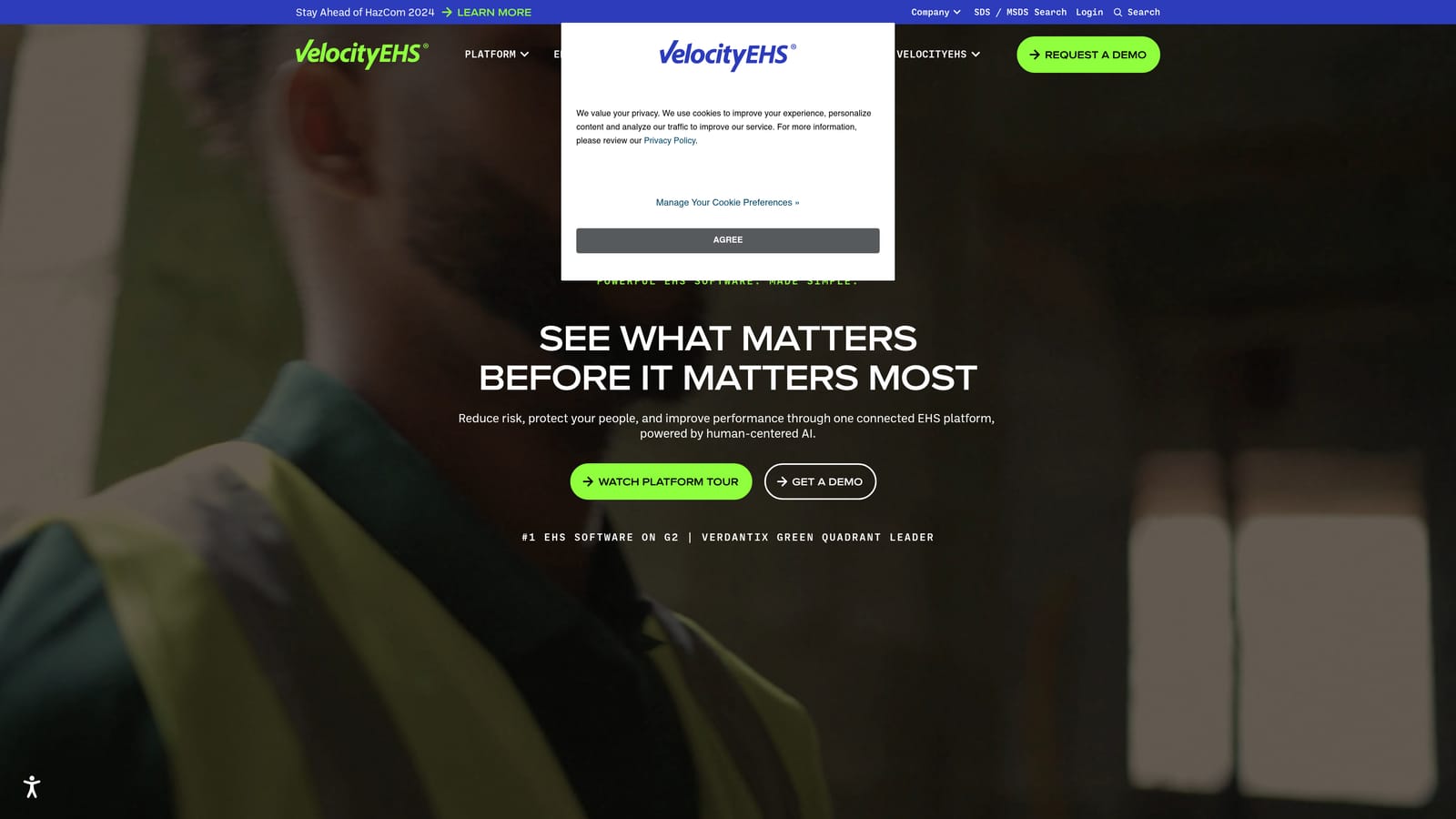
What separates it here is the ergonomics capability. Built-in tools for analyzing job tasks aim at musculoskeletal injury risk, which is a leading source of injuries in warehousing and manufacturing. Most other platforms on this list treat ergonomics as an afterthought or leave it out.
- Incident management captures reports, investigations, and follow-up in one record.
- Inspections and audits standardize routine checks and show where findings recur.
- Chemical management keeps inventories and safety data sheets organized for exposure-heavy sites.
- Ergonomics analysis helps you assess tasks and prioritize changes before strain injuries occur.
- Training management tracks who has completed what and who is overdue.
It connects with HR systems, single sign-on, and APIs, though you should verify the specifics for your stack. Rollout is more involved than a checklist app, and a safety or EHS manager typically owns configuration and ongoing administration.
The main drawback is that cost grows with each module you add, so a broad deployment can become expensive. It is also more than a small office or retail operation needs. Pricing is quote-based, set by module and user count.
Best for: Manufacturers and warehouses with ergonomic and chemical exposure concerns.
3. Cority
Cority is an enterprise platform spanning safety, occupational health, industrial hygiene, and environmental compliance. It is built for large employers whose safety program is tied to employee health programs, not only injury reporting.
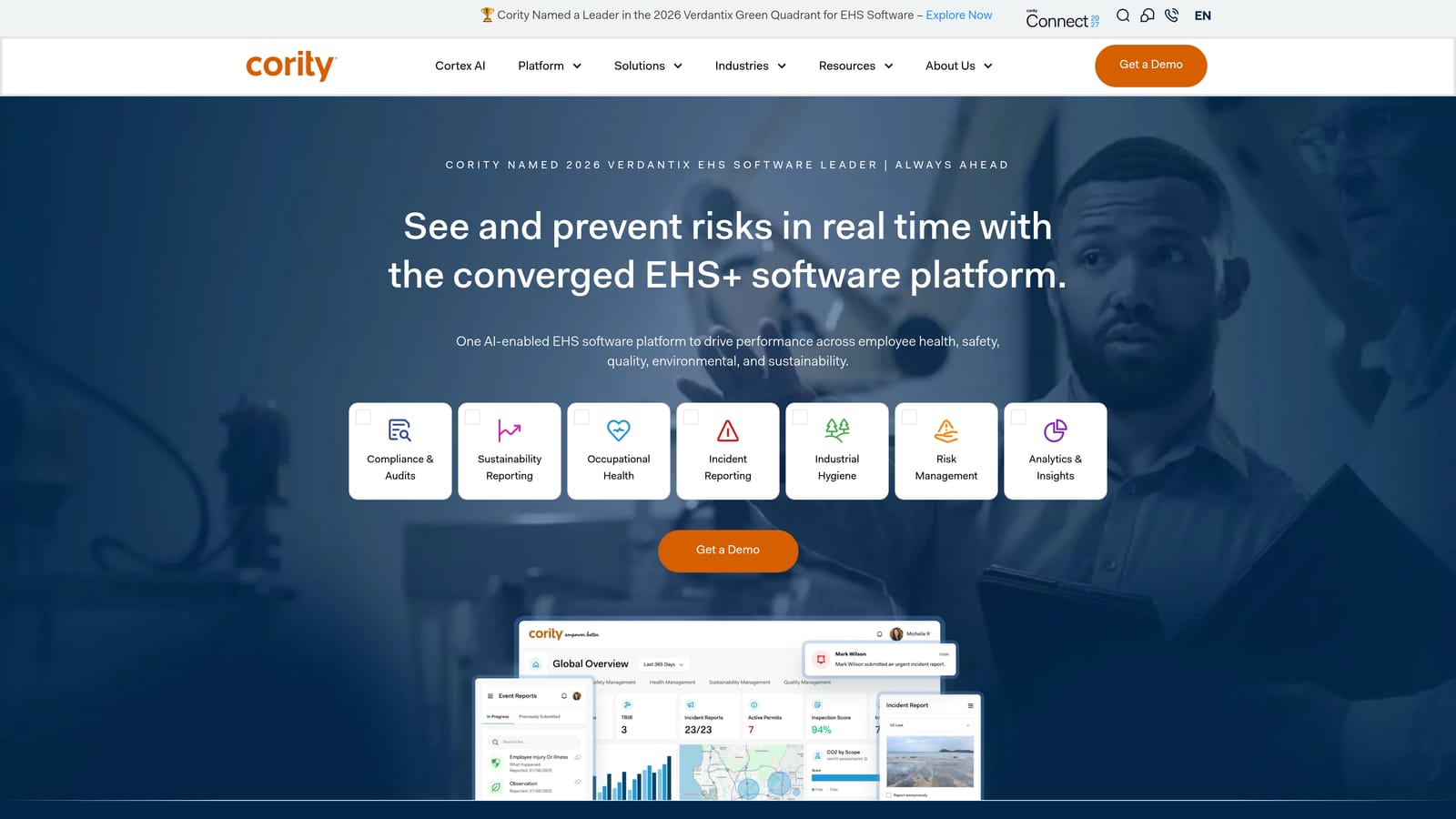
Its distinguishing strength is occupational health and medical surveillance sitting beside safety records. If you run hearing conservation, respirator fit and medical clearance, or exposure monitoring, having those records connected to incident data is a real advantage over tools that handle only the safety side.
What it covers
- Incident and injury management, from first report through investigation and closure.
- Occupational health and medical surveillance, so clinic and monitoring data stay with the worker's record.
- Industrial hygiene tools for sampling and exposure tracking.
- Environmental compliance for permits and reporting obligations.
- Analytics that surface trends across sites and populations.
Fit and cost
Expect integration work with HRIS, ERP, and single sign-on systems (verify specifics with the vendor), and plan for a dedicated project team. Implementation is heavy and costly for small teams, and a company with a few dozen employees would pay for capability it will never use. Health data also brings privacy and access-control responsibilities your team must manage. Pricing is quote-based.
Best for: Large employers running health monitoring programs.
4. Intelex
Intelex is a configurable EHS and quality management platform. It suits organizations that want safety and quality handled in the same system rather than in two disconnected ones.
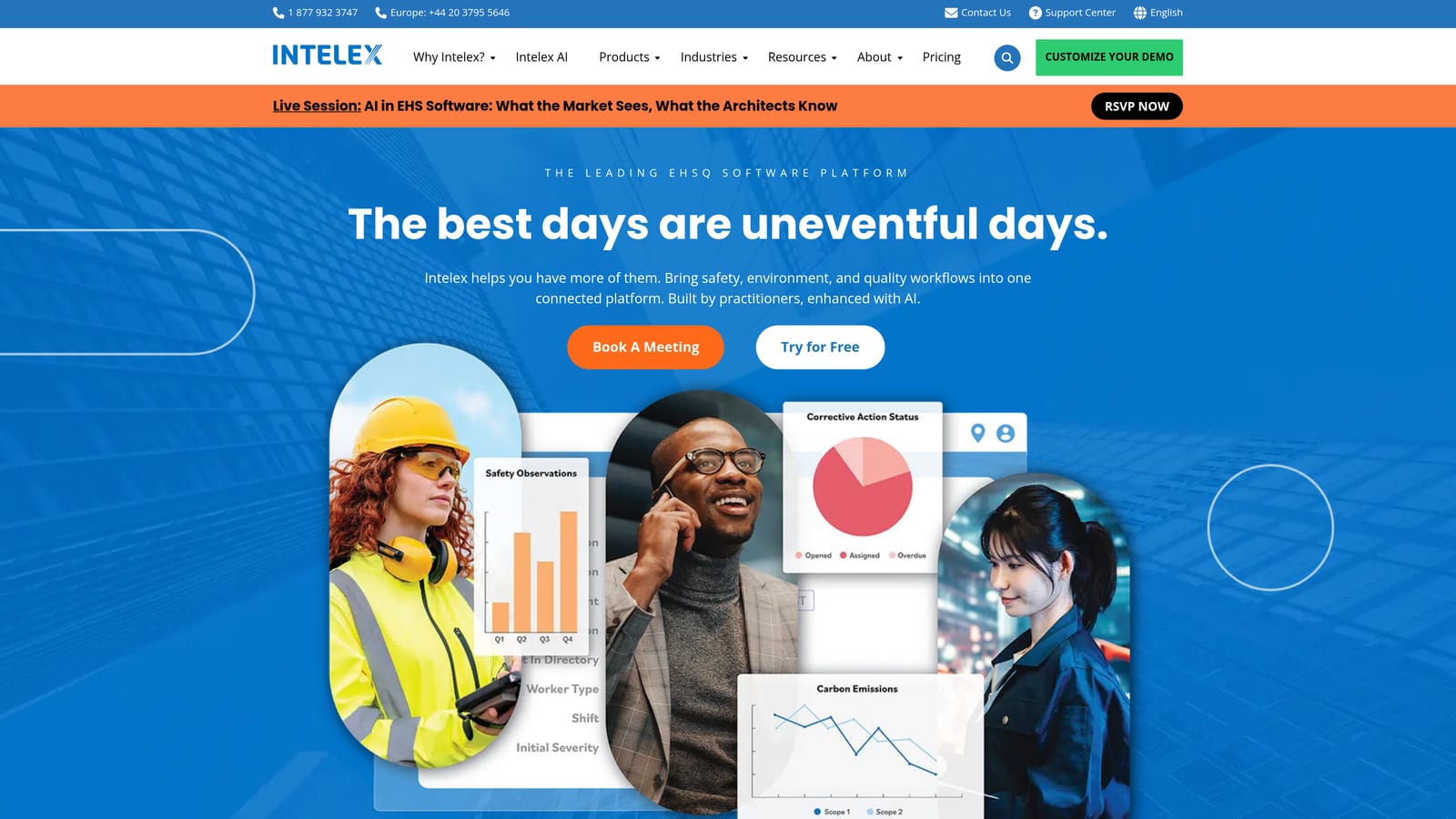
The standout is that unification. Nonconformances, corrective actions, and audits can follow one workflow whether the trigger is a near miss or a defective batch. Few competitors here handle both disciplines natively, and the configurability lets you shape forms and approval paths around your own procedures.
- Configurable workflows and forms let you mirror existing processes instead of bending to a fixed design.
- Incident management records events, investigations, and actions.
- Audits and inspections support scheduled and ad hoc checks.
- Quality management and nonconformance tools bring product and process issues into the same place.
- Dashboards give managers a current view of open items and trends.
It connects to ERP, HR systems, and APIs, but verify details for your environment. Flexibility comes with a cost: you need an internal administrator, and setup takes longer than with template-driven tools. Without someone owning configuration, the system can drift into inconsistency. It is a poor match for a small team that wants to be running inspections next week. Pricing is quote-based.
Best for: Organizations combining safety and quality programs.
5. Benchmark Gensuite
Benchmark Gensuite offers a broad suite of EHS and sustainability applications aimed at organizations operating across many locations. Its pitch is consistency: one set of processes applied from headquarters to the smallest plant.
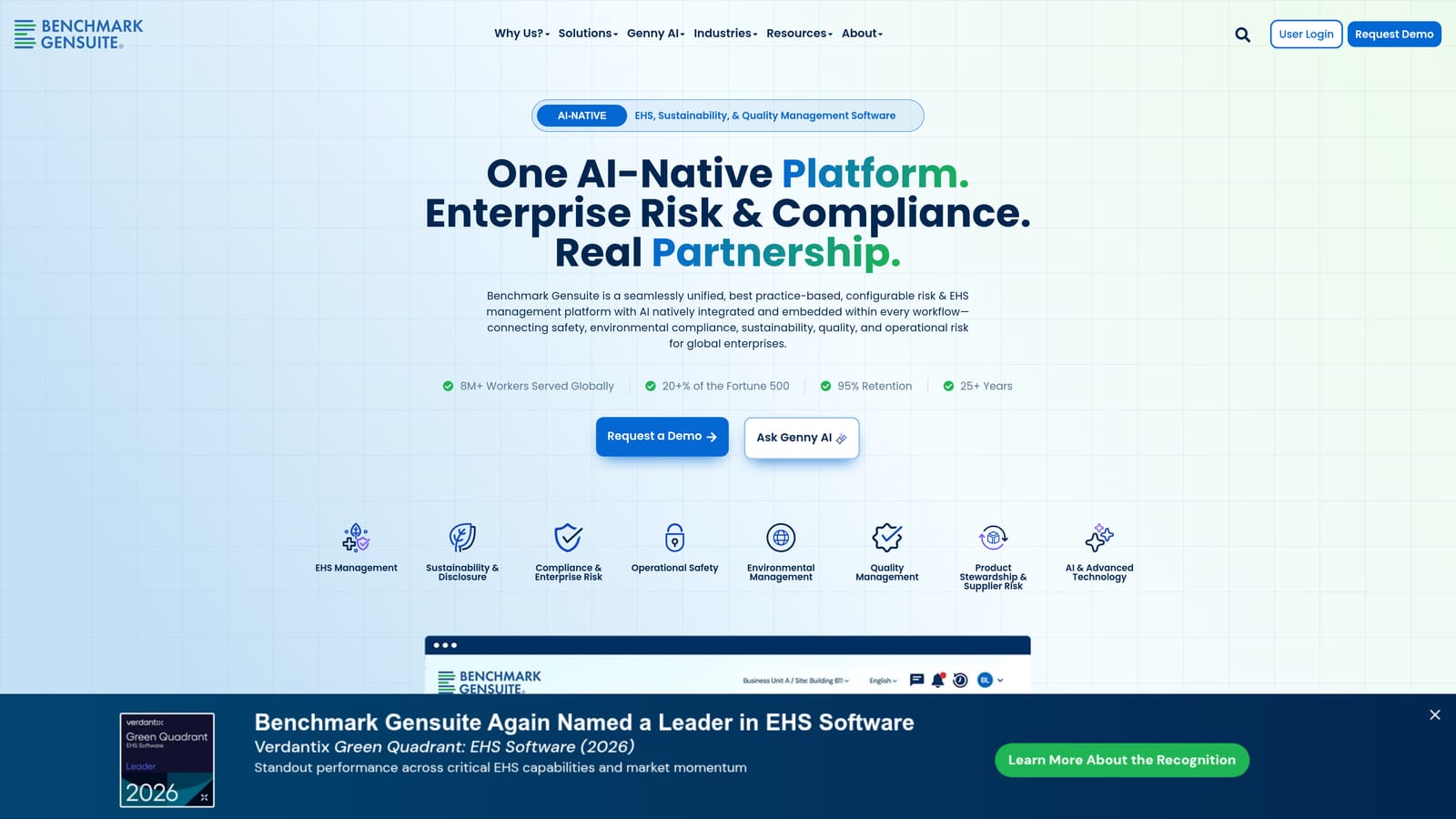
Standardizing EHS across many global sites is what it does best. A corporate safety team can define how incidents, audits, and risk assessments are handled and then see comparable data from every facility, which is hard to achieve when each site uses its own tools.
- Incident management gives every site the same reporting and investigation path.
- Audits and inspections can be rolled out and compared across locations.
- Risk assessment tools support consistent hazard evaluation.
- Contractor safety tracks outside workers who operate on your sites.
- Sustainability reporting lets safety and environmental data share a platform.
It offers ERP and HR connections plus IoT and API options, which you should verify against your needs. Deployment is a program, not a quick install, and typically needs a central team plus site-level coordinators. The breadth is excessive for small organizations, which would end up navigating modules they do not need. Pricing is quote-based.
Best for: Multi-site global enterprises.
6. Sphera
Sphera provides operational risk and EHS software for high-hazard industries, where the concern is not only slips and strains but also releases, fires, and catastrophic failures.
Its process safety and management-of-change tools are the differentiator. Changing equipment, procedures, or materials in a chemical plant or refinery is a classic source of serious incidents, and a formal, documented review workflow is central to programs such as OSHA's Process Safety Management standard. General-purpose platforms rarely go this deep.
- Process safety management supports the elements regulators expect for hazardous operations.
- Management of change routes proposed modifications through review and approval before they happen.
- Incident management captures events and links them to investigations.
- Audits verify that controls are working as designed.
- Risk analysis helps you evaluate scenarios and prioritize safeguards.
It is meant to fit into enterprise systems, though you should verify specifics. Expect a structured implementation involving process safety engineers as well as EHS staff. For a low-hazard workplace such as an office, a school, or a retail chain, it is overbuilt, and the cost and complexity will not pay back. Pricing is quote-based.
Best for: Chemical, energy, and heavy manufacturing operators.
7. HammerTech
HammerTech is a construction safety and workforce management platform. Unlike most tools here, it focuses on who is allowed onto a site and whether they are qualified to be there.
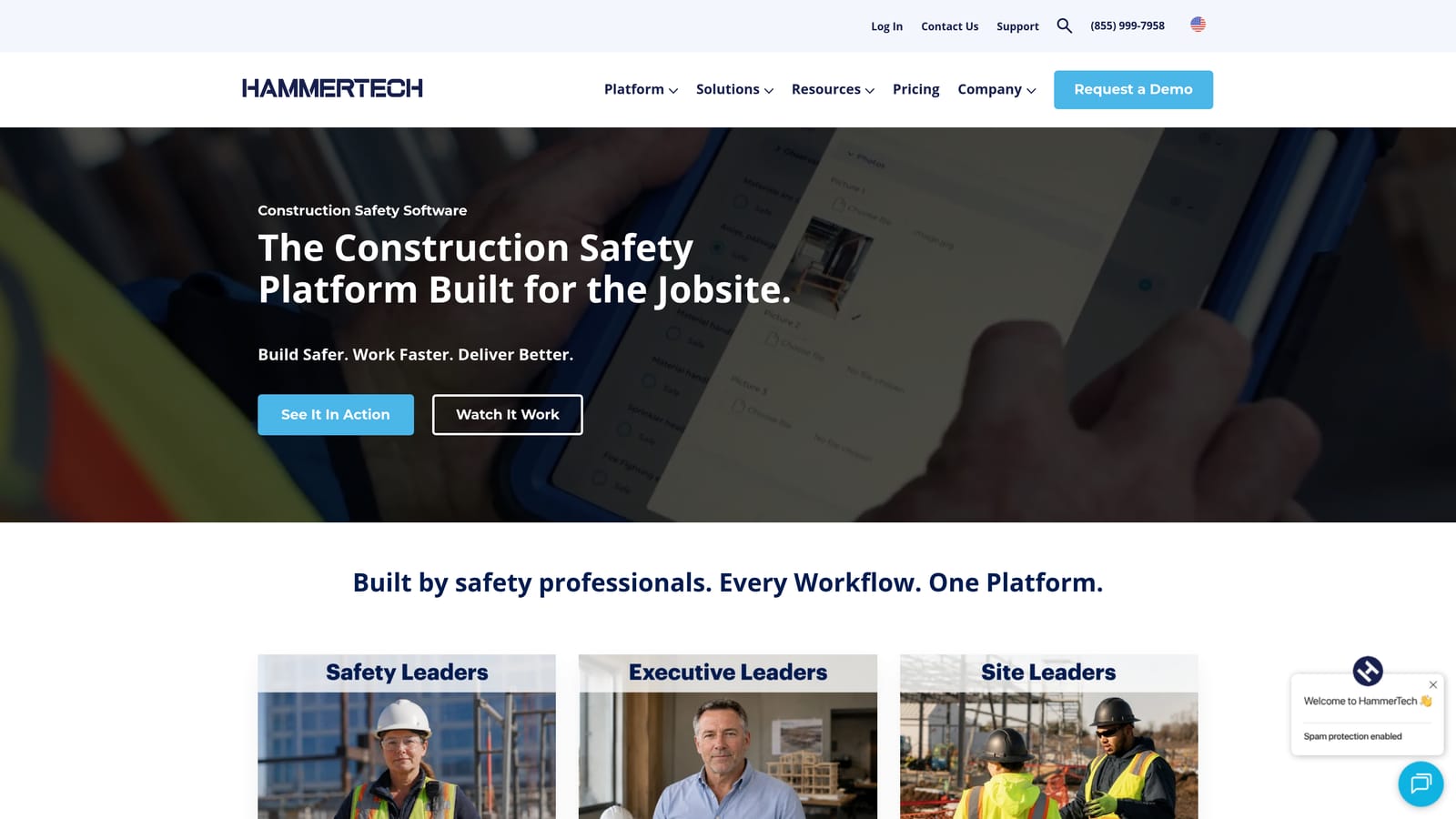
It does contractor onboarding and credential checks before site entry better than anything else on this list. A general contractor can prequalify subcontractors, require inductions, and verify licenses and certifications so unqualified workers are flagged before they arrive.
- Site inductions deliver required safety orientation and record completion.
- Subcontractor prequalification screens firms before they win work.
- Permits manage high-risk work authorizations in a documented flow.
- Worker check-in shows who is on site at any moment, which matters in an emergency.
- Credential verification confirms certifications are current.
It integrates with project management tools (verify specifics), and day-to-day use falls to site safety managers and project administrators, with subcontractors completing their own steps. The limitation is scope: it is not suited to fixed-site, non-construction employers, who would find little of use in a tool built around changing job sites and transient crews. Pricing is quote-based.
Best for: General contractors managing many subcontractors.
8. Ideagen EHS
Ideagen EHS, formerly known as Evotix, covers incident reporting, risk assessment, audits, and behavior-based safety. Confirm current product naming with the vendor, since Ideagen has folded the product into its wider portfolio.
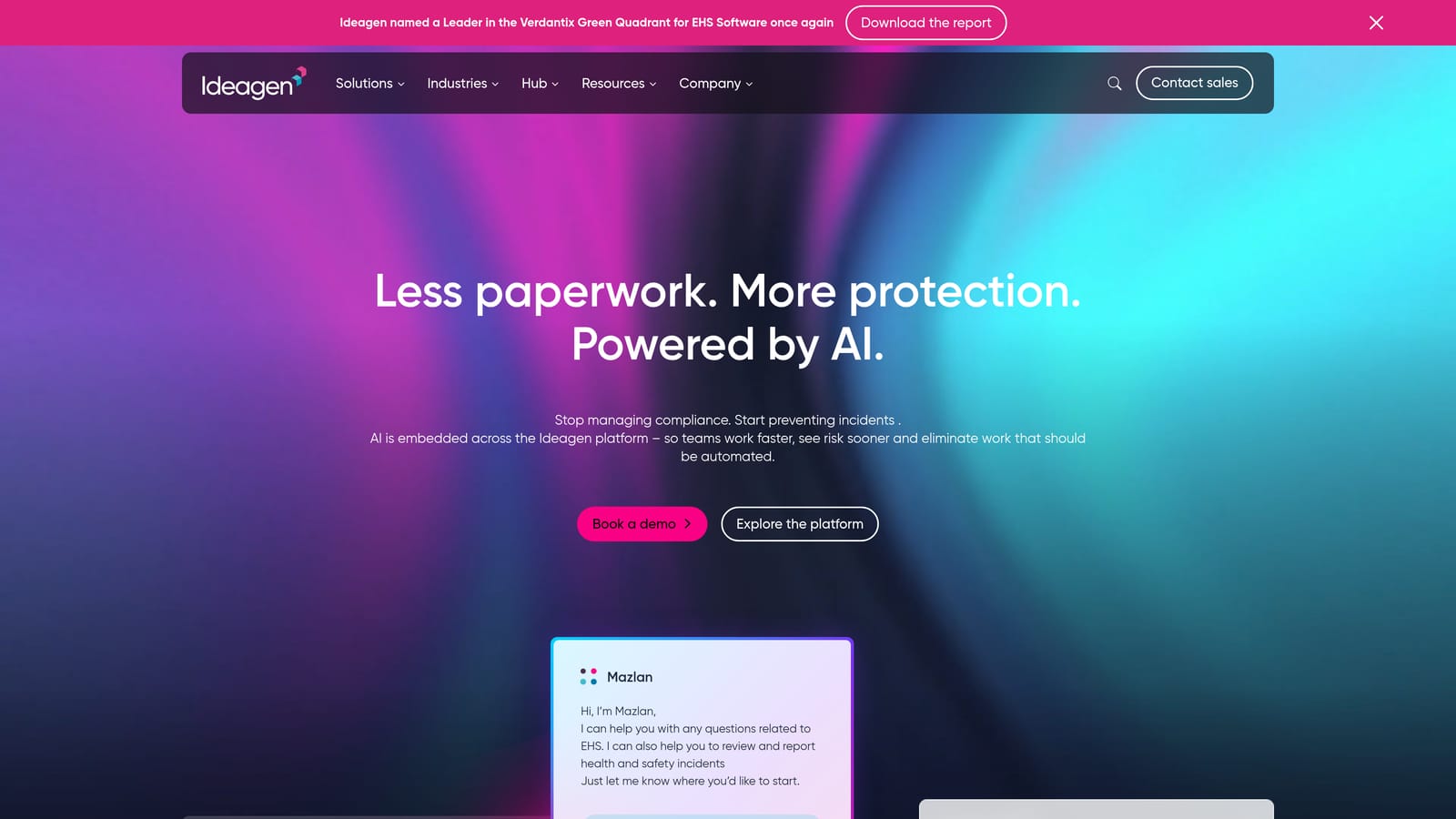
Its strongest case is regulatory fit for the UK and Europe. Organizations that report under those regimes get workflows shaped around them, rather than a US-centric tool adapted after the fact.
- Incident reporting captures events and near misses with structured follow-up.
- Risk assessment supports documented hazard evaluation and review.
- Audits track findings through to completion.
- Behavior-based safety lets you record observations and spot patterns in unsafe acts before injuries occur.
- Compliance tracking keeps obligations and due dates visible.
Integrations include other Ideagen products and HR systems, which makes it attractive if you already use the wider Ideagen family; verify specifics. The trade-off is that it has less US-specific OSHA focus, so American employers who need OSHA log automation should confirm regional support carefully before committing. Pricing is quote-based.
Best for: International teams with UK and European sites.
9. EHS Insight
EHS Insight is a mid-market EHS platform with OSHA recordkeeping and inspection tools. It is aimed at US employers that need to keep their injury and illness records straight without buying a global enterprise suite.
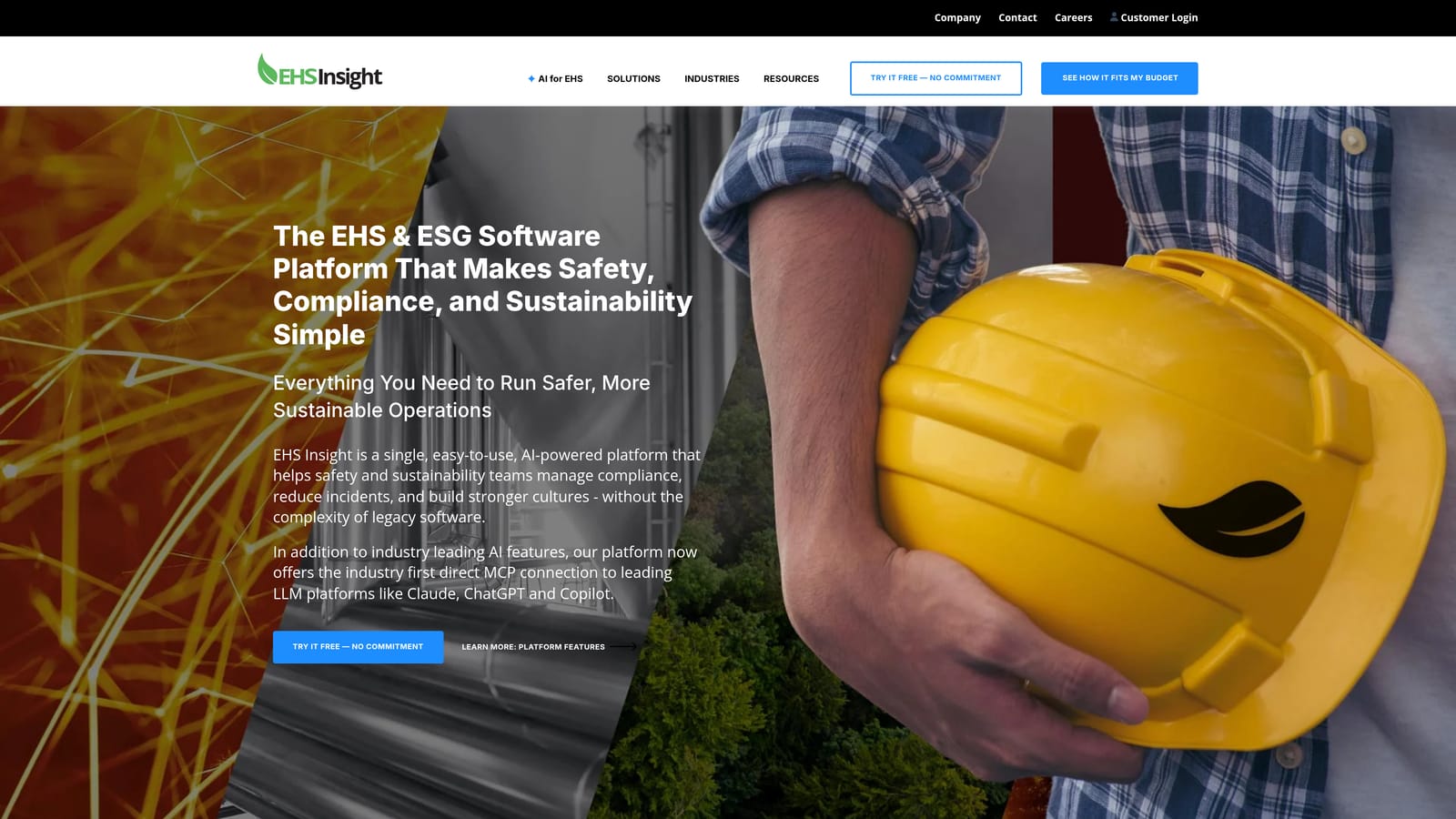
OSHA log and form automation is what sets it apart. Recordable cases flow into the required logs and forms, which reduces the manual work and error risk of maintaining them by hand each year.
- Incident management records events and routes them for investigation.
- OSHA recordkeeping helps populate the logs and forms employers must maintain.
- Inspections and audits standardize routine checks.
- Training tracking shows who is current and who is overdue.
- Reporting turns records into summaries managers can act on.
It connects with HR systems (verify specifics) and is generally lighter to roll out than the largest suites, with an EHS or HR lead typically running it. The limits are a smaller ecosystem and fewer global features, so it is a weaker choice for companies with sites in many countries. Pricing is quote-based.
Best for: US mid-sized employers focused on OSHA compliance.
Matching a Platform to Your Situation, and What Software Cannot Cover
The right choice depends mostly on size and industry. For small teams, SafetyCulture is the practical starting point because you can test it free and avoid paying for enterprise complexity. For enterprise and multi-site operations, Benchmark Gensuite standardizes processes, while Cority adds weight if health surveillance is part of the program. Construction firms should look at HammerTech, high-hazard operators at Sphera, and international teams with UK and European sites at Ideagen EHS. US mid-sized employers whose main burden is OSHA records should shortlist EHS Insight, and manufacturers with ergonomic risk should consider VelocityEHS. Intelex fits when quality and safety need to share one system.
Whichever you pick, test frontline usability, ask how it connects to your HR and payroll systems, and confirm current pricing, since all of it can change.
Software tracks safety; it does not respond to an emergency. When a coworker collapses or someone is badly bleeding, the outcome depends on trained people and equipment within reach: CPR and BLS training, AEDs, tourniquets, and stocked first aid supplies. That is the work 360 Safety does. Ready to put safety into action? Whether you need CPR certification, workplace safety training, or guidance on selecting and maintaining life-saving equipment such as AEDs, we're here to help. Our training programs and safety solutions are designed to help individuals and organizations respond confidently when every second counts. Schedule your training today and take the next step toward creating a safer, more prepared workplace and community.