
Workplace Safety Platform Integrations: 8 Top Tools
This guide compares eight safety platforms on workplace safety platform integrations, covering native connectors, open APIs, and automation options for HR, ERP, and field tools. It helps EHS and operations leads shortlist software by integration depth, industry fit, and company size, with a reminder to verify current connectors on each vendor's site.
Safety managers rarely need another standalone app. They need incident, inspection, training, and compliance data to move into the HR, ERP, and project systems the business already runs. This list is for EHS, safety, and operations leads who are shortlisting software with that goal. Tools were chosen on integration depth (native connectors, open APIs, automation options), fit by industry and company size, and how clearly each vendor documents what it connects to. Details are accurate as of October 2026, but vendors change connectors, packaging, and ownership often, so confirm everything on the official site before you buy.
Quick Comparison of the Platforms
- SafetyCulture: teams that want fast field adoption; free tier, paid per seat; mobile inspections that trigger actions in other tools through webhooks and Zapier-style workflows.
- VelocityEHS: mid-size to large employers; quote-based; built-in ergonomics tooling alongside the core EHS suite.
- Cority: large employers with occupational health needs; quote-based; medical surveillance tied directly to incident data.
- Intelex: organizations running EHS and quality together; quote-based; no-code configurability across both.
- Benchmark Gensuite: multi-site manufacturers; quote-based; a large app library on one shared data model, including sustainability.
- HammerTech: general contractors with many subcontractors; quote-based; contractor onboarding and induction control for multi-employer sites.
- Sphera: chemical, energy, and heavy industry operators; quote-based; process safety and operational risk tooling.
- Ideagen EHS: regulated, multi-region organizations; quote-based; safety records tied into a wider compliance and quality software family.
How to Judge Integration Claims Before You Shortlist
A long integrations page is not proof of deep sync. Learn the vocabulary, then hold each vendor to it.
- Native connector: a prebuilt link the vendor builds and maintains for a specific system. Ask whether it is one-way or two-way.
- Open API: a documented interface your developers or an integrator can use. It is not plug and play, and it usually means developer time.
- Webhook: a message the platform sends the moment an event happens, such as a failed inspection, so another tool can react.
- No-code automation: Zapier-style tools that connect apps with rules instead of code, useful for simple alerts and record creation.
- SSO and user provisioning: single sign-on plus automatic account creation and removal from your HR directory, which prevents orphaned logins when people leave.
For every vendor, ask three questions: which integrations are bidirectional, which cost extra, and who maintains them when the other system updates. Integrations are not automatically included in every plan.
1. SafetyCulture
SafetyCulture is a mobile-first inspection, issue tracking, and training platform aimed at teams that want frontline workers using it quickly. Its distinctive strength on this list is that an inspection result can set off actions elsewhere through webhooks and Zapier-style workflows, so a failed check can open a ticket or post to a chat channel without anyone retyping it.
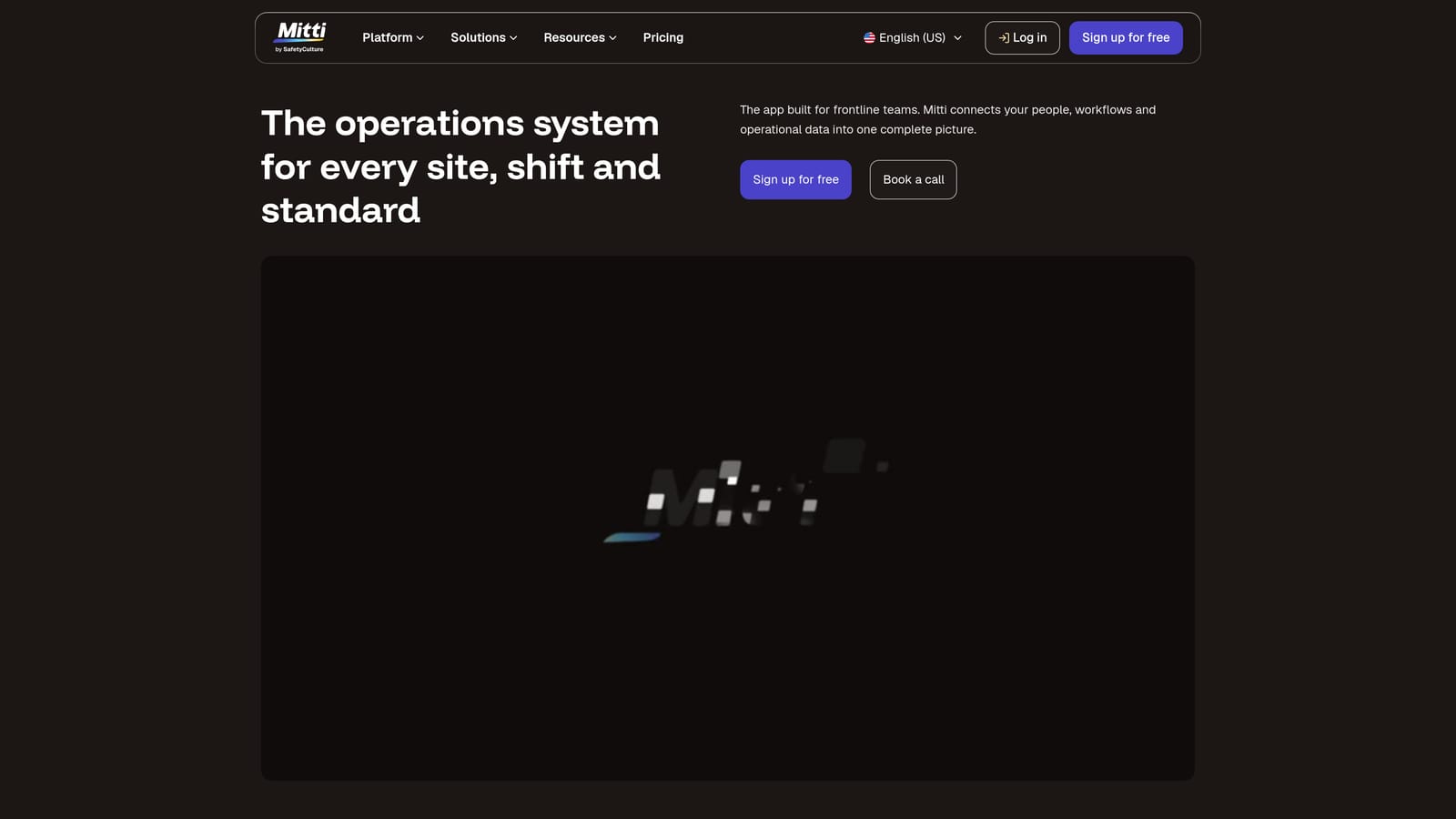
Listed integrations include Slack, Microsoft Teams, Zapier, and Power BI, plus an open API and webhooks. As of October 2026, confirm which connectors sit on which plan. Setup is light compared with enterprise suites: a safety or operations lead can build templates and roll them out to phones without IT, though custom API work needs a developer.
- Digital inspection checklists replace paper forms and make results searchable.
- Issue and action tracking assigns corrective work and follows it to closure.
- Training and sensor monitoring bring learning records and equipment readings into the same place.
- Analytics dashboards show trends across sites, and Power BI can take the data further.
- API and webhooks let your own systems send and receive data.
Limitations: it is lighter on deep regulatory EHS modules than enterprise suites, so heavily regulated programs may outgrow it. The free plan is capped, and paid plans are priced per seat, so cost grows with headcount. Check current rates on the website.
Best for: Teams that want quick field adoption and automated alerts into chat and ticketing tools.
2. VelocityEHS
VelocityEHS is a cloud EHS suite that covers incidents, chemicals, training, and ergonomics. It is built for mid-size and larger employers that want those functions under one login rather than stitched together from separate tools.
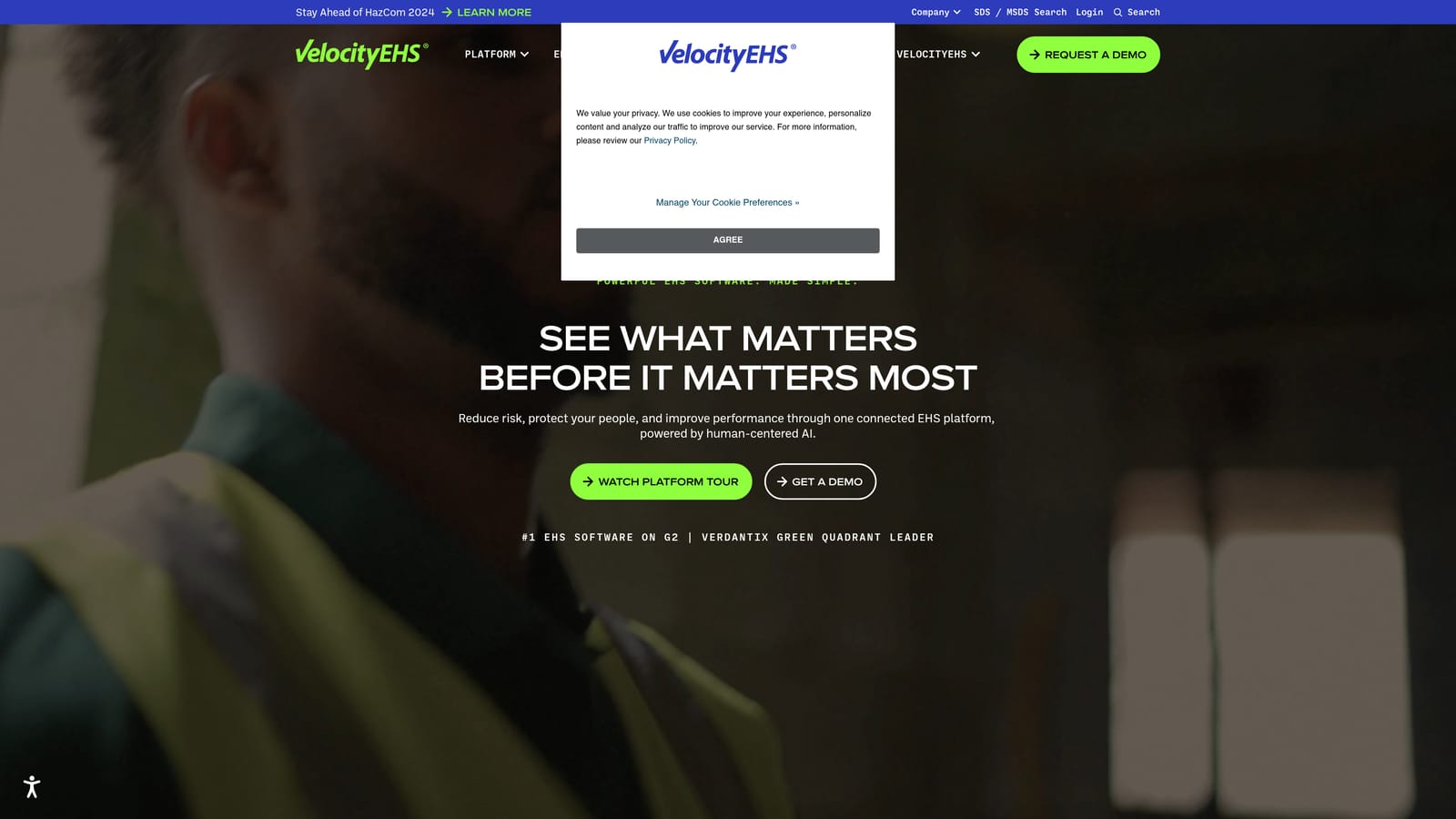
Its standout on this list is the built-in ergonomics tooling, which most rivals here do not offer inside the core product. That matters for warehouses, manufacturing, and any operation where musculoskeletal injuries drive claims.
Integration approach
The vendor describes APIs for syncing HR and ERP data. Which HRIS and ERP systems are supported, and whether sync runs in both directions, is something to verify directly. Ask for the current list in writing and find out whether employee data loads on a schedule or in real time.
What you get
- Incident management captures reports and investigations in one record.
- Chemical and safety data sheet management keeps hazard information current and accessible.
- Training management tracks assignments and completions against roles.
- Ergonomics tools help assess tasks and reduce strain-related injuries.
- Risk and audit tracking links findings to corrective action.
Limitations: pricing is quote-based, and the implementation effort suits organizations with dedicated EHS staff. Small teams may find it more than they need. Cost typically depends on modules, locations, and user or employee counts.
Best for: Mid-size to large employers wanting incidents, chemicals, and ergonomics in one system.
3. Cority
Cority is enterprise EHS and occupational health software. Its defining feature is linking injury records with health surveillance data, so an incident and the related medical follow-up, exposure monitoring, or fitness-for-duty record can live in one place.
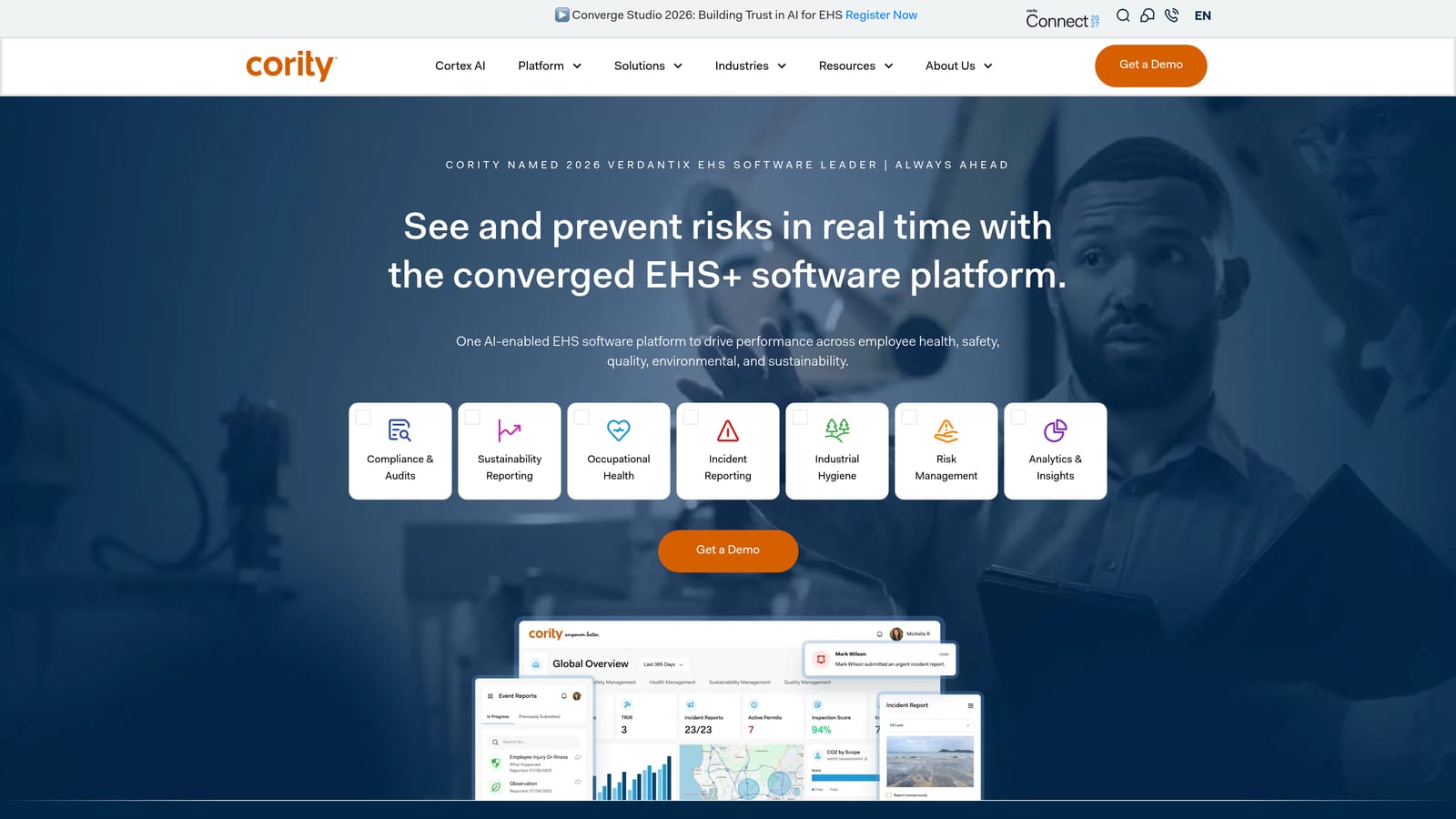
No other tool here is as centered on occupational health. If your safety program has a clinic, nurses, or regulated medical surveillance, that connection removes a lot of cross-referencing between systems.
- Incident and injury management records events and ties them to the affected employee.
- Occupational health and medical surveillance track exams, tests, and exposures.
- Audit and compliance management organizes findings and due dates.
- Industrial hygiene supports exposure sampling and assessment.
- Reporting and analytics roll data up across sites and populations.
Cority points to connectors and APIs for enterprise HR and ERP systems. Named systems should be verified, and because the product handles health data, ask specifically how access controls and data sharing with HR are handled. Expect a configuration project owned by a mix of EHS, IT, and sometimes occupational health staff.
Limitations: heavy configuration and cost make it a poor fit for small teams. Pricing is quote-based and generally scales with modules and the size of the workforce covered.
Best for: Large employers that need safety and occupational health data in one record.
4. Intelex (Fortive)
Intelex, part of Fortive, is a configurable EHS and quality platform. Its distinguishing trait is no-code configurability: administrators can reshape modules, forms, and workflows across both safety and quality without writing code.
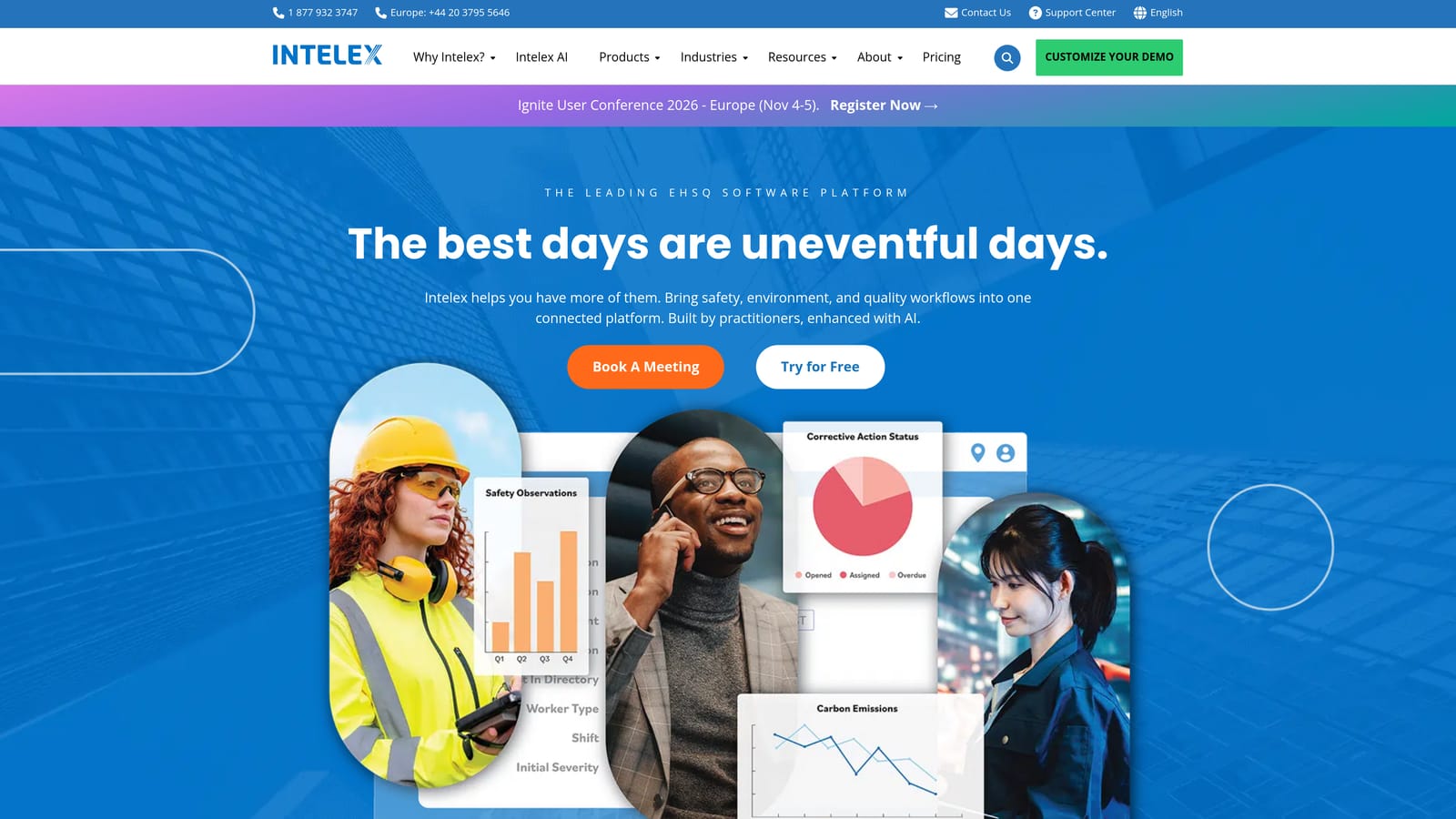
That helps when your process does not match a vendor's template, for example a unique approval chain for corrective actions that spans a quality nonconformance and a safety incident. It also means one system can serve two departments that otherwise buy separately.
- Incident management gathers reports and drives investigations.
- Audits and inspections schedule checks and capture findings.
- Configurable workflows and forms let you model your own process.
- Document control keeps policies and procedures versioned and approved.
- Dashboards surface open actions and trends for managers.
Intelex cites APIs for connecting HR, ERP, and analytics tools. Verify the current list and whether prebuilt connectors exist for your systems or whether you would be building against the API.
Limitations: flexibility can mean longer setup, and the platform needs an internal administrator who understands the configuration. Without one, the freedom turns into drift. Pricing is quote-based and typically reflects modules and user counts.
Best for: Organizations running EHS and quality programs that need custom workflows.
5. Benchmark Gensuite
Benchmark Gensuite is a multi-app EHS and sustainability platform built for multi-site manufacturers and global operations. Its standout is a large library of apps that share one data model, so incident data, audits, product stewardship, and ESG reporting draw from the same underlying records.
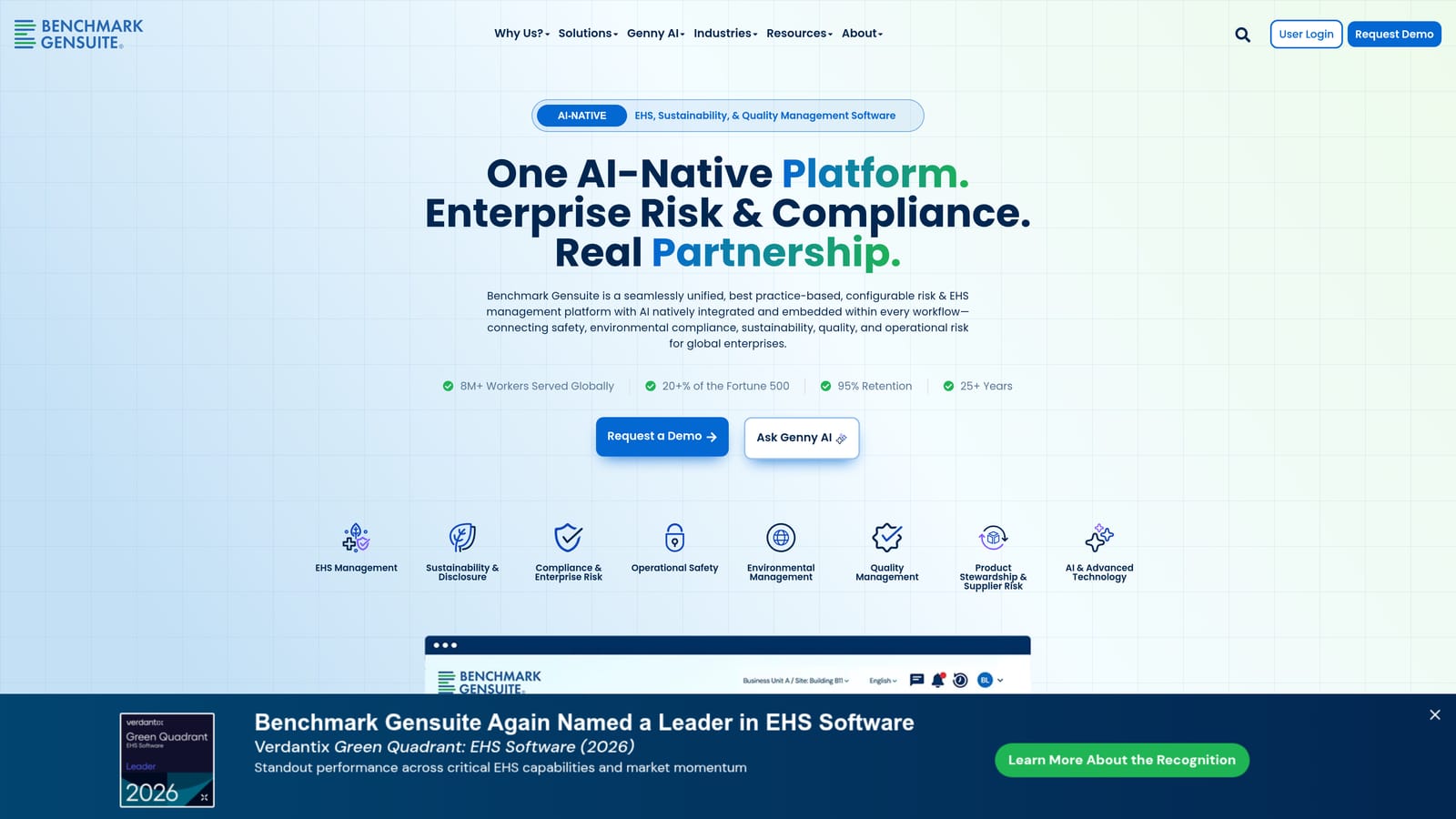
The shared model matters for integration: connecting a source system once can feed several apps, rather than rebuilding the link per module. For companies that must report safety and sustainability metrics together, that consolidation is the main draw.
- Incident and audit management cover the core safety workflow across sites.
- Sustainability and ESG reporting pull operational data into disclosures.
- Product stewardship tracks regulatory and material information for products.
- Risk assessment structures hazard analysis and controls.
- Mobile apps let field staff report and inspect away from a desk.
The vendor refers to enterprise data feeds and APIs. Named connectors should be verified before you rely on them, and ask who builds and maintains each feed. Rollouts are usually staged by app and site, with a central EHS team plus site coordinators.
Limitations: the scope and interface can overwhelm teams that only want a simple inspection tool. Pricing is quote-based and tied to the apps you license and your footprint.
Best for: Multi-site manufacturers consolidating EHS and sustainability reporting.
6. HammerTech
HammerTech is a construction-focused safety and workforce management platform covering inductions, credentials, and site access. Where the others on this list manage an organization's own employees, HammerTech is designed around job sites with many employers on them at once.
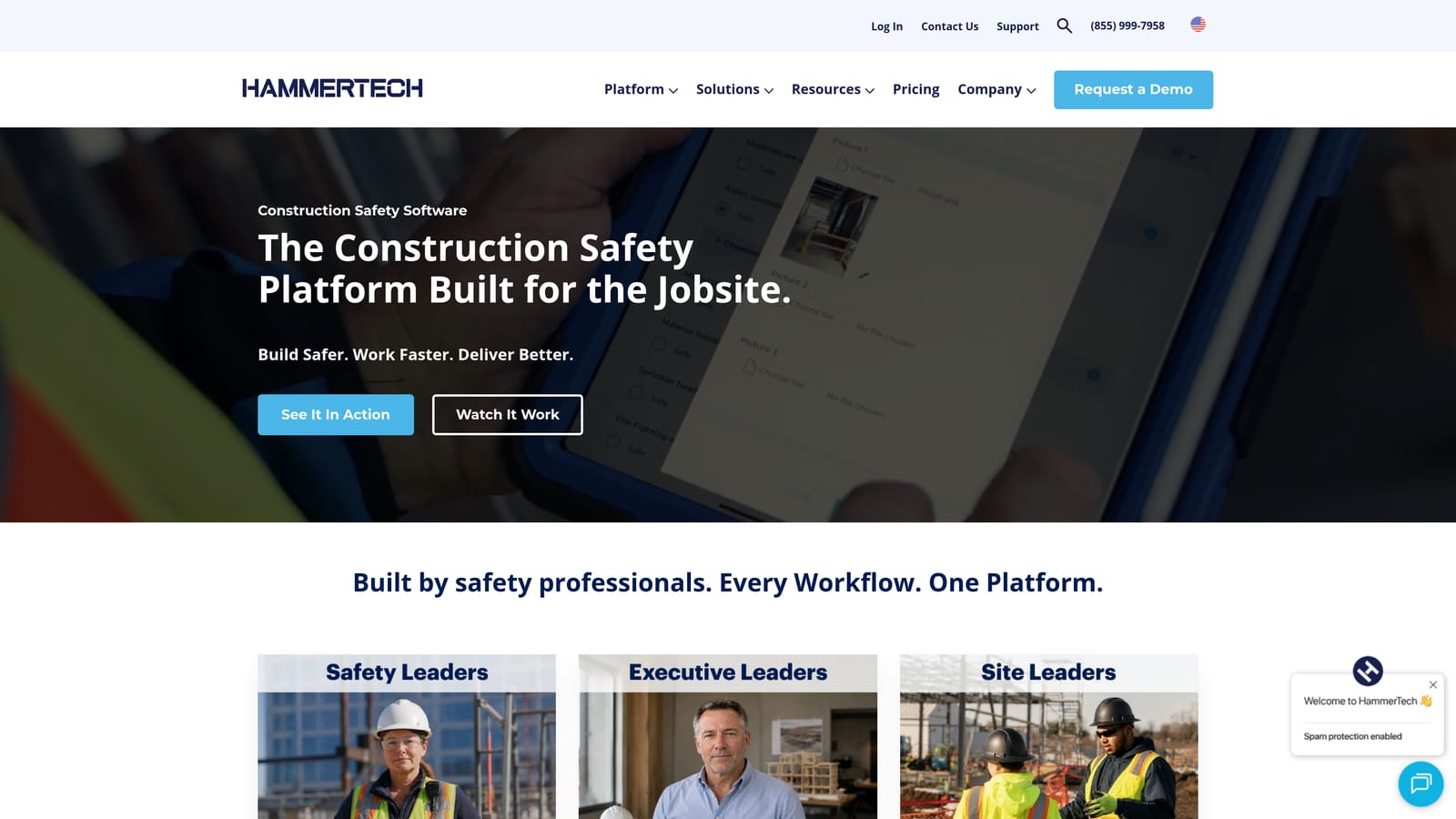
Its strongest point is contractor onboarding and induction control. A subcontractor's worker can be required to complete an induction and hold valid credentials before gaining access, which is hard to enforce with a general EHS suite.
- Site inductions deliver and record site-specific orientation before work starts.
- Worker credential tracking flags expired tickets and licenses.
- Contractor management gives the general contractor visibility into subcontractor compliance.
- Incident reporting captures events on site in the same system as access records.
- Site access control links verified status to who can enter.
Listed integrations include project management tools such as Procore (verify current status), plus access control and HR systems. Because job-site hardware like turnstiles or gate readers may be involved, setup can include coordination with site IT or the access vendor.
Limitations: it is built for construction and is less relevant to office or general manufacturing use. Pricing is quote-based and commonly depends on project volume and workforce numbers.
Best for: General contractors managing many subcontractors on active sites.
7. Sphera
Sphera offers operational risk and EHS software for high-hazard industries such as chemicals, energy, and heavy manufacturing. It goes further than the standard EHS suites here on process safety, the discipline of preventing major releases, fires, and explosions.
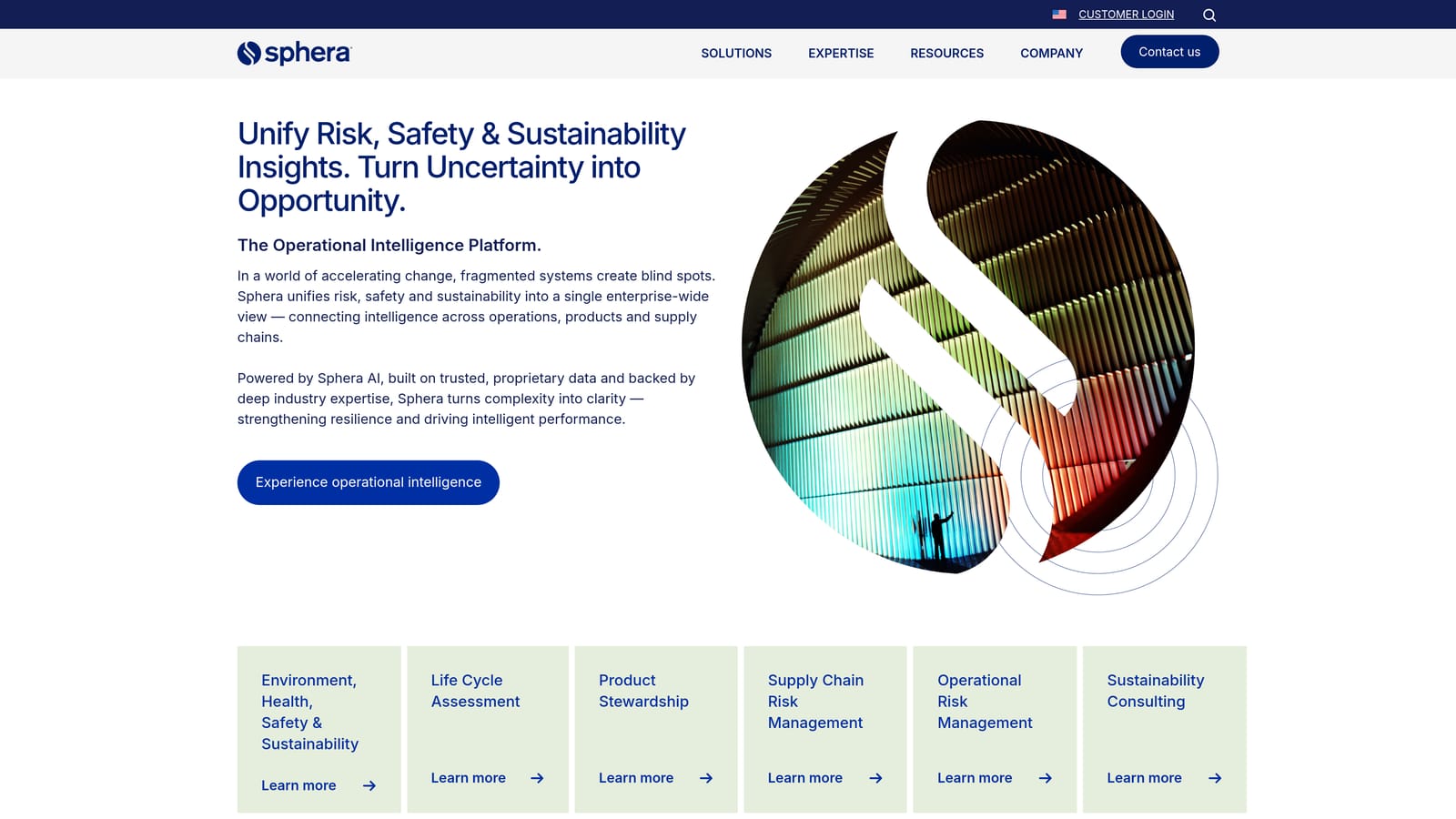
That is its edge: management of change and process safety tooling sit next to ordinary incident and compliance tracking. In these industries, a plant modification should be tied to risk review and operating procedures, and that link is where integration with asset and maintenance data becomes valuable.
- Operational risk management ties hazards and controls to operations.
- Process safety supports the programs high-hazard sites are expected to maintain.
- Incident management records events and investigation outcomes.
- Management of change routes plant and procedure modifications through review.
- Compliance tracking monitors obligations and deadlines.
The vendor points to enterprise asset and ERP systems such as SAP, though specifics need verification. Expect implementation led by a project team with EHS, operations, and IT involvement, often with vendor or partner services.
Limitations: it targets large, high-hazard operations and is not suited to small employers. Pricing is quote-based and typically reflects scope, modules, and sites.
Best for: Chemical, energy, and heavy industry operators with process safety obligations.
8. Ideagen EHS
Ideagen sells EHS software from a compliance-focused vendor, suited to regulated and multi-region organizations. What sets it apart here is that safety records can connect into a broader family of quality and compliance products, which helps when the same auditors ask about both.
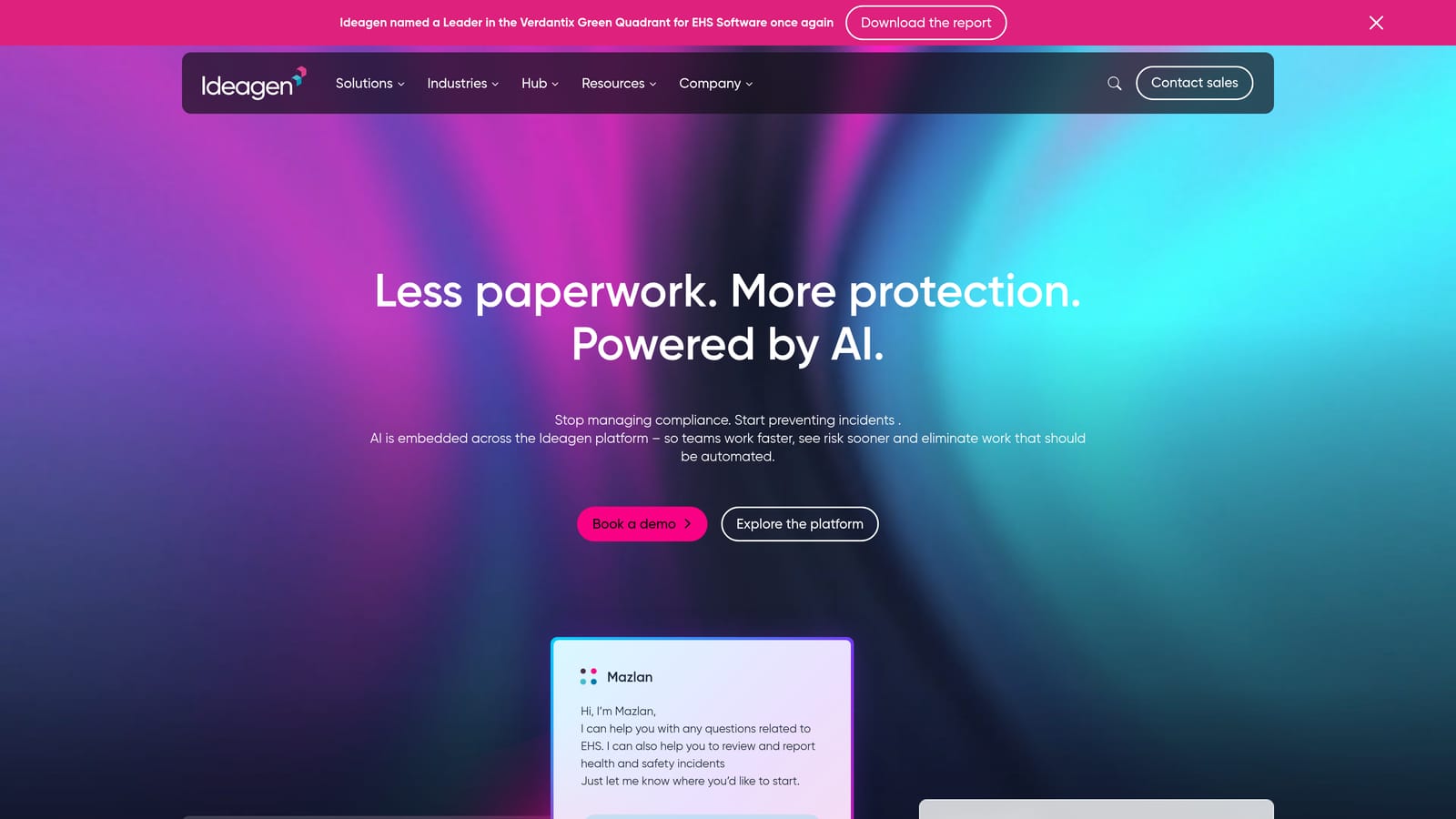
If your organization already uses Ideagen products for document control, quality, or audit, adding safety under the same vendor can reduce the number of contracts and data hand-offs. The company's catalog and product naming have changed over time, so confirm the exact EHS product name and its current scope.
- Incident and risk management record events and assess hazards.
- Audit management schedules reviews and tracks findings to closure.
- Compliance tracking keeps obligations visible across regions.
- Reporting dashboards summarize performance for managers and auditors.
- Connection to wider quality and compliance products joins safety to the rest of the compliance record.
Integrations are described as APIs and pre-built connections to business systems. Verify the current list, since public detail is thinner than for mobile-first rivals, and ask who maintains each connection.
Limitations: there is less public pricing and integration documentation than at mobile-first competitors, so evaluation depends on sales conversations. Pricing is quote-based.
Best for: Regulated, multi-region organizations that want safety within a wider compliance stack.
Matching a Platform to Your Situation, and Not Forgetting the Floor
Three situations cover most buyers. For fast field inspections and automation into chat and ticketing, SafetyCulture is the quickest to deploy. For mid-size EHS programs that want a full suite, VelocityEHS or Intelex fit, with Intelex favored if quality workflows need to share the system. Cority suits enterprises with occupational health needs and Sphera suits process safety, while HammerTech is the clear choice for construction. Benchmark Gensuite and Ideagen fit multi-site compliance programs.
Whichever you shortlist, run a pilot that tests the integrations you actually need: push a real employee roster in, trigger a real incident, and confirm the data lands in the HR, ERP, or project system correctly. Get answers on bidirectional sync, extra fees, and maintenance responsibility in writing.
Software also does not replace readiness on the floor. A dashboard cannot start CPR or shock a heart back into rhythm. Pair your platform with trained responders, BLS training for those who need it, and AEDs placed where they can be reached quickly.
Ready to put safety into action? Whether you need CPR certification, workplace safety training, or guidance on selecting and maintaining life-saving equipment such as AEDs, we're here to help. Our training programs and safety solutions are designed to help individuals and organizations respond confidently when every second counts. Schedule your training today and take the next step toward creating a safer, more prepared workplace and community.